Issue · Technology

Technology

Every technology bill, vote, and legislator stance in United States, automatically classified by Maddy, our AI policy reader.

Total bills
1,461
119th Congress
Top supporter
Ami Bera
86% support rate
Top opponent
Scott Perry
14% support rate
Ranked legislators
10
5 support · 5 oppose
Key legislators

Who's moving technology in United States

Legislators moving technology in United States
Legislator Party Stance Support rate Decisive votes
Ami Bera
Ami Bera House · District 6
D
Strong +
86% 22
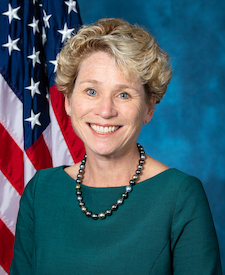
Chrissy Houlahan
Chrissy Houlahan House · District 6
D
Strong +
86% 22
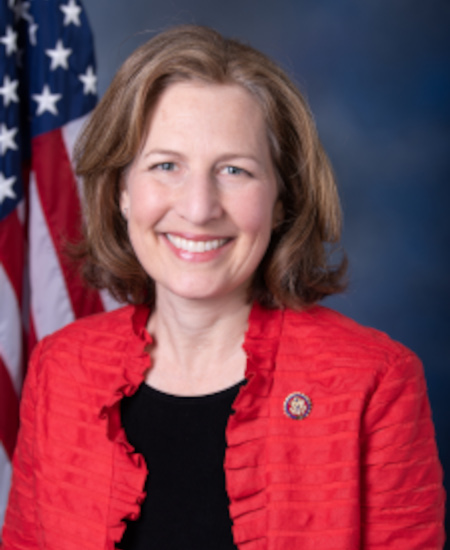
Kim Schrier
Kim Schrier House · District 8
D
Strong +
86% 22
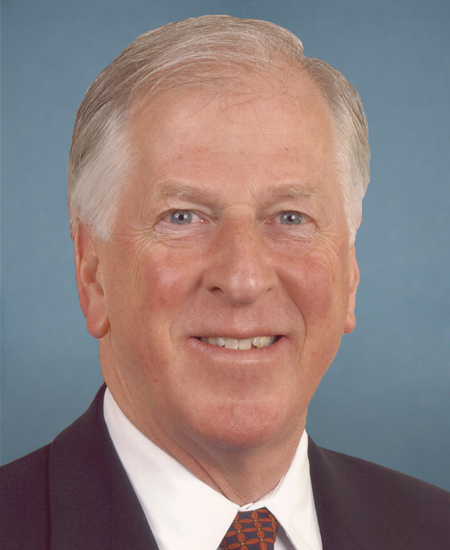
Mike Thompson
Mike Thompson House · District 4
D
Strong +
86% 22
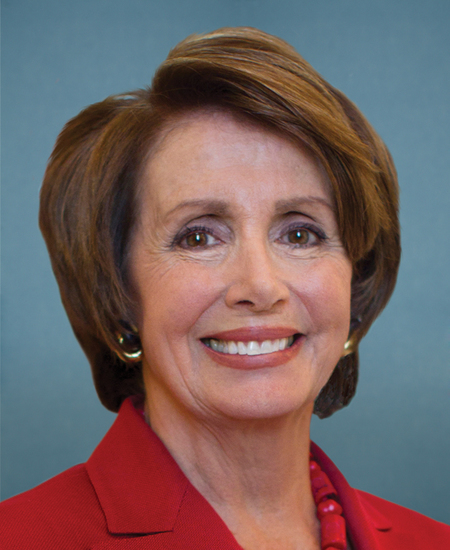
Nancy Pelosi
Nancy Pelosi House · District 11
D
Strong +
86% 22
Scott Perry
Scott Perry House · District 10
R
Strong −
14% 21
AA
Alan Armstrong Senate
R
Strong −
17% 29
Rand Paul
Rand Paul Senate
R
Strong −
17% 46
Josh Hawley
Josh Hawley Senate
R
Strong −
18% 45
Andy Harris
Andy Harris House · District 1
R
Strong −
18% 22
Showing 971–980 of 1,461 bills

All technology bills

in committee · United States · House Dec 4, 2025

HR 6449: DO NOT Call Act

HR 6449, the "DO NOT Call Act," amends the Telephone Consumer Protection Act of 1993 to strengthen penalties for illegal robocalls. It increases criminal penalties for willful violations to up to one year in prison (or three years for aggravated offenses like repeated high-volume calls or calls intended to support felonies), and raises fines for inaccurate caller identification from $10,000 to $20,000 per violation. The bill directly affects businesses and entities making unsolicited calls without consent, including those using auto-dialers or prerecorded messages. Key provisions define "calls" broadly to include unsolicited texts sent via auto-dialers without prior permission.
in committee · United States · House Dec 11, 2025

HR 6631: Establishing Cyber Security Educational Programs at Academic Institutions Act

This bill requires the Secretary of Defense to create a program partnering with eligible colleges and universities (including those conducting DoD research or senior military colleges) to develop standardized cybersecurity education programs. It mandates collaboration with agencies like NSA, CISA, and NIST to establish curriculum standards, workforce competencies, and community outreach, while designating qualifying institutions based on specific criteria like adherence to national cyber workforce frameworks and regional accreditation. The program must report annually to Congress on its cost-effectiveness and benefits to participants and the Department of Defense, without authorizing new funding. It directly affects academic institutions meeting the defined criteria and aims to strengthen the national cyber workforce through coordinated educational standards.
in committee · United States · House Jan 16, 2025

HR 533: Bank Privacy Reform Act

HR 533, the Bank Privacy Reform Act, strengthens privacy protections for individuals' financial records by requiring government agencies to obtain a warrant before accessing bank account information. The bill amends the Right to Financial Privacy Act to mandate warrants for accessing customer records, removes outdated exceptions, and updates the $3,000 threshold for reporting transactions to be adjusted annually for inflation. This directly affects banks, credit unions, and their customers by limiting government access to personal financial data without judicial oversight. Key provisions include requiring warrants for record access (except under specific legal exceptions), removing obsolete sections of financial privacy law, and updating reporting thresholds. The bill focuses on concrete changes to privacy safeguards, not broader financial regulation.
Sub-Topics Consumer Data Protection Data Privacy Tags Privacy
in committee · United States · House May 14, 2025

HR 3417: Websites and Software Applications Accessibility Act of 2025

HR 3417, the Websites and Software Applications Accessibility Act of 2025, requires websites and applications used by covered entities - including businesses, government agencies, and public accommodations - to be accessible to people with disabilities. The bill mandates the Department of Justice and Equal Employment Opportunity Commission to establish accessibility standards within 24 months, with different compliance timelines for small businesses (2-3 years) versus larger entities (30 days). It includes provisions for technical assistance, grants to help small entities remediate inaccessible websites, and enforcement mechanisms to address violations. The law aims to ensure people with disabilities can access the same information, services, and transactions online as people without disabilities. Commercial providers who develop websites or applications for covered entities must also ensure their products meet accessibility standards.
Tags People with Disabilities
in committee · United States · Senate Apr 10, 2025

S 1405: PROOF Act

Proving Reserves Of Others’ Funds Act or the PROOF Act This bill requires digital exchanges to protect customer funds and provide proof of reserves. Specifically, digital exchanges must minimize (1) customer risk of asset loss, and (2) delays experienced by a customer when accessing assets. With some exceptions, a customer’s assets must be separated from any other assets and may not be used to margin, secure, or guarantee a trade or account of a person other than the customer. Further, digital exchanges and digital custodians must report on their proof of reserves through an attestation from an independent auditing firm or a disinterested third party. The Office of Domestic Finance in the Department of the Treasury must make these attestations publicly available. The bill also provides for the creation of an industry standard for the attestations. Violations are subject to civil penalties.
in committee · United States · House Nov 18, 2025

HR 6100: Health ACCESS Act

This bill regulates healthcare platforms that help patients find providers (like online appointment directories). It prohibits these platforms from steering patients toward specific providers based on payment, requiring full disclosure of financial ties between platforms and healthcare providers. Platforms must use objective criteria for listing providers, cannot offer medical services or collect patient data improperly, and must set fair, pre-agreed compensation rates. It directly affects health tech companies operating these platforms and healthcare providers using them to connect with patients.
Sub-Topics Telehealth
in committee · United States · House Mar 5, 2025

HR 1892: Wireless Electric Vehicle Charging Grant Program Act of 2025

HR 1892 establishes a federal grant program to fund wireless electric vehicle (EV) charging infrastructure across the U.S. The program, authorized with $250 million, provides competitive grants (capped at $25 million per project) to states, transit agencies, and other eligible entities to build or improve wireless charging systems for vehicles - prioritizing fleets (like buses and trucks), underserved communities, and projects that reduce range anxiety. Grants cover up to 80% of project costs, require adherence to Davis-Bacon wage standards, and mandate Buy America rules for equipment. This directly affects local governments and transit providers implementing EV charging networks while aiming to expand EV adoption through accessible, grid-friendly infrastructure.
passed · United States · House Sep 15, 2026

HR 3633: Digital Asset Market Clarity Act

# Summary of Digital Commodities and Blockchain Technology Regulatory Framework This comprehensive legislation establishes a new regulatory framework specifically for digital commodities and blockchain technology, creating a balanced approach that protects investors while fostering innovation. ## Key Components 1. **New Regulatory Structure**: - Creates new categories for digital commodity exchanges, brokers, and dealers under the Commodity Futures Trading Commission (CFTC) - Establishes "qualified digital asset custodians" as a new regulatory category - Defines "mature blockchain systems" with special regulatory treatment 2. **Core Requirements**: - Mandates segregation of customer assets and strict custody requirements - Requires robust risk management systems - Sets capital requirements for digital commodity brokers and dealers - Establishes new disclosure and reporting obligations - Defines "blockchain control persons" with special restrictions on selling digital commodities 3. **Innovation-Focused Provisions**: - Creates a "Strategic Hub for Innovation and Financial Technology" (FinHub) at the SEC - Establishes "LabCFTC" as a dedicated innovation lab within the CFTC - Provides exemptions for SEC-registered entities from certain CFTC requirements - Includes provisions for expedited hiring of digital commodities experts 4. **Studies and Research**: - Mandates studies on decentralized finance (DeFi) - Requires a study on non-fungible tokens (NFTs) - Directs a study on financial literacy among digital commodity holders - Requires a study on tokenized securities and derivatives 5. **Exclusions**: - Excludes decentralized finance activities from regulation - Excludes certain blockchain-related activities from regulatory requirements The legislation aims to create a functional regulatory framework that acknowledges the unique benefits and risks of digital commodities while ensuring investor protection, preventing market manipulation, and promoting the responsible development of this emerging technology within the United States. It seeks to prevent the shift of digital commodity development to less regulated countries by establishing a clear, balanced regulatory path.
Sub-Topics Emerging Technology
in committee · United States · Senate Mar 20, 2026

S 1602: Mathematical and Statistical Modeling Education Act

This bill allocates $10 million annually (2026-2030) to fund National Science Foundation programs developing K-12 mathematical and statistical modeling education. It requires research and partnerships to integrate real-world data analysis, computational tools, and problem-based learning into classrooms, with specific focus on students from groups historically underrepresented in STEM. The bill also mandates a National Academies study on implementation barriers and best practices for teaching modeling skills. Funding expires September 30, 2029.
Sub-Topics K-12 Education
in committee · United States · Senate Apr 9, 2025

S 1400: Adult Education WORKS Act

The Adult Education WORKS Act creates a new role for "college and career navigators" who help adults access workforce development programs, postsecondary education, and career services. It requires states and local workforce boards to promote the employment of these navigators in one-stop centers, with $135 million authorized for library-based and community-based programs starting in 2026. The bill emphasizes developing digital literacy and information literacy skills as core components of adult education, and includes new performance metrics to track outcomes related to these skills. This legislation directly affects adult education programs, workforce development systems, and the individuals seeking career advancement through these services.
Showing 971 to 980 of 1,461 bills
Previous 1 … 97 98 99 … 147 Next