Issue · Technology

Technology

Every technology bill, vote, and legislator stance in United States, automatically classified by Maddy, our AI policy reader.

Total bills
1,661
119th Congress
Top supporter
Ami Bera
86% support rate
Top opponent
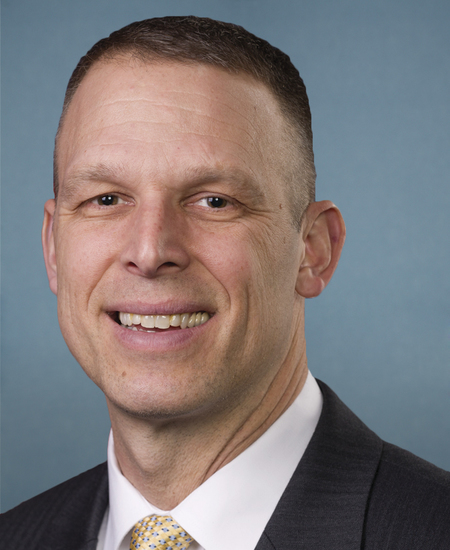
Scott Perry
14% support rate
Ranked legislators
10
5 support · 5 oppose
Key legislators

Who's moving technology in United States

Legislators moving technology in United States
Legislator Party Stance Support rate Decisive votes
Ami Bera
Ami Bera House · District 6
D
Strong +
86% 22
Chrissy Houlahan
Chrissy Houlahan House · District 6
D
Strong +
86% 22
Kim Schrier
Kim Schrier House · District 8
D
Strong +
86% 22
Mike Thompson
Mike Thompson House · District 4
D
Strong +
86% 22
Nancy Pelosi
Nancy Pelosi House · District 11
D
Strong +
86% 22
Scott Perry
Scott Perry House · District 10
R
Strong −
14% 21
AA
Alan Armstrong Senate
R
Strong −
17% 29
Rand Paul
Rand Paul Senate
R
Strong −
17% 46
Josh Hawley
Josh Hawley Senate
R
Strong −
18% 45
Andy Harris
Andy Harris House · District 1
R
Strong −
18% 22
Showing 521–530 of 1,661 bills

All technology bills

in committee · United States · House Mar 20, 2026

HR 8031: GUARDRAILS Act

The GUARDRAILS Act (HR 8031) repeals the December 11, 2025 Executive Order on Artificial Intelligence, which previously established a national policy framework for AI development. By removing this executive order, the bill prevents the federal government from using funds to implement, enforce, or administer the policies outlined in that directive. This change directly affects federal agencies and any organizations that were relying on the executive order's framework for AI regulation. The legislation does not create new AI rules but instead eliminates the existing executive mandate that had been in place.
in committee · United States · House Mar 12, 2026

HR 7896: NOAA Global Ocean Monitoring and Observing Research Act

This bill establishes a new research program within NOAA to improve global ocean monitoring and observing systems. It directs the agency to develop sustained data collection capabilities, including the One-Argo system, while supporting research on ocean health, climate, and extreme weather forecasting. The legislation also mandates the integration of artificial intelligence and cloud technologies to optimize data use, requires annual reviews of program activities, and allows for competitive grants to academic and private institutions for ocean research projects.
in committee · United States · House Jul 21, 2026

HR 8183: MATCH Act of 2026

This bill establishes a new talent marketplace system to connect job seekers with employers and training programs using digital platforms that support open standards and interoperable data sharing. It creates a federal grant program requiring states to allocate 5-10 percent of workforce funds toward building these marketplaces, which include digital tools for tracking skills, verifying credentials, and generating standardized skill profiles. The legislation also mandates that states make these platforms publicly accessible through one-stop delivery systems while protecting user privacy and ensuring websites are easy to navigate and compare programs.
introduced · United States · Senate Apr 14, 2026

S 4280: SAFE Act

The Security And Freedom Enhancement Act of 2026, known as the SAFE Act, introduces new rules for how U.S. intelligence agencies collect and use information about Americans and people in the United States. The bill requires the FBI to conduct regular audits of its data queries, obtain additional approvals before searching for information about elected officials and judges, and create detailed records of all searches. It also limits when government agencies can access Americans' communications without a warrant and restricts intelligence agencies from purchasing personal data from private companies about people in the United States. The law increases transparency by requiring more detailed reports to Congress and the public about surveillance activities, and it expands the role of independent reviewers in court proceedings related to intelligence gathering.
Sub-Topics Data Privacy
in committee · United States · House Apr 2, 2026

HR 8189: American Security Robotics Act of 2026

The American Security Robotics Act of 2026 prohibits federal agencies from purchasing or operating unmanned ground vehicles made by foreign entities from certain countries. This ban applies to mechanical devices that move on land, such as autonomous patrol robots or surveillance vehicles, and extends to contracts where these systems are used by federal agencies. The law allows exceptions for specific national security purposes like counter-terrorism, research, or when the foreign technology is modified to remove data transfer capabilities and cybersecurity risks. Four federal departments - Homeland Security, Defense, State, and Justice - are authorized to request exemptions from these restrictions if they demonstrate a national interest.
in committee · United States · House Mar 27, 2026

HR 8145: Expanding Access to Distance Learning and Telemedicine Act

This bill expands the scope of federal programs supporting rural areas to include cybersecurity support, digital literacy, workforce development, and job training alongside existing telemedicine and distance learning services. It amends the Food, Agriculture, Conservation, and Trade Act of 1990 to update the section heading and modify multiple subsections to explicitly incorporate these new categories of assistance. The changes apply to programs that provide technical support and educational resources to rural communities, with an effective date set for six months after the bill is enacted.
Sub-Topics Telehealth Workforce Development Broadband Access Cybersecurity Tags Agriculture Rural Communities
in committee · United States · House Mar 26, 2026

HR 8120: Veterans Benefits Information Protection Act

This bill, known as the Veterans Benefits Information Protection Act, amends the Communications Act to strengthen protections against automated robocalls targeting government agencies. It specifically prohibits the use of automated telephone equipment that can make repeated calls to federal numbers and exchange information without human intervention when operated by someone other than the intended recipient. The primary effect is to prevent third parties from using automated systems to access or interact with federal departments and agencies, including those handling veterans benefits. This measure aims to reduce unwanted automated communications directed at government institutions while maintaining existing protections for individual consumers.
in committee · United States · Senate Mar 25, 2026

S 4211: Consumer Data Privacy and Security Act of 2026

This bill establishes a comprehensive federal framework for consumer data privacy and security, creating a uniform set of rules that would preempt most state privacy laws. It requires businesses that collect personal data to obtain consent from individuals before gathering or processing their information, with stricter requirements for sensitive data like health records and financial details. Covered entities must provide clear privacy policies, allow individuals to access, correct, or delete their data, and implement security programs to protect information from unauthorized access. The Federal Trade Commission would enforce these rules and has authority to impose civil penalties on violators, while also receiving additional funding to carry out enforcement duties.
in committee · United States · House Mar 24, 2026

HR 8059: Unserialized Firearm Harm Oversight and Serialization Act of 2026

This bill requires licensed firearm dealers to add serial numbers to unserialized guns they receive and to those they manufacture using 3D printing or similar non-traditional methods. It defines additive manufacturing as layer-by-layer processes like 3D printing and mandates that dealers engrave or cast serial numbers on frames and receivers, then report this information to the Attorney General. Dealers who fail to comply face civil fines up to $10,000 for first offenses and criminal penalties including up to $100,000 in fines and one year in prison for subsequent violations. The bill also creates a tax credit for dealers who spend money on serialization equipment and limits how the Attorney General can use the collected serial number data to only active criminal investigations. State laws regarding firearm serialization remain unaffected by these federal requirements.
Sub-Topics Corrections Firearms
in committee · United States · House Mar 27, 2026

HR 8147: Prioritizing Rural Broadband Affordability Act

This bill modifies the Rural Electrification Act to require the Secretary of Agriculture to consider broadband affordability when determining which rural households and service areas are unserved. The changes directly affect rural communities by ensuring that high costs are factored into eligibility assessments for federal broadband funding programs. Under the new provisions, officials must evaluate whether existing broadband services are affordable before designating an area as unserved. The amendments will take effect one year after the bill is enacted, allowing time for agencies to update their evaluation criteria.
Sub-Topics Broadband Access Telecommunications Tags Agriculture Rural Communities
Showing 521 to 530 of 1,661 bills
Previous 1 … 52 53 54 … 167 Next