Issue · Technology

Technology

Every technology bill, vote, and legislator stance in United States, automatically classified by Maddy, our AI policy reader.

Total bills
1,641
119th Congress
Top supporter
Suzan K. DelBene
86% support rate
Top opponent
Scott Perry
14% support rate
Ranked legislators
10
5 support · 5 oppose
Key legislators

Who's moving technology in United States

Legislators moving technology in United States
Legislator Party Stance Support rate Votes
Suzan K. DelBene
Suzan K. DelBene House · District 1
D
Strong +
86% 259
Mike Thompson
Mike Thompson House · District 4
D
Strong +
86% 261
Chrissy Houlahan
Chrissy Houlahan House · District 6
D
Strong +
86% 259
Nancy Pelosi
Nancy Pelosi House · District 11
D
Strong +
86% 246
Kim Schrier
Kim Schrier House · District 8
D
Strong +
86% 261
Scott Perry
Scott Perry House · District 10
R
Strong −
14% 252
AA
Alan Armstrong Senate
R
Strong −
14% 46
Rand Paul
Rand Paul Senate
R
Strong −
16% 223
Andy Harris
Andy Harris House · District 1
R
Strong −
18% 257
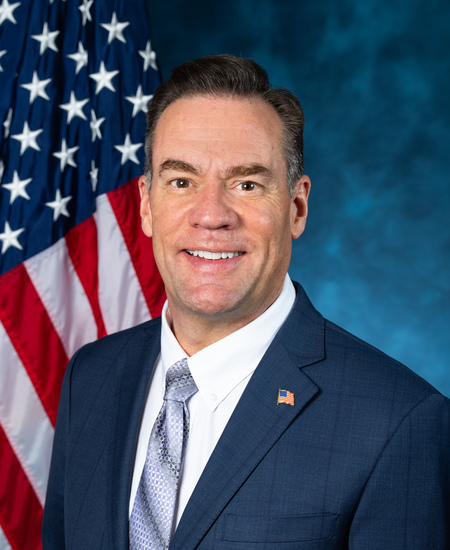
Russ Fulcher
Russ Fulcher House · District 1
R
Strong −
18% 262
Showing 1,581–1,590 of 1,641 bills

All technology bills

in committee · United States · House Nov 12, 2025

HR 6043: MY DATA Act of 2025

The MY DATA Act of 2025 prohibits businesses (referred to as "covered entities") from blocking consumers from using de-identified data (information that cannot be traced back to a person) or cloaked data (unique identifiers that hide a person's identity while enabling communication). It requires covered entities to allow consumers to access or control their data, with enforcement handled by the Federal Trade Commission as an unfair or deceptive practice under existing law. The bill excludes government agencies and specific nonprofits (like those serving missing children cases) from these requirements, focusing on commercial entities that collect personal information.
Sub-Topics Consumer Data Protection Data Privacy Tags Privacy
in committee · United States · House Sep 19, 2025

HR 5511: Algorithmic Accountability Act of 2025

The Algorithmic Accountability Act of 2025 requires companies that deploy complex AI systems making significant decisions (such as those affecting education, employment, healthcare, or financial services) to conduct impact assessments and submit annual reports to the Federal Trade Commission. It applies to companies with over $50 million in annual revenue or those handling information about more than 1 million consumers. Companies must assess potential negative impacts on consumers, including bias, privacy risks, and fairness concerns, and document their findings. The FTC will maintain a public repository of anonymized information from these reports to inform consumers and researchers about how AI systems are being used.
in committee · United States · House Dec 1, 2025

HR 4802: Securing Infrastructure from Adversaries Act of 2025

HR 4802, the Securing Infrastructure from Adversaries Act of 2025, bans the use of federal funds for certain foreign-made LiDAR technology in transportation projects. It prohibits the Secretary of Transportation from procuring, obtaining, or contracting for LiDAR technology from specified "covered foreign countries," "covered LiDAR companies," or "covered LiDAR technology" starting June 30, 2026. Contractors must certify they will not use banned technology, and the Secretary may grant limited waivers for national security reasons, requiring congressional notification. This directly affects transportation infrastructure projects funded by the Department of Transportation, including grants and contracts.
in committee · United States · House Jun 25, 2025

HR 4142: No Adversarial AI Act

HR 4142, the "No Adversarial AI Act," prohibits U.S. federal agencies from acquiring or using artificial intelligence (AI) developed by "foreign adversary entities" as defined by the bill. Within 90 days of enactment, agencies must review and remove such AI from their systems, barring exceptions for scientific research, testing, counterterrorism, or mission-critical functions. The bill requires the Federal Acquisition Security Council to create and regularly update a public list of covered AI within 180 days, with removals possible if entities provide certification. This law directly affects federal agencies managing AI systems and aims to mitigate security risks from foreign-sourced AI technology.
in committee · United States · House Jun 11, 2025

HR 3916: My Body, My Data Act of 2025

This bill, HR 3916 (My Body, My Data Act of 2025), requires businesses and other "regulated entities" to minimize collection and sharing of personal reproductive or sexual health data - such as pregnancy status, contraceptive use, or abortion-related information - and gives individuals specific rights. It mandates that entities provide individuals with easy access to their data, the ability to correct inaccuracies, and the right to request deletion of such information within 15 days. The law also requires clear privacy policies detailing data practices and prohibits retaliation against individuals who exercise these rights, such as charging higher prices or denying services. It applies broadly to most businesses (excluding HIPAA-covered healthcare providers) and is enforced by the FTC with private lawsuits allowed for violations.
passed · United States · House Jul 15, 2025

HR 1766: NTIA Policy and Cybersecurity Coordination Act

HR 1766, the NTIA Policy and Cybersecurity Coordination Act, creates a new Office of Policy Development and Cybersecurity within the National Telecommunications and Information Administration (NTIA). The office, led by an Associate Administrator, will coordinate cybersecurity and privacy policies, promote innovation in communications technologies, and develop market-based strategies for internet access, digital inclusion, and network security. It will conduct studies on public internet usage, foster collaboration between security researchers and service providers, and advise the NTIA on cybersecurity policy matters. This procedural bill establishes a dedicated unit to streamline policy development but does not directly change laws affecting specific groups.
passed · United States · Senate Mar 12, 2025

SJRES 3: A joint resolution providing for congressional disapproval under chapter 8 of title 5, United States Code, of the rule submitted by the Internal Revenue Service relating to "Gross Proceeds Reporting by Brokers That Regularly Provide Services Effectuating Digital Asset Sales".

This joint resolution nullifies the rule titled Gross Proceeds Reporting by Brokers That Regularly Provide Services Effectuating Digital Asset Sales and issued by the Internal Revenue Service (IRS) on December 30, 2024. The rule generally requires persons effectuating decentralized financial (DeFi) transactions to report certain information regarding digital asset sales to the IRS.
in committee · United States · Senate Feb 12, 2026

S 3856: SNAP Data Transparency and Oversight Act of 2026

This bill requires state agencies administering the SNAP program to provide recipient-level data to the U.S. Department of Agriculture upon request. It directly affects state SNAP administrators, mandating they share case file information or program data within 30 days (or sooner for urgent issues) via secure electronic systems. States that fail to comply risk having federal SNAP funds withheld. The law includes privacy safeguards requiring data to be protected under federal privacy laws and allows disclosure only to law enforcement for program oversight or enforcement purposes.
in committee · United States · House Dec 3, 2025

HRES 922: Expressing support for the designation of December 3, 2025, as the "National Day of 3D Printing".

HRES 922 is a symbolic resolution designating December 3, 2025, as "National Day of 3D Printing" to recognize the technology's benefits. It highlights 3D printing's role in reducing manufacturing waste, supporting industries like healthcare and aerospace, and boosting small business innovation. The resolution expresses congressional support for this designation and encourages public promotion of the technology. It does not create new laws, funding, or obligations - only a non-binding expression of support. This resolution directly affects the broader public by raising awareness of 3D printing's economic and industrial significance.
in committee · United States · House Sep 1, 2026

HR 7294: AI for Secure Networks Act

HR 7294, the "AI for Secure Networks Act," requires the Secretary of Commerce to conduct a study on how artificial intelligence (AI) technology impacts telecommunications network security. The study must examine AI's potential to improve security through real-time threat detection, network resiliency, and energy efficiency, as well as its use with Open RAN and virtualized security technologies, while also assessing associated risks. The Secretary must consult with the Federal Communications Commission and industry stakeholders and submit a report with findings and potential recommendations to Congress within one year of the bill's enactment. This bill does not create new regulations or directly affect businesses or consumers; it is a procedural step to gather information about AI's role in securing telecom networks.
Showing 1,581 to 1,590 of 1,641 bills