Issue · Technology

Technology

Every technology bill, vote, and legislator stance in United States, automatically classified by Maddy, our AI policy reader.

Total bills
1,641
119th Congress
Top supporter
Suzan K. DelBene
86% support rate
Top opponent
Scott Perry
14% support rate
Ranked legislators
10
5 support · 5 oppose
Key legislators

Who's moving technology in United States

Legislators moving technology in United States
Legislator Party Stance Support rate Votes
Suzan K. DelBene
Suzan K. DelBene House · District 1
D
Strong +
86% 259
Mike Thompson
Mike Thompson House · District 4
D
Strong +
86% 261
Chrissy Houlahan
Chrissy Houlahan House · District 6
D
Strong +
86% 259
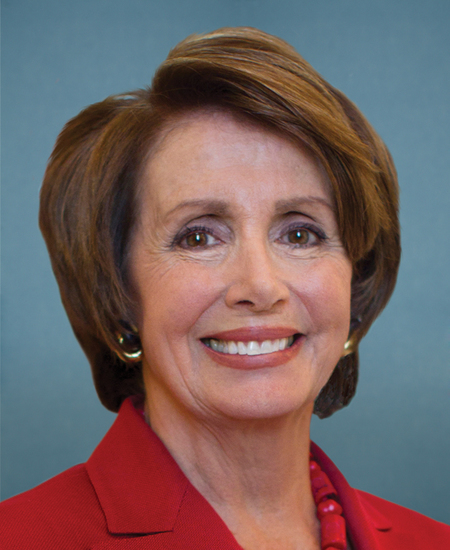
Nancy Pelosi
Nancy Pelosi House · District 11
D
Strong +
86% 246
Kim Schrier
Kim Schrier House · District 8
D
Strong +
86% 261
Scott Perry
Scott Perry House · District 10
R
Strong −
14% 252
AA
Alan Armstrong Senate
R
Strong −
14% 46
Rand Paul
Rand Paul Senate
R
Strong −
16% 223
Andy Harris
Andy Harris House · District 1
R
Strong −
18% 257
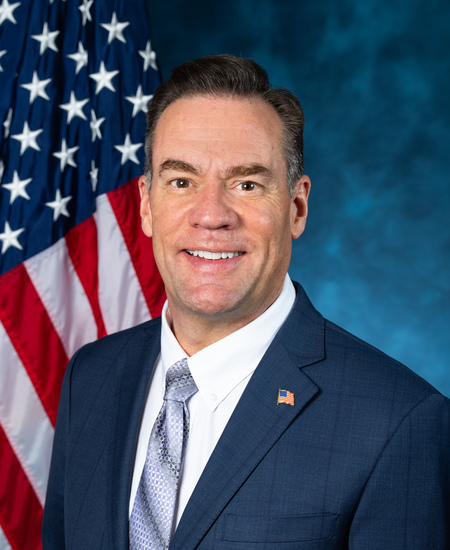
Russ Fulcher
Russ Fulcher House · District 1
R
Strong −
18% 262
Showing 1,591–1,600 of 1,641 bills

All technology bills

in committee · United States · House Jun 24, 2025

HR 4094: Electronic Consent Accountability Act of 2025

This bill requires 16 major federal agencies (including Defense, Health, Homeland Security, and Social Security) to report to Congress within 120 days of enactment on whether they have implemented electronic consent systems as mandated by 2020 OMB guidance (M-21-04). The report must confirm implementation status or detail delays, justifications, and timelines for compliance. It directly affects agencies handling personal data under the Privacy Act by enforcing existing requirements for electronic identity proofing, consent templates on websites, and electronic consent acceptance. The bill focuses on accountability for current OMB guidance, not creating new rules.
in committee · United States · House Apr 9, 2025

HR 2784: Stopping the Theft and Destruction of Broadband Act of 2025

This bill amends federal law (18 U.S.C. § 1362) to explicitly include broadband internet access service infrastructure under protections against destruction. It directly affects entities that operate or damage broadband facilities, such as internet service providers, infrastructure owners, and individuals who might intentionally destroy such infrastructure. Key changes expand the definition of protected "means of communication" to specifically cover broadband facilities and broaden liability to include "any other person or entity" beyond government-controlled systems. The amendment removes the prior exemption for infrastructure used in "military or civil defense functions," ensuring all broadband infrastructure receives equal legal protection. This strengthens existing penalties for damaging broadband networks but does not create new regulatory requirements for service providers.
in committee · United States · House Dec 11, 2025

HR 6253: Algorithmic Transparency and Choice Act

HR 6253 requires online platforms using personalized recommendation systems (like social media or video sites) to provide clear notices and options to minors under 18. It mandates that platforms offer an input-transparent algorithm as the default setting - meaning it doesn’t use hidden user data to curate content - and gives minors the ability to switch algorithms or limit recommendation types. Platforms must also disclose how data is collected, what the system optimizes (e.g., engagement time), and how user-specific data is used. The Federal Trade Commission will enforce these requirements under existing laws, with the bill preempting conflicting state regulations.
Sub-Topics Consumer Data Protection Online Safety Social Media Tags Artificial Intelligence
in committee · United States · House Sep 10, 2025

HRES 694: Expressing the sense of the House of Representatives that the Centers for Medicare & Medicaid Services should halt the pilot program and should not jeopardize seniors' access to critical health care by utilizing artificial intelligence to determine Medicare coverage.

HRES 694 is a non-binding House resolution calling on the Centers for Medicare & Medicaid Services (CMS) to halt a pilot program using artificial intelligence to decide Medicare coverage for medical services. It directly affects seniors who rely on Medicare, as the resolution argues AI-driven coverage decisions could jeopardize their access to critical healthcare. The resolution expresses the House's "sense" that CMS should not proceed with this AI evaluation method, referencing CMS's June 2025 announcement of the pilot. As a resolution, it does not create new law but urges CMS to pause the program.
Sub-Topics Medicaid Medicare Artificial Intelligence Tags Seniors
in committee · United States · House Nov 19, 2025

HR 6159: AI for ALL Act

The AI for ALL Act establishes a federal commission within the Office of Science and Technology Policy to improve public understanding of artificial intelligence. The commission, composed of government officials and experts from education, industry, and research, must develop a national strategy for AI literacy within one year and update it every two years. It will create and distribute free, multilingual educational materials - via a public website and national campaigns - to help Americans learn about AI's basics, evolution, and safe use. These materials aim to enhance public knowledge without imposing new regulations or favoring specific AI technologies.
in committee · United States · House Mar 28, 2025

HR 1838: Broadband Internet for Small Ports Act

HR 1838, the Broadband Internet for Small Ports Act, requires the U.S. Secretary of Agriculture to give equal priority to broadband projects serving rural ports when awarding grants under the Rural Electrification Act. It defines "port" broadly to include harbors, marine terminals, and shore facilities on inland waters, ensuring these areas receive dedicated consideration for broadband funding. The bill mandates verification of unserved communities using FCC data and site testing, and sets aside 1% of funds for oversight. This directly affects rural port operators and communities by prioritizing infrastructure upgrades to improve broadband access for operations like precision agriculture and cargo handling.
Sub-Topics Broadband Access Telecommunications Tags Rural Communities
introduced · United States · Senate Mar 12, 2026

S 4064: Digital Commodity Intermediaries Act

The Digital Commodity Intermediaries Act establishes a regulatory framework for digital commodity exchanges, brokers, and dealers that handle digital assets like cryptocurrencies. It requires these entities to register with the Commodity Futures Trading Commission (CFTC), implement customer protection measures including the use of qualified digital asset custodians, and meet transparency and reporting requirements. The bill defines key terms like "digital commodity" and creates new rules for how these entities must operate, while also establishing an Office of the Digital Commodity Retail Advocate to represent retail investors in digital commodity markets.
in committee · United States · House Apr 2, 2025

HR 2614: Maximum Support Act

HR 2614, the "Maximum Support Act," directs the U.S. government to establish an interagency task force focused on supporting internet freedom in Iran. Key provisions include developing a strategy for secure VPN services, satellite-to-cell technology, and countermeasures against Iranian censorship, while also requiring a plan to ensure U.S. sanctions don't block internet access tools for Iranian citizens. The bill mandates confiscating Iranian government assets to fund support for democratic transition efforts, including humanitarian aid, documentation of human rights abuses, and nonviolent opposition activities. It further requires strategies for diplomatic engagement, intelligence support for Iranian dissidents, and designating Iran's Ministry of Intelligence as a Foreign Terrorist Organization.
Sub-Topics Broadband Access
in committee · United States · House Feb 4, 2025

HR 908: Stop the Censorship Act

HR 908, the "Stop the Censorship Act," would amend Section 230 of the Communications Act to change how online platforms can moderate user content without losing legal immunity. It specifically revises the definition from removing "objectionable" material to only removing "unlawful" material, and adds a new provision stating platforms cannot be shielded for allowing users to restrict access to other content. This bill directly affects online platforms hosting user-generated content, such as social media sites and forums. The key change shifts the standard for immunity from subjective "objectionable" content to legally prohibited "unlawful" content.
Sub-Topics Social Media
in committee · United States · Senate Sep 18, 2025

S 2866: Cybersecurity in Agriculture Act of 2025

This bill establishes five regional cybersecurity centers for the agriculture sector through competitive grants awarded to eligible land-grant universities. These centers will conduct research, develop security tools (like intrusion detection systems), and run training exercises specifically targeting cyber threats from countries including China, Russia, and Iran. The centers must focus on protecting seed agriculture, horticulture, animal agriculture, and supply chains from cyberattacks. The bill authorizes $25 million annually from 2026 to 2030 to fund these centers and their activities.
Sub-Topics Cybersecurity Tags Agriculture
Showing 1,591 to 1,600 of 1,641 bills