Issue · Technology

Technology

Every technology bill, vote, and legislator stance in United States, automatically classified by Maddy, our AI policy reader.

Total bills
1,431
119th Congress
Top supporter
Suzan K. DelBene
86% support rate
Top opponent
Scott Perry
14% support rate
Ranked legislators
10
5 support · 5 oppose
Key legislators

Who's moving technology in United States

Legislators moving technology in United States
Legislator Party Stance Support rate Votes
Suzan K. DelBene
Suzan K. DelBene House · District 1
D
Strong +
86% 259
Mike Thompson
Mike Thompson House · District 4
D
Strong +
86% 261
Chrissy Houlahan
Chrissy Houlahan House · District 6
D
Strong +
86% 259
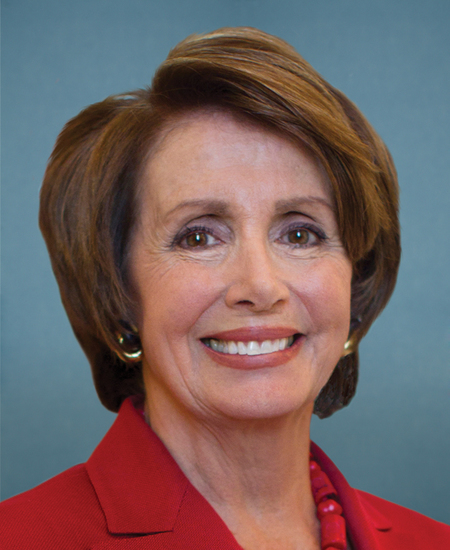
Nancy Pelosi
Nancy Pelosi House · District 11
D
Strong +
86% 246
Kim Schrier
Kim Schrier House · District 8
D
Strong +
86% 261
Scott Perry
Scott Perry House · District 10
R
Strong −
14% 252
AA
Alan Armstrong Senate
R
Strong −
14% 46
Rand Paul
Rand Paul Senate
R
Strong −
16% 223
Andy Harris
Andy Harris House · District 1
R
Strong −
18% 257
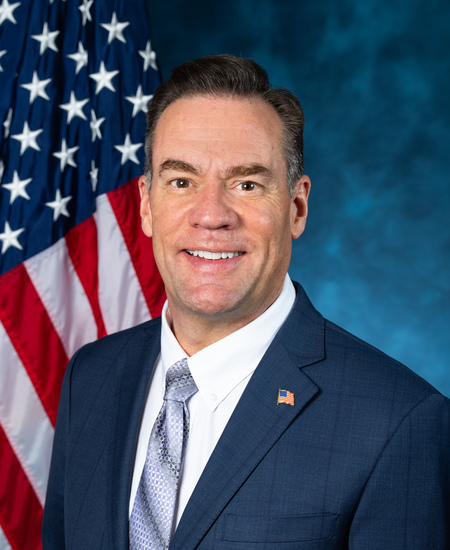
Russ Fulcher
Russ Fulcher House · District 1
R
Strong −
18% 262
Showing 1,371–1,380 of 1,431 bills

All technology bills

in committee · United States · Senate Dec 1, 2025

S 3292: Platform Accountability and Transparency Act

The Platform Accountability and Transparency Act creates a structured process for researchers to access certain platform data for research while protecting user privacy. Platforms with at least 50 million US monthly users must provide specific data to qualified researchers (affiliated with US universities or nonprofits) whose projects are approved by the National Science Foundation and Federal Trade Commission. The bill requires platforms to publicly disclose information about advertising, algorithms, content moderation, and highly disseminated content, while establishing strict privacy and cybersecurity safeguards for the data. It also creates legal protections for platforms and researchers who comply with the law's requirements, ensuring researchers cannot be sued for accessing data through this process.
Sub-Topics Consumer Data Protection Data Privacy Social Media Tags Government Transparency
in committee · United States · Senate Jul 31, 2025

S 2610: Streamlining Rural Broadband Act of 2025

This bill repeals the Community Connect Grant program (established under the Rural Electrification Act of 1936) and redirects its unobligated funds to the existing ReConnect broadband program run by the U.S. Department of Agriculture. It directly affects rural broadband providers and communities that previously relied on Community Connect grants, shifting funding to the ReConnect Program without creating new programs. Key provisions include removing references to the repealed program from other laws and allowing the Secretary of Agriculture to use leftover Community Connect funds for ReConnect loans and grants. The bill streamlines existing funding mechanisms rather than establishing new initiatives.
Sub-Topics Broadband Access Telecommunications Tags Rural Communities
in committee · United States · House Dec 10, 2025

HR 6591: Computer Science for All Act of 2025

This bill authorizes $250 million over five years to fund grants for states, school districts, and eligible Tribal schools to expand computer science education. It requires grantees to provide computer science courses for all high school students within five years, create early access from pre-K through middle school, and implement plans to close equity gaps for underrepresented groups (including minority students, girls, and low-income youth). Grant funds must cover teacher training, high-quality learning materials, and targeted support for underrepresented students, with strict limits on equipment spending (max 15%). Grantees must report annually on student participation data disaggregated by race, gender, and socioeconomic status.
in committee · United States · House Dec 2, 2025

HR 6070: Community Connect Grant Program Act of 2025

This bill amends the Rural Electrification Act to update the Community Connect Grant Program's broadband speed requirements. It raises the minimum downstream speed to 100 Mbps and upstream speed to 20 Mbps for new grants, while increasing existing program standards from 10/1 Mbps to 25/3 Mbps. The bill also extends the program's deadline from 2023 to 2030 and broadens eligibility to include future broadband commitments under other funding programs. These changes directly affect rural communities and providers seeking federal broadband funding under this specific grant program.
Sub-Topics Broadband Access Telecommunications Tags Rural Communities
passed · United States · House Nov 18, 2025

HR 5078: PILLAR Act

The PILLAR Act reauthorizes the CISA State and local cybersecurity grant program through fiscal year 2035, expanding its scope to cover operational technology systems and systems using artificial intelligence. It requires grant recipients to adopt multi-factor authentication and other cybersecurity best practices, with higher federal funding rates (up to 75% for multi-entity groups) if these measures are implemented by October 2027. The bill also mandates outreach to rural and small local governments to ensure equitable access to cybersecurity resources and includes a requirement for GAO reviews of artificial intelligence adoption across funded programs.
passed · United States · House Jan 26, 2026

HR 5764: AI for Main Street Act

HR 5764, the "AI for Main Street Act," amends the Small Business Act to require the Small Business Administration (SBA) to provide guidance and training to small business concerns on using artificial intelligence. It directly affects small businesses by adding new SBA responsibilities to help them evaluate AI for operations, including best practices, cybersecurity, data protection, regulatory compliance, and customer trust. Key provisions mandate the SBA to offer information, training, and outreach on incorporating AI into business processes, such as planning for unexpected circumstances. The bill does not authorize new funding for these activities. It defines "artificial intelligence" using the existing term from the National AI Initiative Act.
Sub-Topics Artificial Intelligence Cybersecurity Data Privacy Tags Small Business
in committee · United States · House Nov 12, 2025

HR 6043: MY DATA Act of 2025

The MY DATA Act of 2025 prohibits businesses (referred to as "covered entities") from blocking consumers from using de-identified data (information that cannot be traced back to a person) or cloaked data (unique identifiers that hide a person's identity while enabling communication). It requires covered entities to allow consumers to access or control their data, with enforcement handled by the Federal Trade Commission as an unfair or deceptive practice under existing law. The bill excludes government agencies and specific nonprofits (like those serving missing children cases) from these requirements, focusing on commercial entities that collect personal information.
Sub-Topics Consumer Data Protection Data Privacy Tags Privacy
in committee · United States · House Sep 19, 2025

HR 5511: Algorithmic Accountability Act of 2025

The Algorithmic Accountability Act of 2025 requires companies that deploy complex AI systems making significant decisions (such as those affecting education, employment, healthcare, or financial services) to conduct impact assessments and submit annual reports to the Federal Trade Commission. It applies to companies with over $50 million in annual revenue or those handling information about more than 1 million consumers. Companies must assess potential negative impacts on consumers, including bias, privacy risks, and fairness concerns, and document their findings. The FTC will maintain a public repository of anonymized information from these reports to inform consumers and researchers about how AI systems are being used.
in committee · United States · House Jun 11, 2025

HR 3916: My Body, My Data Act of 2025

This bill, HR 3916 (My Body, My Data Act of 2025), requires businesses and other "regulated entities" to minimize collection and sharing of personal reproductive or sexual health data - such as pregnancy status, contraceptive use, or abortion-related information - and gives individuals specific rights. It mandates that entities provide individuals with easy access to their data, the ability to correct inaccuracies, and the right to request deletion of such information within 15 days. The law also requires clear privacy policies detailing data practices and prohibits retaliation against individuals who exercise these rights, such as charging higher prices or denying services. It applies broadly to most businesses (excluding HIPAA-covered healthcare providers) and is enforced by the FTC with private lawsuits allowed for violations.
passed · United States · House Jul 15, 2025

HR 1766: NTIA Policy and Cybersecurity Coordination Act

HR 1766, the NTIA Policy and Cybersecurity Coordination Act, creates a new Office of Policy Development and Cybersecurity within the National Telecommunications and Information Administration (NTIA). The office, led by an Associate Administrator, will coordinate cybersecurity and privacy policies, promote innovation in communications technologies, and develop market-based strategies for internet access, digital inclusion, and network security. It will conduct studies on public internet usage, foster collaboration between security researchers and service providers, and advise the NTIA on cybersecurity policy matters. This procedural bill establishes a dedicated unit to streamline policy development but does not directly change laws affecting specific groups.
Showing 1,371 to 1,380 of 1,431 bills