Issue · Healthcare

Healthcare

Every healthcare bill, vote, and legislator stance in United States, automatically classified by Maddy, our AI policy reader.

Total bills
3,150
119th Congress
Top supporter
Darline Graham
100% support rate
Top opponent
Ashley Moody
18% support rate
Ranked legislators
10
5 support · 5 oppose
Key legislators

Who's moving healthcare in United States

Legislators moving healthcare in United States
Legislator Party Stance Support rate Decisive votes
Darline Graham
Darline Graham Senate
R
Strong +
100% 6
AA
Alan Armstrong Senate
R
Strong +
88% 8
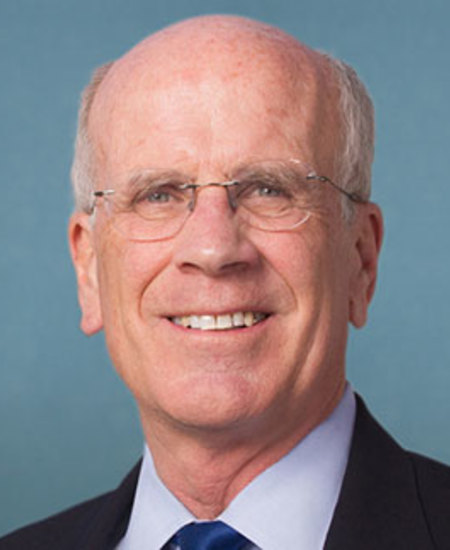
Peter Welch
Peter Welch Senate
D
Strong +
82% 22
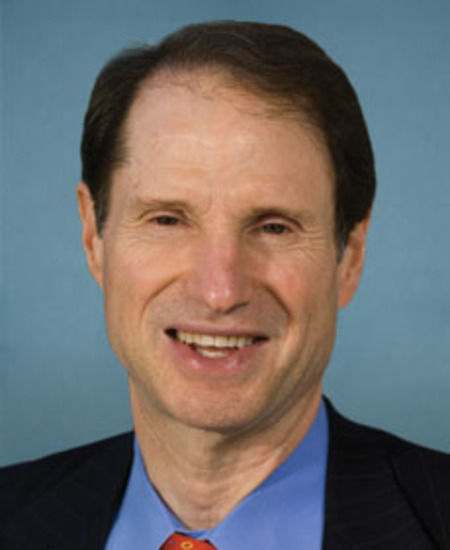
Ron Wyden
Ron Wyden Senate
D
Support
77% 22
Alex Padilla
Alex Padilla Senate
D
Support
76% 21
Ashley Moody
Ashley Moody Senate
R
Strong −
18% 22
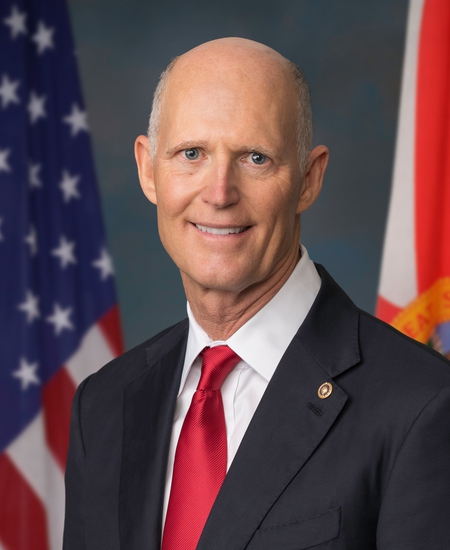
Rick Scott
Rick Scott Senate
R
Strong −
18% 22
Rand Paul
Rand Paul Senate
R
Oppose
23% 22
Brad Knott
Brad Knott House · District 13
R
Oppose
28% 18
Pat Harrigan
Pat Harrigan House · District 10
R
Oppose
28% 18
Showing 2,971–2,980 of 3,150 bills

All healthcare bills

in committee · United States · Senate Sep 4, 2025

S 2710: Open Payments Expansion Act

This bill requires pharmaceutical companies and group purchasing organizations to publicly disclose payments made to patient advocacy groups. Starting March 31, 2027, and annually after, these entities must report the name of the organization and the payment amount to the government. The disclosure covers both direct payments and indirect payments routed through third parties. It directly affects patient advocacy groups that provide education, support, or advocacy for patients with medical conditions, as defined by the bill. The requirement applies to organizations meeting specific IRS 501(c)(3) criteria focused on patient care.
in committee · United States · Senate May 22, 2025

S 1903: A bill to prohibit changes to Medicare and Medicaid in reconciliation.

This bill amends the Congressional Budget Act to explicitly prohibit changes to Medicare and Medicaid through the budget reconciliation process. It modifies Section 310(g) to add specific references to Medicare (Title XVIII) and Medicaid (Title XIX) of the Social Security Act, ensuring these programs are excluded from reconciliation considerations. The key mechanism prevents Congress from using the fast-track budget reconciliation procedure to alter Medicare or Medicaid funding, benefits, or structure. This directly affects congressional budget procedures, not the programs themselves, by restricting how lawmakers can make changes to these healthcare programs.
Sub-Topics Medicaid Medicare
in committee · United States · Senate Feb 20, 2025

S 653: A bill to amend the Internal Revenue Code of 1986 to treat membership in a health care sharing ministry as a medical expense, and for other purposes.

This bill changes the tax code to allow individuals to deduct payments to health care sharing ministries (HCSMs) as medical expenses, similar to traditional health insurance costs. It directly affects people enrolled in HCSMs - groups that share medical costs among members without being regulated as insurance. The bill adds HCSM membership fees and shared medical expenses to the list of deductible medical costs under Section 213(d)(1) of the tax code and clarifies that HCSMs are not treated as health insurance or health plans. These changes would take effect for tax years starting in 2026.
Sub-Topics Insurance
in committee · United States · House Mar 18, 2025

HR 2223: Building Capacity for Care Act

The Building Capacity for Care Act (HR 2223) provides loans, loan guarantees, and grants to help hospitals and mental health/substance use disorder treatment facilities build or improve services. It specifically targets facilities that will increase psychiatric or substance use disorder bed capacity in areas with insufficient services, high overdose death rates, or high suicide rates. Eligible entities must cover at least 25% of project costs from non-federal sources. The bill authorizes up to $200 million annually from fiscal years 2025-2029 for these programs, with grants prioritized for facilities in mental health shortage areas or communities with high rates of overdose deaths or suicides. A new trust fund will be established to support community mental health services using revenues from these programs.
in committee · United States · Senate Jul 31, 2025

SRES 358: A resolution honoring the life of Dr. Paul Farmer by recognizing the duty of the Federal Government to adopt a 21st century global health solidarity strategy and take actions to address past and ongoing harms that undermine the health and well-being of people around the world.

This resolution honors Dr. Paul Farmer's legacy by calling on the U.S. Federal Government to adopt a new global health strategy focused on ending preventable deaths in low-income countries. It proposes concrete actions including increasing annual health funding to $125 billion (to meet international aid targets), supporting health systems through Dr. Farmer's "Five S's" framework (staff, infrastructure, medical tools, governance, and community support), and addressing economic harms like unfair debt and tax evasion that hinder health financing. The resolution specifically targets low- and lower-middle-income countries where health systems face critical resource gaps, citing data showing decades-long delays in reducing mortality rates. It emphasizes aligning aid with national health plans and ensuring medical technologies become global public goods, without proposing binding legislation.
in committee · United States · Senate Mar 19, 2026

S 1784: MAPS Act

The MAPS Act requires the Secretary of Health and Human Services to update and maintain an Essential Medicines List including drugs critical for national security, public health emergencies, chronic conditions, and military readiness. It mandates annual risk assessments identifying supply chain vulnerabilities, particularly drugs sourced over 50% from high-risk foreign suppliers like China, and compiles data on manufacturing locations and shortages. The bill directs HHS to map U.S. pharmaceutical supply chains from raw materials to finished products, using data analytics to identify national security threats, and report findings annually to Congress. This directly affects federal agencies (HHS, Defense), drug manufacturers, and supply chain stakeholders through mandatory reporting and transparency requirements.
in committee · United States · Senate Apr 10, 2025

S 1460: Preserving Patient Access to Accountable Care Act

This bill extends Medicare payment incentives for healthcare providers using alternative payment models, directly affecting Medicare participating doctors and hospitals. It updates specific years in payment formulas from 2026 to 2027 and adjusts the 2027 incentive rate from 1.88% to 3.53%. The key mechanism modifies Medicare payment rules to maintain existing financial incentives through 2028, ensuring continuity for providers participating in these models. The changes are technical amendments to the Social Security Act's Medicare provisions.
Sub-Topics Hospitals Medicare
in committee · United States · House Sep 2, 2025

HR 5081: Telehealth Modernization Act

The Telehealth Modernization Act extends key Medicare telehealth flexibilities through 2027, removing geographic restrictions and allowing audio-only visits. It expands who can provide telehealth services (including nurse practitioners and rural health clinics) and requires new guidance for serving patients with limited English proficiency. The bill also extends certain hospice care provisions and includes virtual diabetes prevention program options. These changes directly affect Medicare beneficiaries, healthcare providers, and telehealth technology companies.
in committee · United States · House Feb 21, 2025

HR 1509: Accelerating Kids’ Access to Care Act of 2025

This bill would require states to create a simplified process for out-of-state healthcare providers to join Medicaid and CHIP programs. Qualified providers (those already enrolled in Medicare or another state's program with low fraud risk) could enroll without excessive screening and would be approved for five years. It directly affects children under 21 enrolled in Medicaid or CHIP by expanding access to providers outside their state, particularly in underserved areas. The change applies to all states' Medicaid programs but takes effect three years after enactment.
in committee · United States · Senate Jan 28, 2026

SRES 590: A resolution designating January 23, 2026, as "Maternal Health Awareness Day".

SRES 590 designates January 23, 2026, as "Maternal Health Awareness Day" to highlight ongoing challenges in maternal health care. The resolution aims to raise public awareness about preventable pregnancy-related deaths, severe maternal morbidity, and racial disparities - such as Black women facing over three times higher pregnancy-related mortality rates than White women - while encouraging federal, state, and community action. It does not create new laws or funding but calls for recognizing these issues and supporting existing initiatives like expanded postpartum Medicaid coverage and maternal mortality review committees. This symbolic gesture targets broad audiences including healthcare providers, policymakers, and the public to promote equitable care.
Showing 2,971 to 2,980 of 3,150 bills