Issue · Healthcare

Healthcare

Every healthcare bill, vote, and legislator stance in United States, automatically classified by Maddy, our AI policy reader.

Total bills
3,150
119th Congress
Top supporter
Darline Graham
100% support rate
Top opponent
Ashley Moody
18% support rate
Ranked legislators
10
5 support · 5 oppose
Key legislators

Who's moving healthcare in United States

Legislators moving healthcare in United States
Legislator Party Stance Support rate Decisive votes
Darline Graham
Darline Graham Senate
R
Strong +
100% 6
AA
Alan Armstrong Senate
R
Strong +
88% 8
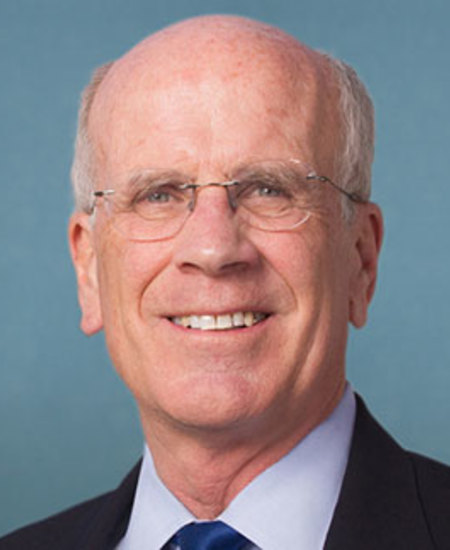
Peter Welch
Peter Welch Senate
D
Strong +
82% 22
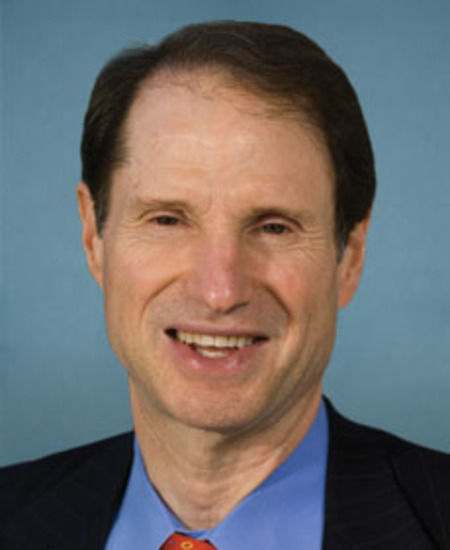
Ron Wyden
Ron Wyden Senate
D
Support
77% 22
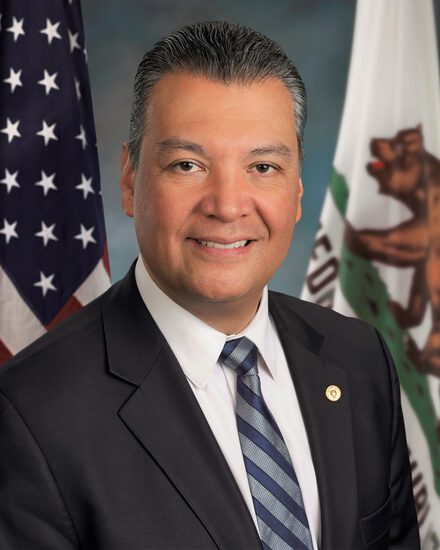
Alex Padilla
Alex Padilla Senate
D
Support
76% 21
Ashley Moody
Ashley Moody Senate
R
Strong −
18% 22
Rick Scott
Rick Scott Senate
R
Strong −
18% 22
Rand Paul
Rand Paul Senate
R
Oppose
23% 22
Brad Knott
Brad Knott House · District 13
R
Oppose
28% 18
Pat Harrigan
Pat Harrigan House · District 10
R
Oppose
28% 18
Showing 2,871–2,880 of 3,150 bills

All healthcare bills

in committee · United States · House Feb 26, 2026

HR 7727: Sustaining Rural Healthcare Act

HR 7727, the Sustaining Rural Healthcare Act, creates a new "Critical Access in Character" designation to help rural hospitals facing closure risk maintain Medicare reimbursement rates. It allows the Secretary of Health and Human Services to designate qualifying hospitals (located in rural areas, serving underserved communities, with high Medicare use, and at risk of reduced services) as eligible for payment rates equivalent to Critical Access Hospitals (CAHs). Hospitals receive this designation for up to three years to stabilize financially and operationally, with renewal possible only for good cause. The bill directly affects rural hospitals at risk of closing, ensuring continued access to essential health services for patients in those communities. This policy change modifies Medicare reimbursement rules without altering existing CAH status.
Sub-Topics Hospitals Medicare Telehealth Tags Rural Communities
in committee · United States · House Feb 25, 2026

HRES 1081: Raising awareness for the sarcoma cancer chordoma.

HRES 1081 is a symbolic resolution (not a law) introduced in the U.S. House of Representatives to raise awareness about chordoma, a rare bone cancer affecting the skull and spine. It states the House's "sense" that chordoma patients need increased funding and support for four specific areas: accurate early diagnosis, new treatments and cures, faster translation of research into therapies, and patient-focused drug development. The resolution highlights chordoma's challenges - such as high recurrence rates, limited treatment options, and no known curative drugs - impacting roughly 300 people annually in the U.S. and over 25,000 globally. As a non-binding resolution, it does not create new laws or allocate funds but formally expresses congressional support for addressing this disease.
in committee · United States · Senate Aug 1, 2025

S 2650: DOCTORS Act

S 2650, the DOCTORS Act, requires state health agencies to report unused J-visa waivers allowing foreign doctors to stay in the U.S. after training. Starting in 2026, the Secretary of State will redistribute 1/3 of these unused waivers as "supplemental waivers" to states that used at least 30 waivers the previous year. Ten percent of these supplemental waivers must be allocated to medical facilities serving patients in medically underserved communities. The bill directly affects state health agencies managing visa waivers and aims to increase access to healthcare in underserved areas by reducing wasted visa slots.
in committee · United States · House Mar 12, 2026

HCONRES 78: Expressing support for the recognition of March 10, 2026, as "Abortion Provider Appreciation Day".

HCONRES 78 is a symbolic resolution designating March 10, 2026, as "Abortion Provider Appreciation Day" to honor abortion providers and staff. It recognizes their work amid rising violence, clinic closures, and abortion restrictions following the Dobbs decision, citing threats and challenges faced by providers. The resolution expresses congressional support for providers' safety and access to abortion care, condemning policies that restrict access. It does not create new laws or alter existing policies - it solely affirms Congress’s stance through a symbolic gesture. This is a procedural resolution focused on recognition, not policy change.
in committee · United States · Senate Sep 16, 2025

S 2824: A bill to amend the Internal Revenue Code of 1986 to extend the temporary enhanced premium credits.

This bill extends the temporary enhanced premium tax credits for health insurance under the Affordable Care Act through 2028, instead of ending in 2026. It directly affects individuals purchasing health insurance through state or federal marketplaces who qualify for these credits based on income (up to 400% of the federal poverty level). The key change updates specific dates in tax law to align the credit period with 2028, while maintaining the same income eligibility rules. The extension applies to tax years beginning after December 31, 2025.
in committee · United States · Senate Jun 11, 2025

S 2035: Protect IVF Act

S 2035, the "Protect IVF Act," establishes federal rights to access and provide fertility treatment, including IVF, under widely accepted medical standards defined by the American Society for Reproductive Medicine. It directly affects patients seeking fertility care, health care providers offering IVF services, health insurance issuers covering such care, and manufacturers of fertility-related drugs or devices. The bill preempts state laws that restrict IVF access in ways inconsistent with medical standards - such as mandating unnecessary procedures, limiting telemedicine, or imposing discriminatory barriers - and allows federal court enforcement against violating state actions. This focuses on protecting existing access rather than creating new benefits or altering insurance coverage requirements.
Sub-Topics Insurance Telehealth
in committee · United States · House Mar 11, 2025

HR 2062: To amend the Internal Revenue Code of 1986 to treat membership in a health care sharing ministry as a medical expense, and for other purposes.

HR 2062 would allow taxpayers to deduct membership fees and medical expenses paid through health care sharing ministries (HCSMs) as medical expenses on their federal tax returns, similar to other health costs. It specifically adds HCSM membership to the list of deductible medical expenses under Internal Revenue Code Section 213(d)(1) and clarifies that HCSMs are not treated as health insurance under Section 7702C. This change directly affects individuals enrolled in HCSMs, which are faith-based or community-based cost-sharing groups operating outside traditional insurance. The bill would take effect for tax years beginning after December 31, 2025.
Sub-Topics Insurance
in committee · United States · Senate Dec 18, 2025

S 3560: Closing the Contraception Coverage Gap Act

The Closing the Contraception Coverage Gap Act requires Medicare Part B, Part C, and Part D to cover all FDA-approved contraceptive items and services at no cost-sharing starting January 1, 2027. This includes not just contraceptive methods themselves but also related clinical services like counseling, examinations, device insertion, and follow-up care. The bill ensures dual-eligible Medicare and Medicaid beneficiaries receive contraceptive coverage that matches Medicaid's comprehensiveness. It also mandates two studies on contraceptive coverage gaps, with reports to Congress within 1-2 years.
in committee · United States · Senate Dec 17, 2025

S 3549: PBM FAIR Act

This bill reclassifies pharmacy benefit managers (PBMs) as fiduciaries under federal law, requiring them to act in the best interest of group health plans they serve. It mandates PBMs to disclose all compensation sources (including rebates and fees) and prohibits them from shielding themselves from liability for breaches of duty. The law directly affects PBMs, employers offering health plans, and health insurers that use PBM services. Key provisions include new transparency rules, clarifying that PBMs cannot be the "responsible fiduciary" for disclosure purposes, and banning contracts that exempt PBMs from accountability.
Sub-Topics Prescription Drugs
in committee · United States · Senate Jun 12, 2025

S 2072: MORE Savings Act

The MORE Savings Act eliminates copays and deductibles for opioid treatment under Medicare, private health plans, and Medicaid. It requires Medicare beneficiaries to have no out-of-pocket costs for opioid treatment drugs, behavioral health services, and recovery support (like peer counseling and transportation). Private health plans must cover these services without cost-sharing starting in 2027, and Medicaid states get a 90% federal match for medication-assisted treatment. The bill directly affects Medicare beneficiaries, private insurance enrollees, and Medicaid recipients seeking opioid use disorder treatment.
Showing 2,871 to 2,880 of 3,150 bills