Issue · Environment

Environment

Every environment bill, vote, and legislator stance in United States, automatically classified by Maddy, our AI policy reader.

Total bills
2,003
119th Congress
Top supporter
Aisha Wahab
100% support rate
Top opponent
Marsha Blackburn
11% support rate
Ranked legislators
10
5 support · 5 oppose
Key legislators

Who's moving environment in United States

Legislators moving environment in United States
Legislator Party Stance Support rate Decisive votes
Aisha Wahab
Aisha Wahab House · District 14
D
Strong +
100% 7
Everton Blair Jr.
Everton Blair Jr. House · District 13
D
Strong +
89% 9
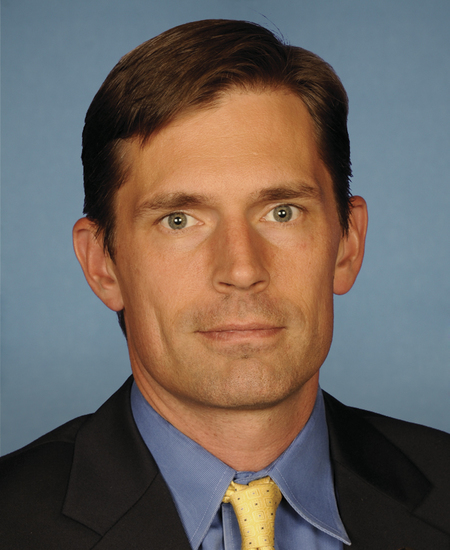
Martin Heinrich
Martin Heinrich Senate
D
Strong +
84% 37
Adam B. Schiff
Adam B. Schiff Senate
D
Support
79% 53
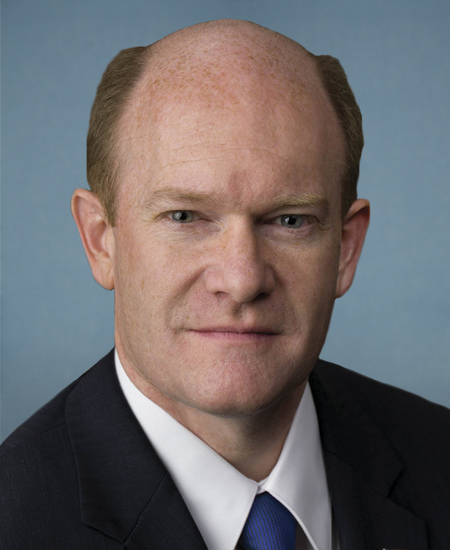
Christopher A. Coons
Christopher A. Coons Senate
D
Support
79% 52
Marsha Blackburn
Marsha Blackburn Senate
R
Strong −
11% 36
Ted Budd
Ted Budd Senate
R
Strong −
20% 40
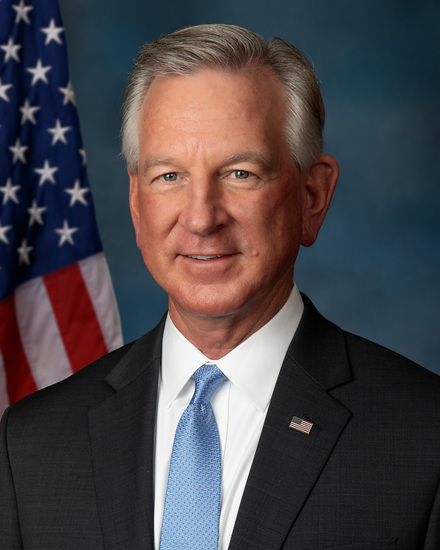
Tommy Tuberville
Tommy Tuberville Senate
R
Oppose
21% 53
Bill Cassidy
Bill Cassidy Senate
R
Oppose
22% 54
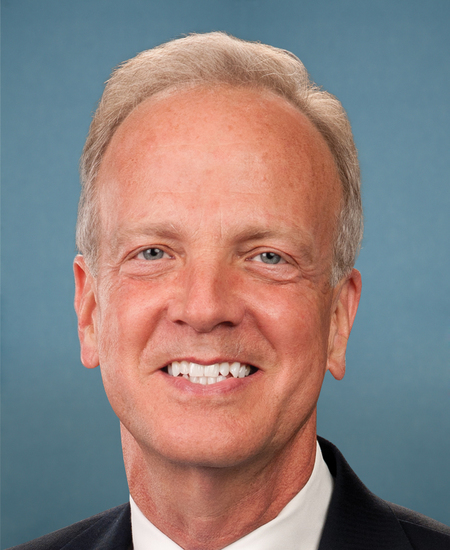
Jerry Moran
Jerry Moran Senate
R
Oppose
23% 53
Showing 1,161–1,170 of 2,003 bills

All environment bills

in committee · United States · House Jun 12, 2025

HR 3948: Offshore Pipeline Safety Act

HR 3948, the Offshore Pipeline Safety Act, requires owners of offshore oil and gas pipelines to conduct third-party inspections every two years and install continuous leak detection systems. It mandates a study comparing environmental risks of leaving pipelines decommissioned in place versus removing them, with findings due within 18 months. The bill also creates an annual fee ($1,000-$10,000 per mile depending on water depth) to fund pipeline removal if owners go bankrupt, and requires ongoing monitoring of decommissioned pipelines. These provisions directly affect pipeline operators on the Outer Continental Shelf, focusing on safety, environmental protection, and financial responsibility.
in committee · United States · Senate Sep 17, 2026

S 3732: Water Security and Drought Resilience Act

This bill authorizes federal funding to support water storage projects in western states (Reclamation States) to improve water security. It creates two main programs: one for small surface and groundwater storage projects (200-30,000 acre-feet for surface, 200-150,000 acre-feet for groundwater) and another for "natural" projects using natural methods like aquifer recharge ($15 million annually for 2027-2031). Eligible applicants include states, tribes, water districts, and local entities, with projects requiring Federal cost-sharing up to 90%. Funding must be distributed across multiple Reclamation States, and the bill explicitly states it doesn’t override state water rights or laws.
Sub-Topics Drinking Water
in committee · United States · House Jan 13, 2026

HR 5196: Protect Our Farmers and Families Act of 2025

This bill bans the pesticide diquat by requiring the EPA to cancel all its registrations, prohibit sales of existing stock, and revoke food residue allowances. It directly affects farmers who use diquat for crop management and food producers who must comply with new residue limits. Key mechanisms include the EPA permanently removing diquat from the market under existing federal law, with no future reregistration allowed. The bill implements these changes immediately upon enactment, targeting environmental and food safety concerns tied to diquat use.
Tags Agriculture
in committee · United States · Senate Feb 6, 2025

S 449: Expediting Forest Restoration and Recovery Act of 2025

S 449, the Expediting Forest Restoration and Recovery Act of 2025, streamlines forest restoration projects by modifying environmental review rules for the U.S. Forest Service. It directs the Forest Service to use categorical exclusions (avoiding full environmental reviews) for hazardous fuel and insect/disease risk reduction projects in designated "insect and disease treatment areas," provided the areas are suitable for timber production or lack timber harvest prohibitions. The bill also requires states to prioritize wildfire/insect risk reduction in these areas and mandates annual public reporting on treated acreage. This primarily affects Forest Service operations and state agencies managing projects under the "Good Neighbor Authority" program, which allows states to use timber sale revenue for additional restoration work.
Sub-Topics Conservation Forestry
in committee · United States · Senate Jan 27, 2026

S 3694: Maximizing Transportation Efficiency Act

S 3694, the Maximizing Transportation Efficiency Act, allocates $20 million annually in dedicated grants to fund transportation demand management (TDM) strategies in rural communities. It directly affects rural residents - particularly elderly, disabled, and low-income households - who face limited transit access, high transportation costs, and barriers to jobs/services. The bill modifies existing transportation grant programs to include TDM projects like carpool/vanpool systems, real-time travel apps, rural mobility hubs, and employer incentive programs. Funds must support activities such as developing TDM plans, marketing shared transit options, and deploying technology to reduce congestion. The legislation aims to improve rural mobility by expanding affordable, efficient transportation alternatives beyond car dependency.
Sub-Topics Electric Vehicles Rail Roads & Highways Tags Rural Communities
in committee · United States · Senate Feb 20, 2025

S 651: Unplug the Electric Vehicle Charging Stations Programs Act

This bill repeals two federal programs that provided funding for electric vehicle (EV) charging infrastructure. It eliminates the grant program for charging/fueling stations under the Infrastructure Investment and Jobs Act and terminates the National Electric Vehicle Infrastructure Formula Program. The bill specifically removes authorization for new grants, cancels unspent funds, and prohibits future use of federal money for these programs. As a result, the federal government will no longer fund or support the development of EV charging networks through these specific mechanisms.
in committee · United States · Senate Jan 16, 2025

S 109: Offshore Energy Security Act of 2025

Offshore Energy Security Act of 2025 This bill directs the Department of the Interior to conduct two offshore oil and gas lease sales per year for 10 years in the Gulf of Mexico Region Program Area, places a moratorium on oil and gas leases in certain areas, and establishes related requirements. Interior must offer at least 74 million acres for each offshore lease sale in such region. The bill stipulates the terms and conditions of such leases. Interior must also carry out the lease sales in accordance with the Record of Decision approved by Interior on January 17, 2017. Interior may waive certain requirements under the National Outer Continental Shelf Oil and Gas Leasing Program that would delay final approval of those lease sales. In addition, the bill prohibits such lease sales from being invalidated as a result of lawsuits relating to environmental reviews under the National Environmental Policy Act of 1969. It also limits delays to the lease sales as a result of the lawsuits. Finally, the bill extends through 2035 a moratorium on oil and gas leasing in (1) any area east of the Military Mission Line in the Gulf of Mexico; (2) any area in the Eastern Planning Area that is within 125 miles of Florida's coastline; and (3) certain areas in the Central Planning Area, including specified areas along Florida's coastline. It also places a moratorium through 2035 on oil and gas leasing in the South Atlantic Planning Area or the Straits of Florida Planning Area.
in committee · United States · House Jan 28, 2025

HR 815: Brownfields Redevelopment Tax Incentive Reauthorization Act of 2025

HR 815 extends a tax incentive allowing businesses to deduct costs for cleaning up contaminated "brownfield" properties (like old factories or gas stations) from their taxes. It directly affects developers and property owners who remediate these sites, reducing their tax burden for cleanup work. The bill updates the tax code to let these deductions apply to costs paid or incurred between 2012-2024 and again after 2028, with the new period starting January 1, 2025. This provides continued financial support for redeveloping underutilized, polluted land.
Sub-Topics Tax Incentives Hazardous Materials Tags Economic Development
in committee · United States · House Sep 8, 2025

HR 5171: Pacific Northwest Gray Wolves Relief Act of 2025

The Pacific Northwest Gray Wolves Relief Act of 2025 requires the Secretary of the Interior to reissue a 2020 federal rule that removed gray wolves from the endangered species list. This reissued rule would apply exclusively to gray wolf populations in Oregon and Washington, ending federal protections for wolves in those states. The bill mandates this reissuance within 60 days of enactment, directly affecting gray wolf management in Oregon and Washington. As a result, gray wolves in these states would no longer be classified as federally endangered under the Endangered Species Act.
Sub-Topics Wildlife
in committee · United States · House Sep 10, 2025

HR 5089: Weather Act Reauthorization Act of 2025

# Summary of the Weather Act Reauthorization Act of 2025 This comprehensive legislation reauthorizes and modernizes the National Oceanic and Atmospheric Administration's (NOAA) weather and climate programs through 2030, with several key focuses: ## Core Program Reauthorizations - **Commercial Data Program** ($100M annually): Establishes a formal program to acquire weather/environmental data from private sector entities, including standards, prioritization, and data assimilation practices - **Commercial Data Pilot Program** (15% of Commercial Data Program funds): Tests and evaluates private sector data for use in NOAA operations - **Advanced Weather Interactive Processing System**: Requires transition to cloud-based operations by 2030 to enable more flexible workforce ## Hazard Communication Improvements - **Hazardous Weather Risk Communication Program**: Focuses on simplifying and improving communication of weather hazards through social, behavioral, and risk science research - **Post-Storm Surveys**: Requires systematic surveys after significant weather events, with emphasis on vulnerable populations - **NOAA Weather Radio Modernization**: Expands coverage, enhances reliability, and transitions to internet protocol-based communications ## Operational Modernization - **National Weather Service Workforce**: Includes hiring assessments, health/morale evaluations, and designation of service hydrologists - **Aviation Weather Program**: Enhances turbulence forecasting, data acquisition, and coordination with the Federal Aviation Administration - **Data Management**: Establishes consistent data standards, infrastructure, and sharing practices across NOAA ## Specialized Programs - **Atmospheric Rivers Forecast Improvement Program**: Focuses on improving forecasts of atmospheric rivers that impact the western U.S. - **Coastal Flooding and Storm Surge Program**: Improves coastal inundation forecasting and warning systems - **National Integrated Drought Information System**: Enhances drought monitoring and forecasting capabilities - **National Mesonet Program**: Expands environmental observation networks across the U.S., with 15% of funds for financial assistance to state/local entities - **National Coordinated Soil Moisture Monitoring Network**: Supports soil moisture monitoring for agricultural and drought management - **Precipitation Forecast Improvement Program**: Aims to improve precipitation forecasting across all timescales ## Funding The bill authorizes significant funding across these programs, with annual appropriations ranging from $10M to $70M depending on the program, for fiscal years 2026-2030. The legislation represents a major effort to modernize NOAA's infrastructure, improve weather communication to the public, and better integrate commercial data sources while maintaining NOAA's leadership in weather and climate science.
Showing 1,161 to 1,170 of 2,003 bills