Issue · Budget & Taxes

Budget & Taxes

Every budget & taxes bill, vote, and legislator stance in United States, automatically classified by Maddy, our AI policy reader.

Total bills
2,411
119th Congress
Top supporter
Clay Fuller
87% support rate
Top opponent
Eleanor Holmes Norton
0% support rate
Ranked legislators
10
5 support · 5 oppose
Key legislators

Who's moving budget & taxes in United States

Legislators moving budget & taxes in United States
Legislator Party Stance Support rate Decisive votes
Clay Fuller
Clay Fuller House · District 14
R
Strong +
87% 46
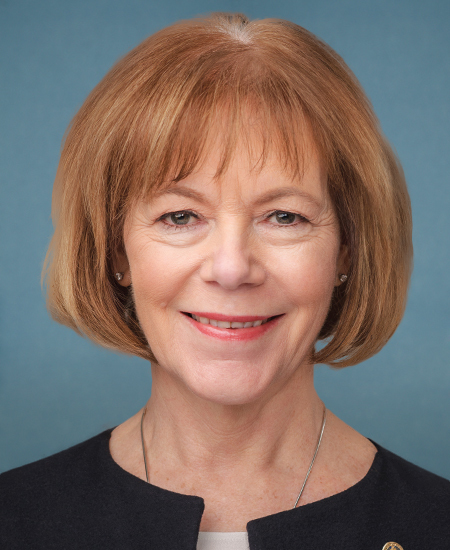
Tina Smith
Tina Smith Senate
D
Strong +
83% 77
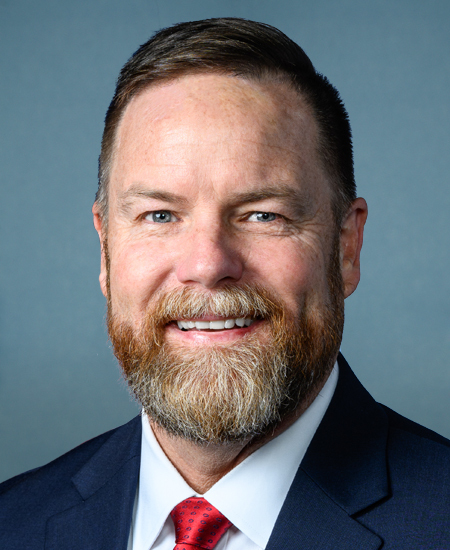
Andrew Ogles
Andrew Ogles House · District 5
R
Strong +
83% 65
Aaron Bean
Aaron Bean House · District 4
R
Strong +
83% 69
Ben Cline
Ben Cline House · District 6
R
Strong +
83% 69
Eleanor Holmes Norton
Eleanor Holmes Norton House · District At-Large
D
Strong −
0% 26
Pablo José Hernández
Pablo José Hernández House · District At-Large
D
Strong −
7% 28
Analilia Mejia
Analilia Mejia House · District 11
D
Strong −
13% 45
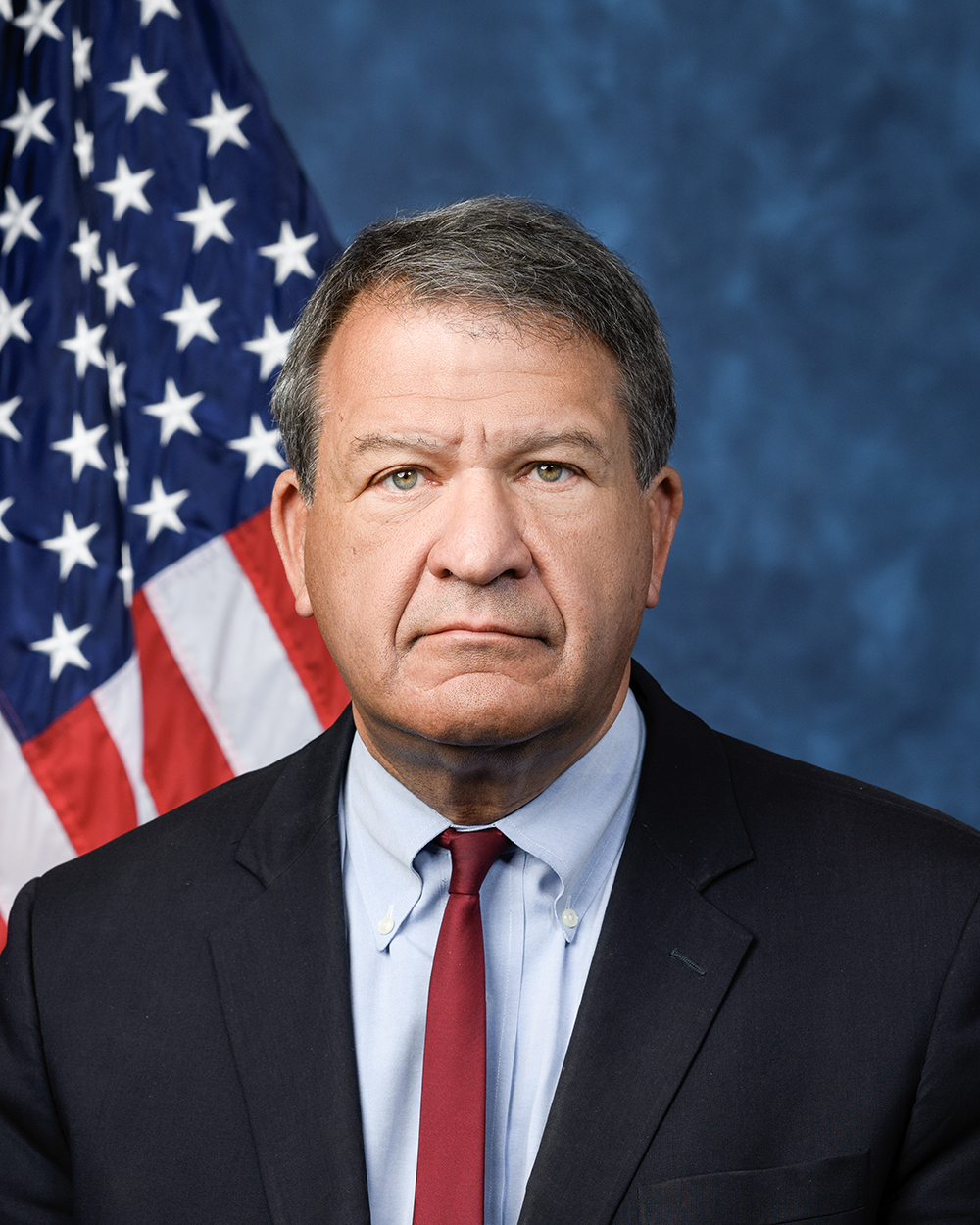
George Latimer
George Latimer House · District 16
D
Strong −
13% 67
Gregory W. Meeks
Gregory W. Meeks House · District 5
D
Strong −
14% 66
Showing 1,921–1,930 of 2,411 bills

All budget & taxes bills

in committee · United States · Senate Jul 21, 2026

S 3524: American Battlefield Protection Program Amendments Act of 2025

This bill reauthorizes and modifies the American Battlefield Protection Program through 2035, extending funding deadlines and increasing grant percentages for battlefield preservation. It raises the maximum federal share for battlefield acquisition, interpretation, and restoration grants from 50% to 75% and sets a $2 million annual appropriation for these programs. The bill also mandates new studies to identify, assess, and propose preservation options for sites tied to the French and Indian War (1754-1763) and Mexican-American War (1846-1848), requiring consultation with states, tribes, and preservation groups. The studies must be completed within two years and reported to Congress, focusing on site significance, threats, and potential preservation strategies.
Sub-Topics Appropriations
in committee · United States · House Jan 15, 2026

HR 6637: To advance bipartisan priorities.

This bill establishes a carbon tax on fossil fuel emissions starting at $35 per metric ton in 2027, with annual increases tied to inflation. It creates the Rebuilding Infrastructure and Solutions for the Environment (RISE) Trust Fund to distribute tax revenues toward infrastructure projects, climate adaptation, energy sector worker retraining, and carbon capture research. The bill also establishes a National Climate Commission to set emissions reduction goals and assess federal climate policies, while implementing border adjustments to prevent carbon leakage for imported goods. Additional sections address cancer research funding, PFAS contamination at defense sites, voting rights for unaffiliated voters, and restrictions on financial transactions for House members.
in committee · United States · House Sep 18, 2025

HR 5493: USA Workforce Investment Act

HR 5493, the USA Workforce Investment Act, creates a federal tax credit for individual taxpayers who donate cash to approved workforce development or apprenticeship training programs. It directly affects U.S. individual taxpayers who contribute to qualifying 501(c)(3) organizations listed under the Workforce Innovation and Opportunity Act. The bill allows a credit of up to $1,700 per year for such donations, with adjustments for state tax credits and a prohibition on double-deducting the same contribution. Unused credit can be carried forward for up to five years.
in committee · United States · House Oct 6, 2025

HR 5695: No Taxation Without Operation Act

This bill suspends federal income tax collection for most wage-earning citizens during any government shutdown (partial or full), meaning no taxes, penalties, or interest accrue on individual income tax payments or returns during that period. It specifically exempts backpay for furloughed federal employees or contractors (under the Government Employee Fair Treatment Act of 2019) from federal income taxation. The Treasury Department must issue guidelines to help employers comply with these tax suspensions for all covered workers, including tipped, hourly, and salaried employees. The law directly affects ordinary wage earners and furloughed federal workers during shutdowns, creating a temporary tax freeze.
Sub-Topics Income Tax
in committee · United States · House Apr 30, 2025

HR 3118: No Tax on Overtime Act

HR 3118, the "No Tax on Overtime Act," creates a new tax deduction for workers who earn overtime pay under the Fair Labor Standards Act (FLSA). It allows taxpayers to deduct up to $100 per 100 hours of overtime (capped at 300 hours yearly) from their taxable income, with a phaseout for higher earners ($100 reduction for every $1,000 over $100,000 AGI). Employers must report overtime amounts on W-2 forms, and taxpayers must include the recipient’s Social Security number to claim the deduction. The deduction applies to tax years beginning after December 31, 2024.
in committee · United States · Senate Jul 24, 2025

S 2436: Healthy H2O Act

The Healthy H2O Act (S 2436) creates a federal grant program to help rural households, renters, small multi-unit property owners (up to 25 units), and licensed child-care facilities with contaminated drinking water. It provides funding for certified point-of-use or point-of-entry water filters, installation by qualified professionals, maintenance, and water testing - targeting contaminants like lead, arsenic, PFAS, and hexavalent chromium. Grants are limited to households with income below 150% of their state’s rural median income and prioritize private well users. The program requires third-party certification for products and installers, mandates annual reporting on water quality trends, and allocates $10 million annually for fiscal years 2026-2030.
Sub-Topics Drinking Water Water Quality Tags Rural Communities
in committee · United States · Senate May 21, 2025

S 1839: Generating Retirement Ownership through Long-Term Holding

This bill allows individual investors to defer paying taxes on capital gains from mutual fund dividends when they automatically reinvest those dividends through a dividend reinvestment plan. The deferred tax is triggered only when the investor sells shares or dies, rather than at the time of dividend receipt. It applies to most individual investors in regulated investment companies (like mutual funds) but excludes dependents and estates. The bill also adjusts holding period rules for reinvested shares, treating them as held for one year and a day from the date of reinvestment.
in committee · United States · House Jan 15, 2026

HR 6636: To advance sensible priorities.

HR 6636, "To advance sensible priorities," primarily establishes a carbon tax on greenhouse gas emissions from fossil fuels, starting at $35 per metric ton of carbon dioxide equivalent in 2027 with annual increases tied to inflation. The tax revenue would fund infrastructure projects, climate adaptation programs, and worker assistance programs, while border tax adjustments would apply to imports and exports of greenhouse gas-intensive products. The bill directly affects fossil fuel producers, manufacturers, and importers of greenhouse gas-intensive goods through this tax mechanism. It also includes additional titles addressing cancer research funding, PFAS contamination response, sanctions on Russia, school safety improvements, voting reforms, and veteran benefits.
in committee · United States · Senate Sep 11, 2025

S 2791: SEED Act

The SEED Act expands tax deductions for educators by including early childhood educators (such as preschool teachers) in the existing educator expense deduction. It modifies Section 62 of the Internal Revenue Code to replace "elementary and secondary" with "early childhood, elementary, and secondary" in the deduction's description and to explicitly add "early childhood" educators to the eligibility criteria. This change allows early childhood educators to deduct work-related expenses like classroom supplies on their federal tax returns, similar to K-12 teachers. The updated provisions apply to expenses incurred in taxable years beginning after December 31, 2025.
in committee · United States · Senate Dec 10, 2025

S 1991: Delivering On Government Efficiency in Spending Act

This bill requires federal agencies to report detailed payment information - including the purpose, funding source, and payment type - to the Treasury before disbursing funds. It mandates agencies to verify recipient bank account details and cross-check payment records to prevent errors or fraud. The Treasury gains access to databases like the National Directory of New Hires and tax/Social Security data (with privacy safeguards) to identify and recover improper payments. These requirements apply to all agencies using Treasury payment systems, aiming to improve transparency and reduce wasteful spending.
Showing 1,921 to 1,930 of 2,411 bills