Issue · Budget & Taxes

Budget & Taxes (Tax Credits)

Every budget & taxes bill, vote, and legislator stance in United States, automatically classified by Maddy, our AI policy reader.

Total bills
420
119th Congress
Top supporter
Adam B. Schiff
100% support rate
Top opponent
Ashley Moody
0% support rate
Ranked legislators
10
5 support · 5 oppose
Key legislators

Who's moving tax credits in United States

Legislators moving tax credits in United States
Legislator Party Stance Support rate Decisive votes
Adam B. Schiff
Adam B. Schiff Senate
D
Strong +
100% 10
Alex Padilla
Alex Padilla Senate
D
Strong +
100% 10
Amy Klobuchar
Amy Klobuchar Senate
D
Strong +
100% 10
Andy Kim
Andy Kim Senate
D
Strong +
100% 10
Angela D. Alsobrooks
Angela D. Alsobrooks Senate
D
Strong +
100% 10
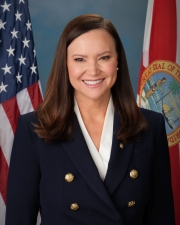
Ashley Moody
Ashley Moody Senate
R
Strong −
0% 10
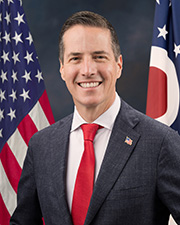
Bernie Moreno
Bernie Moreno Senate
R
Strong −
0% 10
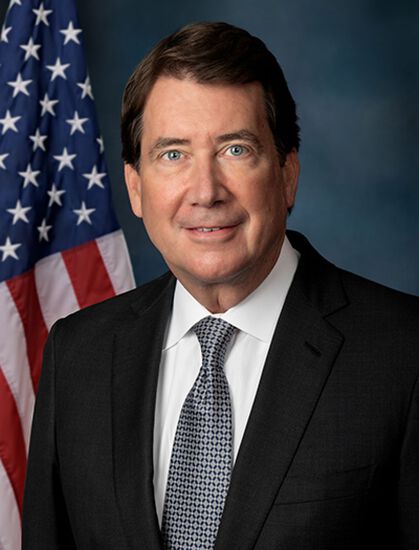
Bill Hagerty
Bill Hagerty Senate
R
Strong −
0% 10
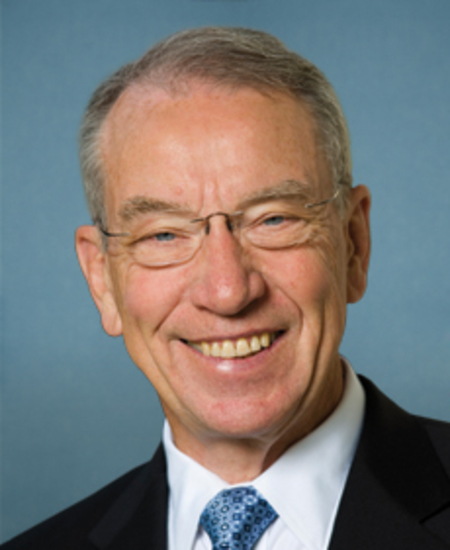
Chuck Grassley
Chuck Grassley Senate
R
Strong −
0% 10
Cindy Hyde-Smith
Cindy Hyde-Smith Senate
R
Strong −
0% 10
Showing 171–180 of 420 bills

All budget & taxes bills

in committee · United States · House Jun 25, 2025

HR 4128: CIRCUIT Act

The CIRCUIT Act (HR 4128) adds a 10% federal tax credit to the Advanced Manufacturing Production Credit for manufacturers producing distribution transformers used in utility infrastructure. It directly affects manufacturers of these transformers by providing a financial incentive equal to 10% of their production costs. The bill defines "distribution transformer" using the existing Energy Policy and Conservation Act standard (42 U.S.C. 6291(35)). The credit applies to transformers produced and sold 90 days after the bill's enactment.
Sub-Topics Tax Credits
in committee · United States · House Jul 17, 2025

HR 4537: CHEFS Act

HR 4537, the CHEFS Act (Cutting Harmful Emissions in Food Service Act), creates a tax credit for small restaurants that install emissions control devices on wood or coal-fired cook stoves and char broilers. It provides a credit equal to 10%-35% of the device installation cost, with an additional 10-15 percentage points for restaurants in historical buildings (50+ years old). The credit applies only to eligible small restaurant businesses meeting SBA size standards and specifically targets devices that reduce PM2.5 emissions. This policy change directly affects small food service businesses using qualifying equipment, offering financial incentives to upgrade emissions controls.
Sub-Topics Tax Credits
in committee · United States · House Jul 15, 2025

HR 4389: Religious Exemptions for Social Security and Healthcare Taxes Act

This bill would allow members of specific religious groups (who already qualify under existing self-employment tax exemptions) to receive credits or refunds for Social Security and Medicare taxes withheld from their wages. It creates a new application process for these individuals to seek reimbursement of taxes paid under Section 3101 of the tax code. The credit would apply to wages earned during taxable years starting after the bill's enactment. This directly affects employees in qualifying religious communities who work for wages but are exempt from self-employment taxes under current law. The bill does not change existing tax obligations for other workers.
Sub-Topics Tax Credits
in committee · United States · House May 23, 2025

HR 3597: Protecting Circuit Boards and Substrates Act

HR 3597, the Protecting Circuit Boards and Substrates Act, creates two main incentives to boost domestic production of printed circuit boards and integrated circuit substrates. It provides a 25% tax credit for businesses purchasing US-manufactured circuit boards and substrates, and establishes a federal financial assistance program offering up to $300 million per project (with larger amounts possible with presidential approval) for manufacturing or research and development facilities in the United States. The program prioritizes small businesses, minority-owned businesses, veteran-owned businesses, and projects that expand domestic production capacity or relocate manufacturing from foreign-controlled areas. Recipients must use funds for specific covered incentives like facility construction, equipment, or workforce training programs, with strict clawback provisions for delays or inappropriate technology sharing with foreign entities of concern. The program requires coordination with multiple federal agencies and includes annual reviews by the Government Accountability Office to track outcomes.
in committee · United States · House Jul 10, 2025

HR 4352: HOMES Act

The HOMES Act disallows tax deductions for interest and depreciation on single-family rental properties owned by large-scale investors. Specifically, it prohibits deductions for taxpayers owning 50 or more single-family rental properties (defined as properties with 4 or fewer units), effective for taxable years after enactment. Exceptions apply when such properties are sold to individuals for primary residence use or to qualified nonprofit housing organizations (like community land trusts or affordable housing nonprofits). The bill targets tax benefits currently available to institutional landlords, aiming to redirect incentives toward affordable housing solutions. These changes affect only large-scale rental property owners, not individual landlords or small investors.
Sub-Topics Tax Credits
in committee · United States · House Jul 17, 2025

HR 4507: TUTOR Act

The TUTOR Act creates a federal tax credit for certified K-12 teachers who provide academic tutoring outside school hours. Teachers qualify if they work at a preschool, elementary, or secondary school (meeting state certification), provide at least 150 hours of tutoring in math, reading, writing, or science during non-school time, and meet other defined criteria. The credit starts at $500, with a supplemental amount (capped at $500) based on hours exceeding 150, calculated as a ratio of excess hours to 50. The credit expires after 2032, and the Treasury must annually report on credit claims and tutoring hours to Congress.
in committee · United States · House Sep 18, 2025

HR 5463: Choice Arrangement

The Choice Arrangement Act creates a new type of employer-provided health benefit called a "CHOICE arrangement" that allows employees to use employer funds to pay for health care expenses. These arrangements must meet specific requirements including nondiscrimination rules, enrollment verification, and proper notice to employees. Employers offering CHOICE arrangements can claim a tax credit of $100 per month for the first year and $50 per month for the second year for each employee enrolled. Employees in CHOICE arrangements remain eligible to purchase health insurance through the marketplace. The changes apply to plan years beginning after December 31, 2025.
Sub-Topics Tax Credits Insurance
in committee · United States · House Aug 12, 2025

HR 4949: Apprenticeships for Small Businesses Act of 2025

This bill creates a new tax credit for small businesses to support workforce training. It allows eligible small businesses to claim a credit equal to 50% of qualified wages paid to employees under 21 or enrolled in approved apprenticeships, community college programs, or career training related to the business, plus qualified workmen’s compensation expenses, capped at $10,000 per year. The credit applies to taxable years beginning after December 31, 2025, and is designed to directly benefit small businesses seeking to train young workers through structured educational programs. It does not change existing labor laws but provides a financial incentive to invest in employee development.
in committee · United States · House Sep 4, 2025

HR 5145: Bipartisan Premium Tax Credit Extension Act

HR 5145, the Bipartisan Premium Tax Credit Extension Act, extends enhanced federal subsidies for health insurance premiums through 2026. It directly affects individuals purchasing coverage through health insurance marketplaces who qualify for premium tax credits. The bill extends the period for increased credit amounts (through 2026 instead of 2025) and maintains the rule allowing tax credits for households earning above 400% of the federal poverty level. These changes apply to tax years beginning after December 31, 2025.
in committee · United States · House Oct 3, 2025

HR 5686: Battery Fire Prevention Act

The Battery Fire Prevention Act creates a 30% tax credit for businesses purchasing battery detection devices (using technologies like X-ray or AI) for recycling operations, directly affecting recycling companies. It imposes a 5% tax on battery sales by manufacturers and importers, with the revenue funding a new trust to support nationwide lithium battery recycling. The trust will finance a program offering financial incentives to individuals who turn in used batteries and requiring federal agencies to prioritize buying from approved recycling facilities. These provisions take effect for taxable years and sales after December 31, 2025.
Showing 171 to 180 of 420 bills
Previous 1 … 17 18 19 … 42 Next