Issue · Budget & Taxes

Budget & Taxes

Every budget & taxes bill, vote, and legislator stance in Pennsylvania, automatically classified by Maddy, our AI policy reader.

Total bills
697
2025-2026 Regular Session
Top supporter
Camera Bartolotta
94% support rate
Top opponent
Katie Muth
23% support rate
Ranked legislators
10
5 support · 5 oppose
Key legislators

Who's moving budget & taxes in Pennsylvania

Legislators moving budget & taxes in Pennsylvania
Legislator Party Stance Support rate Votes
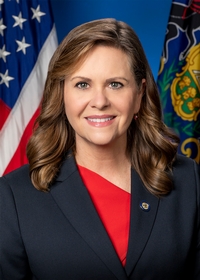
Camera Bartolotta
Camera Bartolotta Senate · District 46
R
Strong +
94% 74
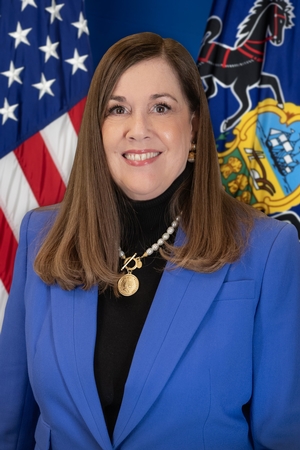
Lisa Baker
Lisa Baker Senate · District 20
R
Strong +
93% 61
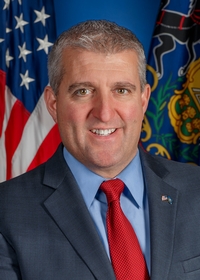
Joe Picozzi
Joe Picozzi Senate · District 5
R
Strong +
92% 83
Frank Farry
Frank Farry Senate · District 6
R
Strong +
92% 67
Dave Argall
Dave Argall Senate · District 29
R
Strong +
91% 80
Katie Muth
Katie Muth Senate · District 44
D
Oppose
23% 74
Art Haywood
Art Haywood Senate · District 4
D
Oppose
29% 83
Lindsey Williams
Lindsey Williams Senate · District 38
D
Oppose
30% 74
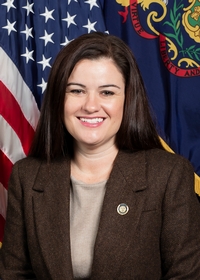
Charity Krupa
Charity Krupa House · District 51
R
Oppose
31% 292
Steve Santarsiero
Steve Santarsiero Senate · District 10
D
Oppose
32% 68
Showing 681–690 of 697 bills

All budget & taxes bills

in committee · Pennsylvania · House Jun 24, 2025

HB 1649: An Act amending Titles 53 (Municipalities Generally) and 72 (Taxation and Fiscal Affairs) of the Pennsylvania Consolidated Statutes, eliminating school district property taxes; imposing county and school district taxes; establishing the School District Emergency Fund and the School District Property Tax Elimination Fund; consolidating Articles II and III of the Tax Reform Code of 1971; in preliminary provisions relating to sales and use tax, providing for definitions; in taxation generally relating to sales and use tax, providing for exclusions and for transfer to county sales and use tax accounts; in preliminary provisions relating to personal income tax, providing for definitions; and making repeals.

HB 1649 eliminates school district property taxes on residential and commercial properties in Pennsylvania. It replaces these taxes with two new revenue sources: a 2% increase to county-level sales, use, and occupancy taxes (with some exclusions like clothing and candy removed), and a local income tax of up to 1.88% on resident taxpayers' earned income and retirement benefits (excluding Social Security). The bill establishes two funds - the School District Property Tax Elimination Fund (to distribute sales tax revenue to school districts) and the School District Emergency Fund - and requires landlords to reduce rents for tenants by the amount of eliminated property taxes. This directly affects property owners, school districts, and landlords/tenants, shifting funding responsibility from property taxes to broader consumption and income-based taxes.
in committee · Pennsylvania · House Nov 12, 2025

HB 2027: An Act amending the act of April 9, 1929 (P.L.343, No.176), known as The Fiscal Code, in general budget implementation, further providing for executive offices.

HB 2027 creates a new "Public Sector Workplace Safety Equipment Account" within Pennsylvania's General Fund to purchase safety equipment for state employees in high-risk jobs. It directs the Secretary of the Budget to transfer up to $3.8 million in unspent funds from previous years (for agencies under the Governor's jurisdiction) to this account by October 1, 2025. The funds will specifically cover lift kits for healthcare workers handling patients and postural support devices for construction workers, targeting state agencies operating nursing facilities, disability care facilities, and highway construction projects. The bill requires transparency through public notices and committee notifications before any transfer occurs.
passed · Pennsylvania · House Jul 23, 2025

HB 1424: An Act amending the act of December 31, 1965 (P.L.1257, No.511), known as The Local Tax Enabling Act, in local taxes, further providing for delegation of taxing powers and restrictions thereon.

HB 1424 amends Pennsylvania's Local Tax Enabling Act to prohibit local governments from taxing admission fees at recreational campgrounds. It adds a new restriction (section 18) preventing municipalities from levying amusement taxes on guest charges for campground access. The bill also clarifies that camping property rentals aren't considered "places of amusement" for tax purposes. This change affects all local authorities covered by the original tax law, including cities, towns, and school districts.
Sub-Topics Sales Tax
in committee · Pennsylvania · House Jan 17, 2025

HB 244: An Act amending the act of March 4, 1971 (P.L.6, No.2), known as the Tax Reform Code of 1971, in sales and use tax, further providing for exclusions from tax.

HB 244 exempts the sale or use of alternative fuel vehicles and hybrid vehicles from Pennsylvania's sales and use tax during 2026 and 2027. It directly affects consumers purchasing qualifying vehicles during those years, as well as dealers and the state's tax administration. The bill requires the Secretary of Environmental Protection to certify eligible vehicle models, using definitions from Pennsylvania's existing Alternative Fuels Incentive Act (2004). This creates a temporary tax break for specific vehicle types to encourage adoption during the 2026-2027 period. The exemption applies only to vehicles meeting the defined criteria and takes effect 60 days after enactment.
in committee · Pennsylvania · House Jan 17, 2025

HB 254: An Act amending the act of March 4, 1971 (P.L.6, No.2), known as the Tax Reform Code of 1971, in tax credit and tax benefit administration, further providing for definitions; and establishing the Residential Electric Vehicle Charging Station Tax Credit.

HB 254 creates a new tax credit for Pennsylvania residents who install electric vehicle charging stations at their primary homes. It allows eligible taxpayers to claim a credit equal to 100% of the installation cost, up to $2,000 per year, which is refundable if it exceeds their state income tax liability. To qualify, residents must have lived in Pennsylvania for over half the previous year, have a valid taxpayer ID, and install the station at their owned primary residence. The credit applies to tax years starting after December 31, 2025, with the Department of Revenue responsible for implementing guidelines.
in committee · Pennsylvania · Senate Nov 5, 2025

SB 1084: An Act amending the act of March 4, 1971 (P.L.6, No.2), known as the Tax Reform Code of 1971, in tax credit and tax benefit administration, further providing for definitions; and establishing the child adoption tax credit.

SB 1084 creates a new child adoption tax credit under Pennsylvania's Tax Reform Code of 1971, allowing adoptive parents to reduce their state income tax payments. The bill amends the existing tax code to establish this credit and clarify definitions for tax credit administration. This change directly affects adoptive families in Pennsylvania by providing a financial benefit to offset adoption costs. The credit is a concrete policy change that modifies how state tax liabilities are calculated for eligible taxpayers.
Sub-Topics Income Tax Tax Credits
in committee · Pennsylvania · Senate Mar 24, 2026

SB 979: An Act amending Title 53 (Municipalities Generally) of the Pennsylvania Consolidated Statutes, in consolidated county assessment, further providing for changes in assessed valuation.

SB 979 would prevent property tax increases for minor home improvements (20% or less of a property’s current assessed value) on primary residences under specific conditions. The bill prohibits assessors from raising taxes if the home has been the owner’s primary residence for at least five years from the improvement date and this is the first time such minor improvements have been made during ownership. It also explicitly excludes normal repairs and painting from triggering tax reassessments. This bill directly affects homeowners in Pennsylvania making small renovations to their primary homes.
Sub-Topics Property Tax
in committee · Pennsylvania · House Nov 19, 2025

HB 2056: An Act amending the act of April 9, 1929 (P.L.177, No.175), known as The Administrative Code of 1929, providing for miscellaneous provisions relating to recovery audits.

HB 2056 amends the 1929 Administrative Code to add specific provisions for recovery audits, which are processes state agencies use to identify and recover overpaid funds (e.g., in Medicaid or unemployment benefits). The bill directly affects state agencies conducting these audits and individuals or businesses that may have received erroneous payments. Key provisions update administrative procedures for conducting recovery audits, including requirements for documentation and timelines, though exact details are not specified in the title. The bill was referred to the Appropriations committee on November 19, 2025.
signed · Pennsylvania · House Nov 19, 2025

HB 1332: An Act providing for the capital budget for fiscal year 2025-2026 and for limitation on redevelopment assistance capital projects; and making a repeal.

HB 1332 is a state budget bill that allocates funding for capital projects (like infrastructure and public buildings) during fiscal year 2025-2026. It specifically limits the amount of state redevelopment assistance capital funds that can be used for certain projects, replacing previous funding rules. This bill directly affects state agencies managing capital projects and local governments receiving redevelopment funds. The law became effective immediately upon the governor's approval on November 19, 2025 (Act No. 48 of 2025).
signed · Pennsylvania · House Jun 27, 2025

HB 1420: An Act making an appropriation from a restricted revenue account within the General Fund to the Office of Consumer Advocate in the Office of Attorney General.

HB 1420 provides funding from a designated restricted revenue account within the state's General Fund to the Office of Consumer Advocate, which operates under the Office of the Attorney General. This bill directly supports the Office of Consumer Advocate’s existing work representing consumers in disputes with utilities, insurance, and other regulated services. The key provision is a specific financial appropriation to ensure the office has resources to handle consumer complaints and investigations. As a funding measure, it does not create new laws or alter consumer rights but allocates existing state funds to a specific agency. (This is a procedural funding bill, so the summary is concise as required.)
Showing 681 to 690 of 697 bills