Issue · Budget & Taxes

Budget & Taxes

Every budget & taxes bill, vote, and legislator stance in Pennsylvania, automatically classified by Maddy, our AI policy reader.

Total bills
655
2025-2026 Regular Session
Top supporter
Camera Bartolotta
94% support rate
Top opponent
Katie Muth
23% support rate
Ranked legislators
10
5 support · 5 oppose
Key legislators

Who's moving budget & taxes in Pennsylvania

Legislators moving budget & taxes in Pennsylvania
Legislator Party Stance Support rate Votes
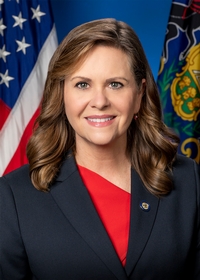
Camera Bartolotta
Camera Bartolotta Senate · District 46
R
Strong +
94% 74
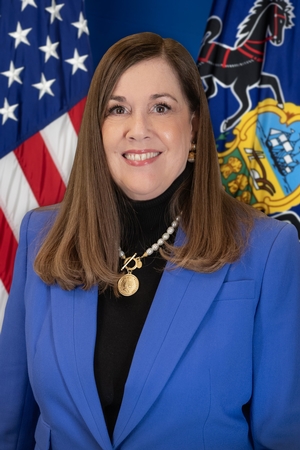
Lisa Baker
Lisa Baker Senate · District 20
R
Strong +
93% 61
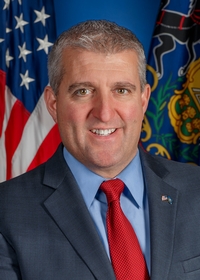
Joe Picozzi
Joe Picozzi Senate · District 5
R
Strong +
92% 83
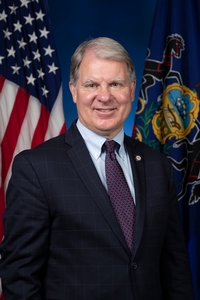
Frank Farry
Frank Farry Senate · District 6
R
Strong +
92% 67
Dave Argall
Dave Argall Senate · District 29
R
Strong +
91% 80
Katie Muth
Katie Muth Senate · District 44
D
Oppose
23% 74
Art Haywood
Art Haywood Senate · District 4
D
Oppose
29% 83
Lindsey Williams
Lindsey Williams Senate · District 38
D
Oppose
30% 74
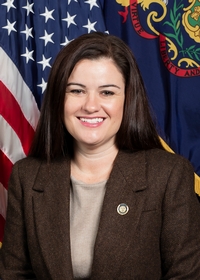
Charity Krupa
Charity Krupa House · District 51
R
Oppose
31% 292
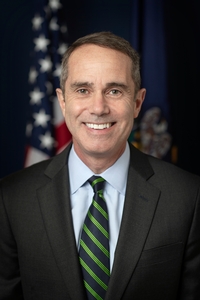
Steve Santarsiero
Steve Santarsiero Senate · District 10
D
Oppose
32% 68
Showing 1–10 of 655 bills

All budget & taxes bills

in committee · Pennsylvania · House Aug 4, 2026

HB 2727: An Act amending Title 53 (Municipalities Generally) of the Pennsylvania Consolidated Statutes, in assessments of persons and property, providing for senior property tax freeze.

Pennsylvania House Bill 2727 authorizes local governments to offer a voluntary property tax freeze for seniors who are at least 65 years old, have lived in the state for five or more years, and meet specific income limits. Eligible homeowners can keep their real estate taxes fixed at the amount paid during a designated base year, provided they continue to meet financial criteria that are adjusted annually for inflation. The tax freeze applies only to a primary residence and transfers if the owner moves within the same local jurisdiction, but it ends when the property is sold or transferred. The state Department of Community and Economic Development will oversee the program by creating a standardized application form and publishing annual reports on its performance and cost savings.
in committee · Pennsylvania · Senate Jul 10, 2026

SB 1384: An Act amending the act of March 4, 1971 (P.L.6, No.2), known as the Tax Reform Code of 1971, in tax credit and tax benefit administration, further providing for definitions; in computer data center equipment incentive program, providing for certification prohibition; providing for Governor's Responsible Infrastructure Development certification and standards; and imposing duties.

SB 1384 amends Pennsylvania's Tax Reform Code to update definitions for tax benefits and introduce new rules for computer data centers. The bill explicitly prohibits the Department of Revenue from certifying any new computer data centers after its effective date. It also establishes a new certification program for the Governor's Responsible Infrastructure Development, which sets standards for clean firm energy, including specific requirements for solar, wind, and battery storage systems. Additionally, the legislation defines terms related to alternative compliance payments and clean hydrogen production to support these infrastructure standards.
in committee · Pennsylvania · House Jul 29, 2026

HB 2720: An Act amending the act of March 4, 1971 (P.L.6, No.2), known as the Tax Reform Code of 1971, in tax credit and tax benefit administration, further providing for definitions; and providing for green infrastructure tax credit.

This Pennsylvania bill creates a new tax incentive to encourage the installation of green infrastructure, such as rain gardens, green roofs, and permeable pavement, on properties within the state. It defines "green infrastructure" as stormwater management practices that reduce or reuse runoff and sets rules for claiming a tax credit based on qualified costs like design, materials, and installation. To receive the credit, taxpayers must complete a certified project and submit detailed documentation to the Department of Revenue, while excluding costs covered by grants or routine maintenance. The legislation also updates the legal definition of "tax credit" to include this new program alongside existing state tax benefits.
in committee · Pennsylvania · House Jul 31, 2026

HB 2721: An Act amending Title 8 (Boroughs and Incorporated Towns) of the Pennsylvania Consolidated Statutes, in vacancies in office, further providing for temporary auditor; and, in taxation and finance, further providing for adoption of budget.

This bill updates Pennsylvania laws regarding borough and town governance to address financial management when auditor positions are empty. It allows a borough council to temporarily appoint one or two individuals to fill vacancies in the auditor's office, granting them the same powers as elected auditors until the next election. Additionally, the legislation clarifies that the council must adopt the town budget by December 31 and ensures total spending cannot exceed available estimated revenues. The council retains full discretion to set the qualifications for these temporary appointments.
in committee · Pennsylvania · Senate Jul 10, 2026

SB 1393: An Act amending the act of March 4, 1971 (P.L.6, No.2), known as the Tax Reform Code of 1971, in neighborhood improvement zones, further providing for Neighborhood Improvement Zone Funds and providing for Small Business Opportunity Program.

This bill amends Pennsylvania's Tax Reform Code to update how funds are managed in Neighborhood Improvement Zones and to create a new Small Business Opportunity Program. Under the new rules, any leftover money from these zones must first pay required debts and obligations before 25% of the baseline tax revenue is automatically transferred to a fund dedicated to small business grants. The program is designed to help small businesses start, grow, or stay open in these specific areas by providing financial support to those that hire full-time employees and file all required tax reports. Local authorities will be required to report annually on the number of businesses participating, the total money awarded, and the number of jobs created or kept. Additionally, the bill clarifies that local officials and auditors can access specific tax records for these zones solely to verify eligibility and manage the program.
Sub-Topics Revenue
in committee · Pennsylvania · Senate Jul 8, 2026

SB 1417: An Act amending the act of March 4, 1971 (P.L.6, No.2), known as the Tax Reform Code of 1971, providing for sustainable aviation fuel tax credit.

This bill creates a tax credit program in Pennsylvania to encourage the production of sustainable aviation fuel. To qualify, companies must invest at least $150 million in a local facility, create at least 400 permanent jobs, and pay workers prevailing wages. The credit provides up to $1 per gallon for fuel production, with an extra 25 cents per gallon for using local feedstocks or achieving significant greenhouse gas reductions. Eligible producers must also meet specific state tax compliance requirements and sign a commitment letter with state officials.
in committee · Pennsylvania · House Jul 16, 2026

HB 2706: An Act amending the act of March 4, 1971 (P.L.6, No.2), known as the Tax Reform Code of 1971, establishing the Pennsylvania Child and Dependent Care Enhancement Tax Credit Program; and making a repeal.

This bill establishes a new Pennsylvania tax credit program designed to help residents who pay for child and dependent care. It allows eligible taxpayers to claim a state tax credit based on the amount they already claim for the same expenses on their federal tax returns. The credit rate changes over time, starting at 30% for tax years ending before 2023, increasing to 100% for years between 2023 and 2026, and returning to 100% for years after 2026. The maximum credit is calculated on up to $3,000 of expenses for one child or $6,000 for two or more children.
Sub-Topics Income Tax Tax Credits
in committee · Pennsylvania · House Jul 22, 2026

HB 2709: An Act amending Title 12 (Commerce and Trade) of the Pennsylvania Consolidated Statutes, in entertainment economic enhancement program, further providing for limitations.

This bill increases the annual funding cap for Pennsylvania's Entertainment Economic Enhancement Program from $24 million to $26 million. The change directly affects the state's entertainment industry by allowing a larger pool of tax credits to be distributed each fiscal year. These credits are designed to help businesses in the entertainment sector by reducing their tax liability. The new limit will apply to fiscal years starting on or after July 1, 2026.
in committee · Pennsylvania · Senate Jul 8, 2026

SB 1406: An Act amending the act of March 4, 1971 (P.L.6, No.2), known as the Tax Reform Code of 1971, in tax credit and tax benefit administration, further providing for definitions; and providing for Keystone Literacy Investment Tax Credit.

This bill creates a new tax incentive program called the Keystone Literacy Investment Tax Credit to fund evidence-based reading instruction in Pennsylvania public schools. The program allows insurance companies and their holding companies to purchase tax credits from the state, which they can then use to offset their own insurance premiums tax liability. The Department of Community and Economic Development will sell up to $150 million in these credits by January 2027, with the funds designated for literacy programs. Qualified taxpayers can begin applying the credits against their tax bills starting in 2029, with an annual cap on the total amount of credits that can be used set at $50 million.
signed · Pennsylvania · House Jul 12, 2026

HB 1505: An Act amending the act of March 10, 1949 (P.L.30, No.14), known as the Public School Code of 1949, in preliminary provisions, providing for standardized testing study; in grounds and buildings, repealing provisions relating to lead testing and providing for lead testing; providing for school facilities; in certification of teachers, further providing for special education certificate grade spans and age levels and duties of department, for program of continuing professional and paraprofessional education, for continuing professional education for school or system leaders and for Pennsylvania school leadership standards, repealing provisions relating to permit for classroom monitors and providing for permit for classroom monitors; in pupils and attendance, further providing for attendance policy at charter, regional charter and cyber charter schools, providing for school district enrollee wellness checks and further providing for procedure when child is truant and for procedure upon filing of citation; in student supports, further providing for policy relating to bullying; in school safety and security, further providing for definitions, for School Safety and Security Grant Program, for school safety and security coordinator and for school safety and security training, providing for school safety and mental health grants for 2026-2027 school year, further providing for school safety and security coordinator training and for reporting and memorandum of understanding and providing for school mapping services; in school health services, further providing for health services and for reports and providing for eating disorder awareness and education; in terms and courses of study, providing for use of funds for implementing later school start times, further providing for flexible instructional days and for physical education, providing for recess periods, further providing for economic education and personal financial literacy programs and providing for social media literacy education; in early learning programs, further providing for definitions and for duties of approved providers; in high schools, further providing for attendance in other districts; in charter schools, further providing for enrollment, for cyber charter school requirements and prohibitions, for enrollment and notification and for enrollee wellness checks; in disability inclusive curriculum, further providing for pilot program; in career and technical education, providing for temporary waiver; in community colleges, further providing for financial program and reimbursement of payments; in Thaddeus Stevens College of Technology, further providing for individuals eligible for admission; in the State System of Higher Education, further providing for definitions and for Grow Pennsylvania Tuition Waiver Program; in institutions of higher education, further providing for definitions and for agency duties, providing for institution duties and further providing for report; in Ready-to-Succeed Scholarship, further providing for agency; in funding for public libraries, providing for State aid for fiscal year 2026-2027; in reimbursements by Commonwealth and between school districts, further providing for student-weighted basic education funding beginning with 2023-2024 school year and for extraordinary special education program expenses, providing for temporary assistance program and further providing for assistance to school districts declared to be in financial recovery status or identified for financial watch status and for Ready-to-Learn Block Grant; and, in construction and renovation of buildings by school entities, further providing for applicability.

HB 1505 amends Pennsylvania's Public School Code of 1949 to clarify definitions related to early learning programs. The bill specifically updates terminology used in the existing law to better define what constitutes early learning programs within the state's educational framework. This change directly affects school districts, early learning providers, and state education agencies by providing clearer standards for program classification and reporting under the Public School Code. The bill focuses solely on refining definitions, not creating new programs or funding mechanisms.
Sub-Topics Social Media
Showing 1 to 10 of 655 bills
1 2 3 66 Next