Maddy summaryThis bill amends federal law to clarify how the National Guard Bureau handles reimbursement funds received from states, territories, or the District of Columbia. It requires that funds paid back for using military property must be credited to the specific account that covered the original expenses or a similar account for the same purpose. These funds may only be used by the Department of Defense for repairing, maintaining, or similar upkeep of assets directly used by National Guard units operating under state active duty status. The bill affects the National Guard Bureau and state/territorial governments that reimburse the federal government for shared property costs.
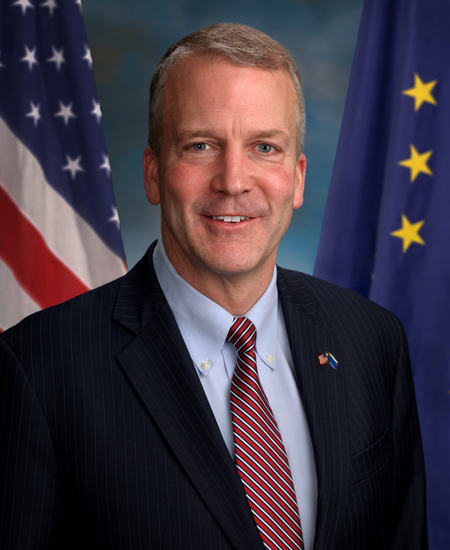
Sen. Dan Sullivan
Sponsored bills
Maddy summaryThis bill amends the Alaska Native Claims Settlement Act to clarify land conveyance rules for Alaska Native Village Corporations. It requires Village Corporations to convey specific land (up to 1,280 acres) to the State of Alaska in trust for future Municipal Corporations, but stops additional conveyances for this purpose after the bill's enactment. Crucially, it allows land to revert to the Village Corporation if a Municipal Corporation isn't established by the bill's effective date, subject to existing rights and easements. The bill directly affects Alaska Native Village Corporations and the State of Alaska regarding land ownership and management.
Maddy summaryS 5598 would prohibit U.S. persons from making investments in China-related entities involving "prohibited technologies" such as advanced semiconductors, quantum computing, and AI systems with potential military or surveillance applications. The bill also requires notification for certain investments in "notifiable technologies" and establishes a self-disclosure process for violations. Violations could result in civil penalties of up to $250,000 or twice the transaction amount. The bill defines "covered foreign persons" as entities incorporated in China, controlled by Chinese entities, or owned 50% or more by China. It mandates annual reports to Congress detailing enforcement actions and trends in these types of investments.
Maddy summaryThis bill (S 3373) allows hydropower project licensees to request an extension of their construction start deadline. It specifically applies to projects licensed by the Federal Energy Regulatory Commission (FERC) before March 13, 2020. Under the bill, FERC may grant a 4-year extension beyond the existing 8-year construction period, provided the licensee shows good cause and after reasonable notice. The extension period begins after the current deadline expires and ends 4 years later. This directly affects hydropower developers needing more time to begin construction on existing licensed projects.
Maddy summaryThis bill establishes reciprocity in student exchanges between the U.S. and China by reducing Chinese student visas in the U.S. to match the number of U.S. students in China. It mandates an annual 50,000 reduction in Chinese student visas (starting fiscal year 2025) until the numbers balance, while banning Chinese students from sensitive STEM fields like AI, quantum computing, and military-related engineering. The visa restrictions would end only if China lifts specific restrictions on U.S. students, including travel permits for Xinjiang/Tibet, internet access, and exit ban threats. The bill directly affects Chinese nationals studying in the U.S. and aims to align U.S. policy with China's documented restrictions on American students.
Maddy summaryThe Good Samaritan Remediation of Abandoned Hardrock Mines Act of 2024 establishes a pilot program allowing qualified individuals or organizations (defined as "Good Samaritans") to remediate historic mine residue at abandoned hardrock mine sites without facing liability for their actions. The Environmental Protection Agency would grant up to 15 permits for projects that address pollution from abandoned mines, with applicants required to demonstrate they meet specific eligibility criteria (not being responsible owners/operators, having no role in creating the residue, and possessing adequate resources). The program includes liability protection for permitted activities, requires detailed remediation plans with baseline condition assessments, public notice, and environmental reviews, and establishes a fund for long-term operations and maintenance. This 7-year pilot program would directly affect communities near abandoned mine sites and qualified remediation groups seeking to address environmental contamination.
Maddy summaryS 5536, the "End Assistance to China Act," prohibits most U.S. foreign assistance to the Chinese government, the Chinese Communist Party, and entities controlled by them. It specifically bans aid to any organization using U.S. funds for activities in China (including Hong Kong), except for two key exceptions: aid promoting human rights/democracy, or supporting livelihoods, culture, education, health, or environment in Tibetan communities. The President may temporarily waive the ban for specific purposes like combating wildlife trafficking, preventing nuclear proliferation, or providing emergency disaster relief, but must notify Congress and justify the national interest. This bill directly affects all U.S. foreign aid programs targeting China's government or CCP-affiliated entities, with limited exceptions for humanitarian and specific development purposes.
Maddy summaryThis bill amends the Tribal Forest Protection Act of 2004 to expand protections for tribal forest and rangeland. It specifically allows Alaska Native Corporations (under the Alaska Native Claims Settlement Act) to qualify for protections, broadens the Act's purpose to include restoring land, and updates criteria for Federal land projects. The bill authorizes $15 million annually from 2025 through 2030 to fund these expanded protections. It directly affects federally recognized tribes and Alaska Native Corporations managing forest or rangeland.
Maddy summaryThis bill establishes a federal program to support Native American tribes in restoring and managing buffalo herds on tribal lands. It directly affects federally recognized tribes and tribal organizations by authorizing the Secretary of the Interior to provide grants, contracts, and technical assistance for buffalo restoration, habitat management, and related economic activities. Key mechanisms include requiring federal consultation with tribes on buffalo-related decisions, protecting culturally sensitive tribal information, and allowing tribes to receive surplus buffalo from federal lands. The law aims to strengthen tribes' cultural connections to buffalo, support subsistence needs, and promote tribal-led economic development through buffalo management, without altering existing tribal treaty rights.
Maddy summaryThis bill authorizes the posthumous award of a Congressional Gold Medal to Shirley Chisholm, the first African-American woman elected to Congress (1968-1982) and the first African American to seek a major party's presidential nomination (1972). The bill directs the Secretary of the Treasury to design and strike a gold medal featuring Chisholm's image and name, which will be presented to her family by congressional leaders. After presentation, the medal will be displayed at the Smithsonian Institution for public viewing and research. The bill also authorizes the production and sale of bronze duplicates to cover costs. This is a commemorative measure honoring Chisholm's historic contributions to American politics and civil rights.