Maddy summaryThis bill would allow individuals with a valid concealed carry permit from their home state to carry concealed handguns in other states that either permit concealed carry for residents or don’t ban it entirely. It applies to permit holders who are federally eligible to possess firearms, require government-issued ID, and must follow the host state’s specific restrictions (like where carry is prohibited). The bill does not override state laws on issuing permits but ensures reciprocity for those who legally carry in their home state, excluding machineguns and destructive devices.
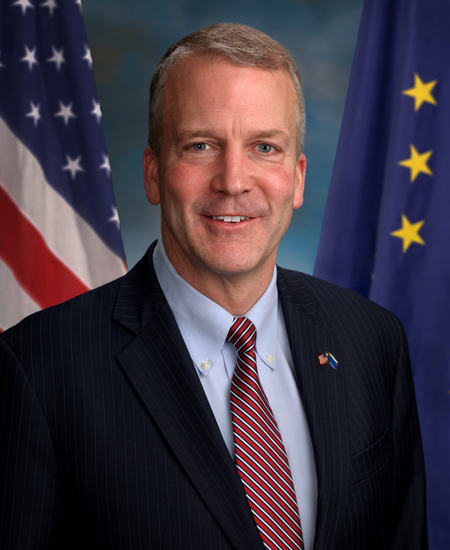
Sen. Dan Sullivan
Sponsored bills
Maddy summaryThe VALOR Act of 2025 establishes criteria for determining when a democratically elected government is in power in Venezuela, requiring free and fair elections with international observer oversight, respect for human rights, and the release of political prisoners. The bill authorizes U.S. sanctions against the Maduro regime, including blocking transactions involving Venezuelan debt instruments, cryptocurrency, and government property, while prohibiting support for nondemocratic governments. It also creates mechanisms for U.S. assistance to Venezuelans under a democratically elected government, including humanitarian aid and support for democratic institutions, with specific reporting requirements for sanctions and assistance programs. The sanctions remain in place until the President certifies a democratically elected government is in power, at which point the U.S. would work to terminate sanctions and coordinate international support for Venezuela's transition.
Maddy summaryThe Keeping Military Families Together Act of 2024 extends two existing benefits for veterans and their families. It updates the expiration dates for memorial headstones and markers for veterans and certain individuals, extending eligibility from 2025 to 2032. It also extends the authority to bury spouses and children of veterans in national cemeteries until 2032. These changes ensure continued access to commemorative services and burial options for eligible veterans and their families without creating new benefits.
Maddy summary# Summary of Veterans' Affairs Legislative Bill This comprehensive bill contains numerous provisions to improve veterans' healthcare, benefits, and educational assistance programs. Key components include: ## Healthcare Provisions - **Dental Care Expansion**: Pilot program to provide dental care to veterans with ischemic heart disease using community care, mobile clinics, and portable dental units - **Suicide Prevention**: Mandates annual National Veteran Suicide Prevention Reports with detailed analysis of suicide rates, engagement with VA healthcare, and benefits usage - **Appointment Scheduling**: Requires a plan to enable same-day scheduling for veterans requesting appointments by phone - **Infrastructure Assessment**: Requires a report on physical infrastructure needed for dental care services at VA medical facilities - **Staffing Models**: Directs development of staffing models and performance metrics for VA healthcare employees focused on timely access to care ## Mental Health & Support Services - **Mental Health Support for Caregivers**: Mandates GAO report on mental health support availability and accessibility for caregivers - **Centralized Website**: Requires development of a centralized website for information on home- and community-based services - **Respite Care Review**: Directs review of respite care services availability, cost, and effectiveness ## Educational Assistance - **Fry Scholarship Expansion**: Temporarily expands eligibility for Marine Gunnery Sergeant John David Fry Scholarship to children/spouses of veterans who die from service-connected disabilities within 120 days of discharge - **Housing Stipend**: Ensures full monthly housing stipend for veterans in final semester using Post-9/11 educational assistance - **Digital Transcripts**: Requires educational institutions approved for VA benefits to provide digital official transcripts - **Commercial Driver Education**: Modifies rules for approval of commercial driver education programs for veterans' education benefits ## Administrative & Reporting Requirements - **Quarterly Referral Reports**: Requires quarterly reports on referral processing times between VA facilities - **Pay Modifications**: Amends pay limitations for physicians, podiatrists, optometrists, and dentists - **Documentation of Preferences**: Directs development of mechanism to document veterans' scheduling preferences - **VA Infrastructure Assessment**: Requires report on physical infrastructure required for dental care services The bill includes numerous deadlines (ranging from 90 days to 3 years) for implementation and reporting, and establishes new requirements for transparency, accountability, and veteran-centered care across multiple VA programs.
Maddy summaryThis bill amends the Marine Debris Act and the Save Our Seas 2.0 Act to improve administrative processes and tribal engagement in marine debris programs. It allows NOAA to contribute in-kind support for projects (rather than just financial aid) and requires the Marine Debris Foundation to develop specific outreach practices for Indian Tribes, including technical assistance and promoting available grants. The bill updates definitions to clarify terms like "nonprofit," "Tribal government," and "coastal shoreline community," and reorganizes program structures within the Marine Debris Act. These changes primarily affect NOAA, the Marine Debris Foundation, and tribal entities working on marine debris initiatives. The amendments focus on operational clarity and better coordination with tribal governments, without creating new funding or regulatory requirements.
Maddy summaryThis bill provides funding to pay military personnel, civilian Defense Department staff, and supporting contractors during gaps in regular budget approval for fiscal year 2025. It appropriates necessary funds for active-duty service members (including reserves), Defense civilians, and contractors supporting military operations if Congress hasn't passed a full budget by the end of FY2025. The funding is temporary, ending on January 1, 2026, or when Congress passes a regular budget for the relevant purpose. It directly affects all active-duty military members, Defense Department civilians, and contractors providing military support during the funding gap.
Maddy summaryThis bill reauthorizes and updates the National Volcano Early Warning and Monitoring System through the John D. Dingell Act. It increases annual funding from $55 million to $75 million, extends the program's authorization period to 2033-2034, and modernizes technical language (replacing "Global Positioning System" with "Global Navigation Satellite System"). Key provisions include requiring management plan updates every 5 years, creating a new implementation committee with state agencies, universities, and volcano observatories, and strengthening coordination with the Forest Service. The changes directly affect U.S. Geological Survey operations and volcano monitoring at active sites, improving early warning capabilities for communities near volcanoes.
Maddy summaryThis bill extends the Alaska Native Vietnam Era Veterans Land Allotment Program from a 5-year to a 10-year period (Section 2). It directly affects eligible Alaska Native Vietnam Era veterans by making additional federal lands available for them to select, including National Wildlife Refuge System lands identified in a 2020 Fish and Wildlife Service report (Section 3(a)). For Forest Service lands, it requires the Secretary of Agriculture to identify suitable lands within a year of enactment, excluding areas near water, wilderness, or those conflicting with management plans (Section 3(b)), and makes all identified lands immediately available for selection under the program. The key mechanism ensures veterans can claim specific federal lands through a defined, extended timeline.
Maddy summaryThe Cape Fox Land Entitlement Finalization Act of 2024 finalizes land entitlement for the Cape Fox Village Corporation (representing the Native Village of Saxman, Alaska) by enabling them to select and receive approximately 180 acres of Federal land in the Tongass National Forest. It waives a requirement forcing Cape Fox to select land within a specific township, which was previously blocked by a 6-mile restriction from Ketchikan, Alaska. The Secretary of the Interior must convey the surface land to Cape Fox and the subsurface estate to Sealaska Corporation within 180 days of a selection notice. This resolves a unique situation where Cape Fox could not complete its land selection under the Alaska Native Claims Settlement Act due to historical restrictions.
Maddy summaryThis bill amends the Alaska Native Claims Settlement Act to prevent payments from Settlement Trusts to aged, blind, or disabled Alaska Natives or their descendants from being counted as income or assets when determining eligibility for federal assistance programs. Specifically, it excludes these payments from calculations used for programs like Medicaid, food assistance, or housing benefits that have income or asset limits. The change ensures eligible individuals can access these benefits without their Settlement Trust payments disqualifying them. The bill does not alter how Settlement Trust payments are distributed but modifies their treatment in eligibility determinations.