

Maddy summaryThe Forgotten Heroes of the Holocaust Congressional Gold Medal Act (S. 91) authorizes the award of a single Congressional Gold Medal to 60 diplomats who risked their careers and safety to save Jewish lives during the Holocaust. These diplomats, representing countries including Sweden, Switzerland, Spain, Portugal, and others, issued visas and provided safe passage to Jews fleeing Nazi persecution despite strict orders from their home governments. The medal will be presented collectively to the next of kin of each diplomat, along with representatives from their home countries, and then permanently displayed at the United States Holocaust Memorial Museum. The act recognizes these individuals' bravery without implying they represent all who performed similar humanitarian acts during the Holocaust. The medal serves as a permanent tribute to their sacrifice and will be available for public display and research.
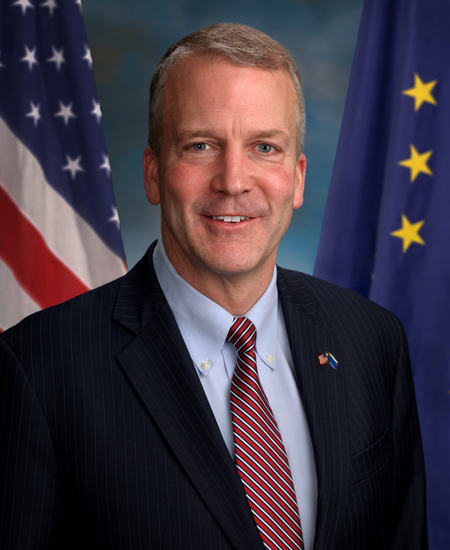
Sen. Dan Sullivan
Sponsored bills
Maddy summarySRES 925 is a Senate resolution honoring the late Senator Fred R. Harris of Oklahoma, who died on November 23, 2024, at age 94. The resolution expresses the Senate’s sorrow at his passing, requests that his family be notified, and directs the Senate to adjourn in his memory. It does not create new laws or affect any policies - it is a formal expression of respect for a former senator’s legacy.
Maddy summary# Summary of Coast Guard Authorization Act of 2024 This comprehensive legislation contains numerous provisions to improve Coast Guard operations, safety, and response capabilities. Key provisions include: 1. **Sexual Assault and Harassment Response**: - Mandates a comprehensive policy for retention and access to evidence related to sexual misconduct (Section 402) - Requires 50-year retention of physical and forensic evidence related to rape or sexual assault - Establishes a Safe-to-Report policy for all Coast Guard members, cadets, and trainees (Section 405) - Creates a process for cadets who are victims of sexual assault to request transfer to other military academies or ROTC programs (Section 403) 2. **Uncrewed Systems**: - Establishes a National Advisory Committee on Autonomous Maritime Systems (Section 231) - Creates a pilot program for governance of small uncrewed maritime systems (Section 232) - Requires a report on establishing an uncrewed systems capabilities office within the Coast Guard (Section 236) 3. **Vessel Safety and Operations**: - Amends regulations for towing vessels, fish tenders, and fishing vessels (Section 223) - Establishes new requirements for vessel traffic services and pipeline proximity alerts (Section 220) - Creates a National Advisory Committee on Autonomous Maritime Systems (Section 231) 4. **Evidence and Records Management**: - Requires retention of all work product related to investigations for at least 7 years (Section 402) - Establishes specific procedures for handling evidence in sexual assault cases - Creates requirements for victim access to records after case disposition 5. **Environmental Protection**: - Amends oil spill response capabilities (Section 301) - Creates requirements for abandoned vessel removal (Section 250) - Improves online incident reporting systems (Section 304) The legislation represents a significant update to Coast Guard policies and procedures, with particular emphasis on improving response to sexual assault and harassment, enhancing safety regulations, and adapting to new technologies like uncrewed maritime systems.
Maddy summaryS 559, the Fire Grants and Safety Act, extends funding for three key fire-related federal grant programs through 2032. It reauthorizes the U.S. Fire Administration with $95 million annually (2024-2030), including $3.42 million yearly for specific programs, and extends the Firefighter Assistance Grants and Staffing for Adequate Fire and Emergency Response programs through 2032. These programs provide critical federal funding to state and local fire departments for equipment, training, and staffing. The bill directly affects fire departments nationwide that rely on these grants to maintain safety resources.
Maddy summaryThis bill reauthorizes the National Oceanic and Atmospheric Administration's (NOAA) Marine Debris Program through fiscal year 2028, extending its existing funding period. It directly affects NOAA by ensuring continued federal support for the program's work to identify, prevent, and remove marine debris. The key provision amends the Marine Debris Act to specify the program's funding authorization period as fiscal years 2018 through 2028, replacing the previous language. This is a procedural update to maintain the program's operations without introducing new policies or requirements.
Maddy summaryThis is a ceremonial Senate resolution (SRES 902) honoring the late Senator Timothy Peter Johnson of South Dakota, who died after a long career in public service. The resolution expresses the Senate's "profound sorrow" over his death, directs the Secretary of the Senate to share the resolution with the House and send a copy to his family, and calls for the Senate to adjourn in his memory. It does not create new laws or affect any policies, as it is purely a formal expression of respect for a former senator. The resolution commemorates his decades of service, including his time as Chairman of the Banking Committee and his return to work after a serious health setback.
Maddy summaryThis bill requires the President to notify Congress and take specific actions if a "country of concern" (like Russia, China, or Iran) attempts to influence U.S. elections through disinformation. The President must inform relevant congressional committees within 30 days and, unless waived for national security reasons, publicly reveal U.S. government information about corruption, unexplained wealth, or misconduct involving senior officials or governing parties in that foreign country. The goal is to counter foreign interference by exposing such information to citizens of the target nation, aiming to undermine adversary efforts. It directly affects the President’s executive response to foreign election meddling, with Congress overseeing the process.
Maddy summaryThis bill directs the U.S. Treasury Secretary to instruct U.S. representatives at major international financial institutions (like the World Bank and IMF) to oppose and reverse policies restricting financing for coal, oil, natural gas, and nuclear energy projects. It requires these institutions to eliminate such restrictions or face limits on U.S. funding (capping obligations at 50% until compliance). The bill also mandates annual reports detailing efforts to remove financing barriers for these energy sources and steps to promote international energy project financing. It directly affects how global development banks allocate capital for energy infrastructure in developing nations.
Maddy summaryThe INFORM Act (S 5377) aims to increase access to independent information for citizens of the People's Republic of China (PRC) who face internet censorship. It establishes a "Global News Service" to curate, translate, and distribute uncensored China-related news in Mandarin Chinese and English, and creates an interagency task force to coordinate efforts across U.S. government agencies. The bill authorizes $25 million annually for the Department of State and $50 million for the U.S. Agency for Global Media to develop censorship circumvention tools, improve Mandarin Chinese-language content, and increase coordination. It requires the President to submit a strategy within one year for increasing access to independent information for PRC citizens, both inside and outside China.
Maddy summaryThe Aligning Development and Competition Act of 2024 (S 5403) modifies the U.S. International Development Finance Corporation (USIDFC) to better align its projects with U.S. national security priorities. It requires the USIDFC to submit annual reports detailing potential conflicts of interest involving its advisory councils, mandates prioritization of infrastructure projects in strategic areas (such as ports, digital networks, transportation, and critical minerals), and adds the Secretary of Defense to the USIDFC Board. The bill also establishes a new Strategic Advisory Council focused on national security and authorizes the USIDFC CEO to waive location requirements for projects if the President deems it vital for national security. These changes directly affect how the USIDFC selects and funds international development projects, emphasizing strategic competition over traditional development goals.