

This bill requires the Department of State to make certain information regarding the 2021 withdrawal of U.S. personnel from Afghanistan available to Congress and to the public. Specifically, the State Department must provide Congress with the July 13, 2021, dissent channel cable regarding the likely consequences of a U.S. withdrawal from Afghanistan and the official State Department response to the cable. (The dissent channel is a tool that foreign service officers may use to communicate alternative or dissenting views about foreign policy matters with senior State Department officials. ) The unredacted cable and official response must be provided to Congress within five days of the bill's enactment, except that the names of the cable signatories may be redacted. The bill also requires the State Department to complete a declassification review of (1) the dissent channel cable and official response, and (2) the after-action review developed with respect to the Afghanistan withdrawal. After determining what information may be declassified, the State Department must publish such information online within 60 days of the bill's enactment.
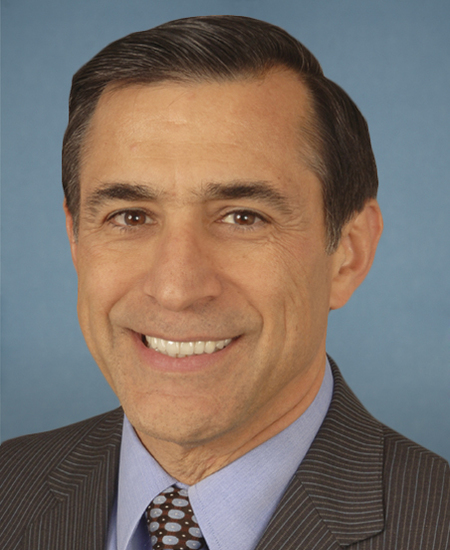
Rep. Darrell Issa
Sponsored bills
Strategic Lebanon Security Reporting Act This bill requires the Department of State to provide Congress with a report addressing security in Lebanon. Specifically, the report must include details regarding the extent of Iranian and Syrian influence in Lebanon, the capability of the Lebanese Armed Forces, Lebanese Armed Forces' actions to prevent the forced return of refugees to Syria, Hezbollah's influence on governmental and financial institutions in Lebanon, and implementation activities related to U.N. Security Council Resolution 1701 and successor resolutions.
Maddy summaryHR 1176, the Taiwan International Solidarity Act, amends the TAIPEI Act of 2019 to clarify that UN Resolution 2758 does not address Taiwan's representation or sovereignty in international organizations. The bill directs U.S. representatives in international bodies to resist China's efforts to distort policies regarding Taiwan and encourages U.S. allies to oppose China's attempts to undermine Taiwan's diplomatic relationships. It also requires the U.S. government to report on China's initiatives promoting its "One China" position. These changes aim to strengthen Taiwan's international engagement through U.S. advocacy and policy coordination.
Maddy summaryThis bill directs the U.S. Treasury to mint commemorative coins marking the Marine Corps' 250th anniversary in 2025. It authorizes three coin types: $5 gold coins (max 50,000), $1 silver coins (max 400,000), and half-dollar coins (max 750,000), with surcharges of $35, $10, and $5 respectively. The surcharge proceeds will fund the Marine Corps Heritage Center's educational programs, with no net cost to taxpayers as the Treasury must recover all minting costs through the surcharges. The coins can only be issued during 2025, and the Treasury must ensure all costs are covered before distributing funds to the Heritage Foundation.
Maddy summaryHR 4860, the PROTECT the Second Amendment Act, prevents landlords in specific federally assisted housing from banning or restricting residents' lawful possession of firearms in their private units or during travel between units and common areas. It directly affects tenants in housing funded by HUD or USDA programs, including public housing, Section 8 vouchers, and housing for veterans or people with disabilities. The bill prohibits landlords from imposing firearm bans or additional conditions on residents who lawfully carry firearms within their dwelling units or while moving through common areas to reach their units. This changes current policies in these housing programs by explicitly allowing firearm possession where state law permits.
Maddy summaryThis bill would prohibit government employees from directing or encouraging social media platforms to censor protected speech. It defines "covered information" to include phone calls, digital communications, photos, shopping history, location data, and other user information. The bill creates a private right of action for people affected by government interference with their speech, requires government agencies to report communications with platforms about content moderation, and terminates the Disinformation Governance Board. It directly affects government employees, social media platforms, and users whose speech might be impacted by government requests to moderate content.
Maddy summaryHR 4742, the Pay Back Act, prohibits federal agencies from canceling or modifying student loans without new congressional approval. It directly affects borrowers with federal student loans covered under the Higher Education Act of 1965 or the Health Education Assistance Loan Program. The bill blocks the Secretary of Education, Treasury, or Attorney General from forgiving balances or changing loan terms, except as authorized by a new law passed after the bill's enactment. This requires Congress to explicitly pass new legislation for any future loan forgiveness or modification.
Maddy summaryThis bill, HR 1282 (Major Richard Star Act), expands benefits for certain military retirees by allowing them to receive both veterans' disability compensation and military retirement pay simultaneously. It specifically affects combat-related disabled retirees under Chapter 61 of the military retirement system who have fewer than 20 years of service. The key change removes the automatic reduction of military retirement pay when these retirees also receive disability compensation, as amended in Section 1413a(b)(3) of Title 10. Technical updates to the law’s structure and effective date (starting after enactment) complete the provisions.
Maddy summaryHR 4690, the Gray Zone Defense Assessment Act, requires the U.S. government to assess and improve its capacity to counter "gray zone" state-led actions - such as disinformation, cyberattacks, or economic coercion - below the threshold of military conflict. The bill mandates two key reports: a presidential review within 180 days evaluating U.S. interagency capabilities to identify and respond to such campaigns, and a State Department report detailing its capacity to coordinate responses to adversaries like China, Russia, and Iran. These reports must include recommendations for better coordination, resources, and thresholds for action, with classified and unclassified summaries for Congress. The law aims to strengthen the U.S. government’s whole-of-government approach to countering gray zone tactics that challenge national interests without triggering direct military conflict.
Maddy summaryThe Project Safe Neighborhoods Reauthorization Act of 2023 extends federal funding for the Project Safe Neighborhoods (PSN) program through fiscal years 2024-2028, replacing its previous authorization period. The bill directly affects state, local, tribal, and federal law enforcement agencies, prosecutors, and community groups that receive PSN grants to reduce violent crime. Key provisions allow grantees to use funds for hiring crime analysts, covering overtime for officers and assistants, purchasing technology for crime reduction, and supporting multi-jurisdictional task forces. It also requires annual reports from the Attorney General detailing fund usage, community outreach, and violent crime statistics (including murder, robbery, and assault) in each program area. The program operates across all 94 U.S. federal judicial districts and territories.