Issue · Budget & Taxes

Budget & Taxes

Every budget & taxes bill, vote, and legislator stance in New Mexico, automatically classified by Maddy, our AI policy reader.

Total bills
242
2026 Regular Session
Top supporter
Nathan Small
100% support rate
Top opponent
Stefani Lord
0% support rate
Ranked legislators
10
5 support · 5 oppose
Key legislators

Who's moving budget & taxes in New Mexico

Legislators moving budget & taxes in New Mexico
Legislator Party Stance Support rate Votes
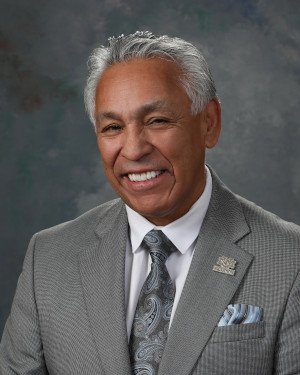
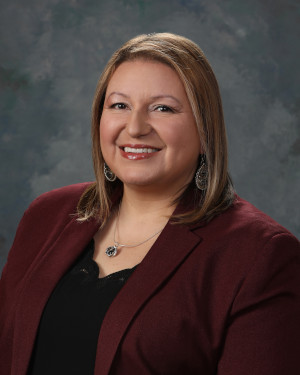
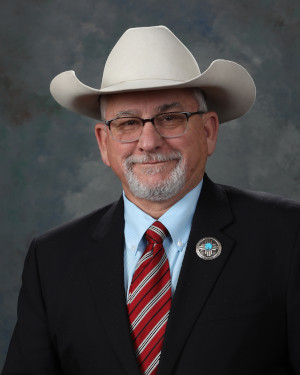
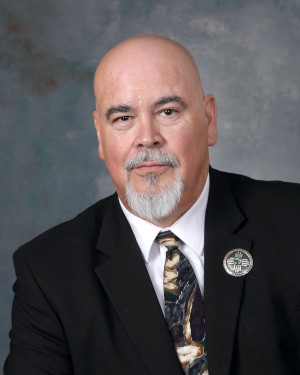
Nathan Small
Nathan Small House · District 36
D
Strong +
100% 21
Art De La Cruz
Art De La Cruz House · District 12
D
Strong +
100% 22
Anita Gonzales
Anita Gonzales House · District 70
D
Strong +
100% 21
Ray Lara
Ray Lara House · District 34
D
Strong +
100% 20
Reena Szczepanski
Reena Szczepanski House · District 47
D
Strong +
100% 22
Stefani Lord
Stefani Lord House · District 22
R
Strong −
0% 17
Randy Pettigrew
Randy Pettigrew House · District 61
R
Strong −
0% 21
Alan Martinez
Alan Martinez House · District 23
R
Strong −
0% 15
John Block
John Block House · District 51
R
Strong −
0% 22
Angelita Mejia
Angelita Mejia House · District 58
R
Strong −
0% 21
Showing 51–60 of 242 bills

All budget & taxes bills

in committee · New Mexico · Senate Mar 24, 2026

SB 208: WELCOME CHILD ACT & FUND

SB 208 creates the "Welcome Child Benefit," providing eligible parents or guardians in New Mexico with a $9,000 financial benefit for newborns or newly adopted children. To qualify, applicants must reside in New Mexico for at least six months before the child's birth or adoption and submit required documentation. The benefit consists of three $3,000 monthly payments (or a $9,000 lump sum if applied more than 90 days after birth/adoption) and adjusts annually for inflation starting in 2030. Funding comes from an annual $189 million transfer from the existing Early Childhood Education and Care Fund, beginning in 2028.
Tags Children
in committee · New Mexico · Senate Mar 24, 2026

SB 210: NM HIGHLANDS SPORTS FIELDS

SB 210 is an $80 million funding bill that appropriates general fund money to New Mexico Highlands University's Board of Regents for specific campus facility improvements. It directly affects the university by authorizing construction of a women's soccer field, football field, track, natatorium, and upgrades to the Gene Torres golf course, all to be completed by fiscal year 2027. Any unspent funds at year-end would revert to the state general fund. This is a procedural appropriation bill focused solely on funding allocation, not policy change.
in committee · New Mexico · Senate Mar 24, 2026

SB 252: LIQUOR TAX CHANGES

New Mexico's SB 252 creates a new liquor excise surtax on retailers and directs the revenue to a new Tribal Alcohol Harms Alleviation Fund. It also amends tax definitions to exclude liquor taxes from "gross receipts" calculations for other state taxes. The bill updates how existing liquor tax revenue is distributed, including maintaining funding for local DWI programs, alcohol treatment services, and drug courts. This directly affects liquor retailers (through the new surtax) and tribal communities (as recipients of the new fund). The changes aim to redirect liquor tax revenue toward tribal-specific alcohol harm programs while simplifying tax calculations.
Sub-Topics Business Taxes Revenue
in committee · New Mexico · House Mar 24, 2026

HB 296: INCREASE WORKING FAMILY TAX CREDIT

HB 296 increases New Mexico's Working Families Tax Credit to 50% of the federal Earned Income Tax Credit (EITC) for eligible residents, up from previous rates of 20-25%. It directly affects low-to-moderate income New Mexico residents who file individual state tax returns and qualify for the federal EITC, including those aged 18-24 who previously faced age-based barriers. The bill allows the credit to reduce state tax liability, with any excess refunded to taxpayers. This change takes effect for tax years beginning January 1, 2026, as specified in Section 7-2-18.15 of New Mexico's tax code.
in committee · New Mexico · Senate Mar 24, 2026

SB 230: NM HISTORIC WOMEN MARKER PROGRAM

SB 230 allocates $450,000 from the state general fund to the Cultural Affairs Department to expand and continue the New Mexico Historic Women Marker Program through fiscal year 2029. The program places markers honoring significant women in New Mexico history, directly benefiting the department and the public through historical recognition. Unspent funds by 2029 must revert to the general fund. This is a funding bill, not a policy change.
Sub-Topics State Budget
vetoed · New Mexico · House Mar 11, 2026

HB 153: LOW-CARBON CONSTRUCTION MATERIAL REBATE ACT

HB 153 establishes a state rebate program to incentivize the use of low-carbon construction materials, such as cement, steel, and glass, in eligible projects (over one residential unit or 5,000 square feet of nonresidential space). Material buyers (e.g., developers or contractors) can receive rebates for purchasing materials meeting emissions benchmarks set by the Department of Environment - 15% below industry-average greenhouse gas emissions - verified through independently assessed environmental product declarations. Rebates are capped at $500,000 per project and $10 million statewide annually, with priority given to projects achieving the greatest emissions reductions and using New Mexico-made materials. The program requires annual reporting on emissions reductions and includes strict antifraud measures, including penalties for false claims.
in committee · New Mexico · Senate Mar 24, 2026

SB 188: PAID PARENTAL LEAVE FOR SCHOOL EMPLOYEES

SB 188 creates a new law requiring New Mexico public school districts and charter schools to provide up to 12 weeks of paid parental leave to full-time school employees who have worked for 52 consecutive weeks. The leave covers birth, adoption, or foster care placement of a child, is paid at the employee’s regular rate, and must be used within a 52-week period. School districts will be reimbursed by the state for costs like substitute staff, and schools must report on employee demographics and leave usage annually. This law directly affects school employees and ensures job protection during leave without impacting retirement benefits or requiring leave exhaustion.
Sub-Topics Teachers Paid Leave
in committee · New Mexico · Senate Mar 24, 2026

SB 87: OPIOID ADDICTION PREVENTION

SB 87 creates a 5-year "Opioid Addiction Prevention Pilot Project" in New Mexico focused on reducing unnecessary opioid prescriptions after surgery. The bill requires the Department of Health to contract with a qualified third party to implement nurse navigation services - clinically-led, personalized pain management coaching and education for surgical patients and providers - to improve pain control while lowering opioid use. It appropriates $9 million from the opioid crisis recovery fund (2026-2031) for this project, with annual reports to legislative committees tracking surgical cases covered and opioids avoided. The pilot directly affects surgical patients, hospitals, and healthcare providers by changing post-surgery pain management protocols.
in committee · New Mexico · House Mar 24, 2026

HB 161: CHANGE K-12 PROGRAM UNIT CALCULATION

HB 161 adjusts how New Mexico school districts calculate funding for "K-12 plus schools" - those offering more than 1,140 instructional hours annually (1,195+ hours for extended calendars). It modifies the formula to award higher funding rates (16 thousandths vs. 12 thousandths) for schools exceeding 1,195 instructional hours, based on actual hours and days taught. This directly affects school districts operating extended-calendar programs, changing how they receive state funding for those schools. The bill requires districts to submit student participation data by October 15 annually for the next school year’s funding calculations.
in committee · New Mexico · Senate Mar 24, 2026

SB 49: SCHOOL-AGE APPROPRIATE FILTERING PROJECT

SB 49 creates a three-year pilot program in New Mexico public schools to test a voluntary rating system for library materials based on age-appropriateness. Participating school districts and charter schools must implement the rating system, publish rated materials for parents, and administer a department-approved survey to measure parent engagement and trust. Each selected school receives $25,000 upon selection and another $25,000 after completing the survey phase, with $3.21 million allocated from the public education reform fund for the project. The program requires geographic diversity in participant selection and mandates annual reports to the legislative education committee, focusing on evaluating how the rating system impacts parent-school relationships.
Sub-Topics Libraries
Showing 51 to 60 of 242 bills
Previous 1 5 6 7 25 Next