

Maddy summaryThe SILVER Act aims to improve the resilience and efficiency of the U.S. precious metals futures market by allowing storage facilities outside New York City to be approved for use in futures contracts. The bill requires derivatives clearing organizations to use transparent, objective criteria when selecting storage vaults and to approve new facilities that promote geographic diversity, competition, and lower storage costs. It mandates that at least two approved depositories be available in each of the four U.S. time zones, ensuring broader market access and reducing risks associated with concentrating vaults in one location. The legislation also requires periodic assessments of how easily market participants can access physical delivery of commodities regardless of where the storage facilities are located.
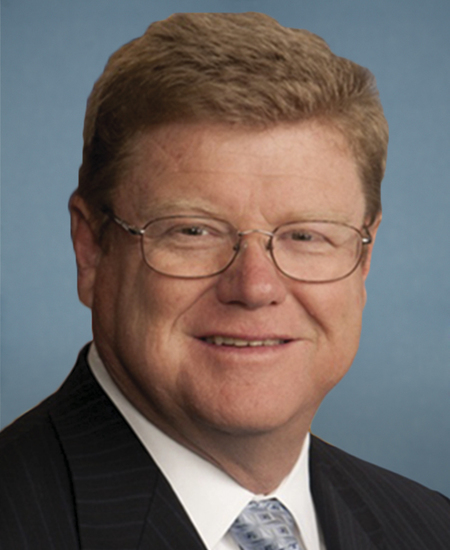
Rep. Mark E. Amodei
Sponsored bills
Enhanced Iran Sanctions Act of 2025 This bill imposes sanctions on certain foreign persons (individuals and entities) that are involved in Iran's petroleum sector as well as certain associated persons. The bill also requires or authorizes actions to facilitate the enforcement of sanctions on Iran. Specifically, the bill requires the President to impose visa- and property-blocking sanctions on any foreign person that, after the bill's enactment, knowingly engages in any transaction related to the processing, export, or sale of oil, condensates, gas, liquefied natural gas, or other petrochemical products in whole or in part from Iran. The President must also impose sanctions on certain foreign persons associated with a sanctioned individual or entity. For example, the President must sanction the subsidiaries and corporate officers of a sanctioned business. The bill provides certain exceptions to these sanctions, including specifying that sanctions do not apply to the importation of goods or to conducting or facilitating transactions for humanitarian assistance. The Department of State must establish an interagency working group that shall seek to establish a multilateral contact group to coordinate international efforts to enforce sanctions on Iran. The bill expands the State Department rewards program to authorize a reward payment to any individual who furnishes information leading to the identification of a person (1) subject to sanctions under this bill, or (2) that has attempted or is attempting to evade sanctions under this bill.
Mining Regulatory Clarity Act This bill allows mining operators to use federal lands for activities ancillary to mining, such as waste disposal, regardless of whether those lands contain mineral deposits valuable enough to be mined (mineral validity). It also establishes the Abandoned Hardrock Mine Fund. The bill addresses a 2022 decision in the U.S. Court of Appeals for the Ninth Circuit related to the Rosemont Copper Mine in Arizona (commonly known as the Rosemont decision , described further in CRS Report R48166 ). The court held that mining claims are only allowed where mineral validity has been established and that mill site claims are more appropriate means for establishing a mining waste disposal site under the Mining Act. The bill allows a mining operator to (1) locate and include within its plan of operations as many mill site claims (e.g., areas for waste rock disposal) as are reasonably necessary for its operations, and (2) use or occupy public land in accordance with an approved plan of operations. Additionally, the bill requires any revenue generated from fees for such mill site claims to be deposited into the Abandoned Hardrock Mine Fund. The Department of the Interior must use the fund for certain abandoned hardrock mine reclamation activities.
Maddy summaryHR 6062 transfers approximately 25 acres of federal land from the Department of the Interior (DOI) to U.S. Customs and Border Protection (CBP) for its Advanced Training Center in Harpers Ferry, West Virginia, while returning about 71.51 acres from CBP back to DOI to expand Harpers Ferry National Historical Park. The bill requires adjusting park boundaries to exclude the transferred CBP land and include the returned land, with a survey finalizing exact boundaries. It specifies no monetary reimbursement for the transfers and allows CBP to revert unused land back to DOI for park inclusion. The transfer relies on a specific 2021 National Park Service map for land descriptions.
Maddy summaryH.J. Res. 151 seeks to block a Bureau of Land Management (BLM) rule that established management guidelines for Utah's Grand Staircase-Escalante National Monument. The resolution, introduced in March 2026, uses the Congressional Review Act to request Congress disapprove the rule, which was issued in January 2025 and submitted for review. If enacted, the resolution would prevent the rule from taking effect, meaning the BLM would not be required to follow the specific management plan outlined in that rule. This action directly affects the monument's management, as the rule governed activities like land use and conservation within the protected area.
Maddy summaryHR 7678, the Gun Owner Registration Information Protection Act, prohibits federal funding for state or local databases that track lawfully owned firearms or their owners. The bill allows federal funding for databases recording lost or stolen firearms but bans it for databases listing legal gun ownership. This means states cannot use federal money to create or maintain systems that compile information about legally owned guns. The bill directly affects state and local governments that rely on federal funds for firearm ownership databases.
Maddy summaryHR 7568, the Hot Rock Act, funds research and development for "hot dry rock" geothermal energy - a next-generation technology that extracts heat from superhot (300°C+) rock formations with low natural permeability. It authorizes $16-30 million annually (2027-2031) for grant programs targeting high-temperature drilling, reservoir creation, and supercritical fluid research, plus a workforce training program to transition oil/gas workers into geothermal roles. The bill directly affects eligible entities (National Labs, universities, private companies) and covered individuals (U.S. oil/gas workers seeking geothermal careers), with provisions requiring seismic monitoring and risk research. Key mechanisms include milestone-based grants for achieving technical goals like drilling to supercritical temperatures and developing new well-casing methods.
Maddy summaryThis bill authorizes the U.S. Mint to produce two types of commemorative $2.50 coins for the 250th anniversary of the Declaration of Independence: a circulating coin for everyday use and a numismatic (collector) coin. Both would feature designs based on the 1926 Sesquicentennial coin - showing allegorical liberty holding the Declaration on one side and Independence Hall on the other - with "1776-2026" inscriptions. The bill requires the Mint to issue these coins by July 4, 2026, if technically and economically feasible, but does not mandate their production or affect any specific groups beyond the public who may purchase them.
Maddy summaryHR 4304, the FAIR Bet Act, amends the tax code to allow gamblers to deduct 100% of their wagering losses instead of the current 90% limit. This change directly affects individuals who report gambling losses on their federal income tax returns. The key provision modifies Section 165(d) of the Internal Revenue Code to remove the 90% restriction on deducting gambling losses. The bill does not alter how gambling winnings are taxed, only the deduction available for losses.
Maddy summaryThe REPAIR Act requires motor vehicle manufacturers to provide car owners and independent repair shops with full access to vehicle data and repair information, prohibiting technological or legal barriers that restrict this access. It mandates that manufacturers share vehicle-generated data, critical repair information, and tools on equal terms with dealers and authorized service providers, without requiring consumers to use specific brands of parts or tools. The law establishes an advisory committee to monitor implementation and ensure fair competition in vehicle repair, while giving the Federal Trade Commission authority to enforce these requirements as unfair or deceptive practices. This legislation directly affects car owners, independent repair facilities, aftermarket parts manufacturers, and motor vehicle manufacturers by shifting control of repair information and data from manufacturers to consumers.