Maddy summaryHR 7391, the Community Health Center Drug Pricing Protection Act, requires that Federally Qualified Health Centers (FQHCs) pay the discounted 340B ceiling price for covered drugs **at the time of purchase**, not later through rebates or adjustments. This directly affects FQHCs, which rely on 340B discounts to provide affordable care to low-income patients. The bill amends the Public Health Service Act to prohibit manufacturers from entering agreements where FQHCs initially pay more than the ceiling price, with later reimbursement. It takes effect immediately upon enactment for all new drug purchases and applies to existing agreements starting then.
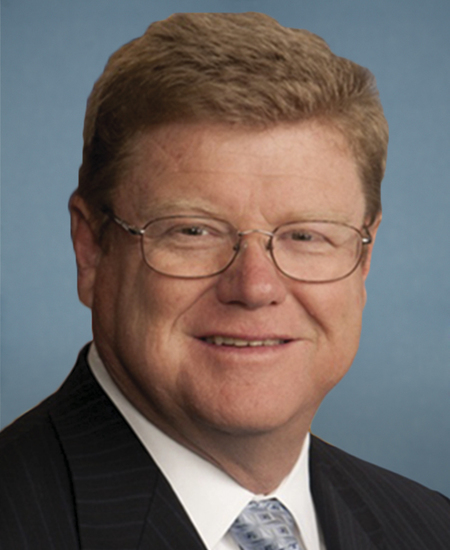
Rep. Mark E. Amodei
Sponsored bills
Maddy summaryHR 7409, the Defend Rural Health Act of 2026, prevents rural hospitals from being reclassified as urban Medicare facilities after October 1, 2029, unless they met specific criteria before October 1, 2026. The bill amends Medicare rules to block hospitals from retaining rural status beyond 2029, even if they applied for reclassification earlier. It also prohibits the Medicare Geographic Classification Review Board from approving new reclassification requests for hospitals already treated as rural under current rules for fiscal years starting after October 1, 2026. This directly affects rural hospitals that rely on higher Medicare payments tied to their geographic classification. The law aims to maintain stable funding for rural hospitals by restricting future reclassifications.
Maddy summaryThis bill prevents state or local governments from banning or restricting energy connections (like installation, modification, or access) based on the type or source of energy, such as electricity, natural gas, or renewable fuels. It directly affects consumers choosing energy providers and energy companies seeking to offer services. The key provision prohibits local laws, regulations, or policies that limit energy services sold in interstate commerce, covering all energy types listed in the bill’s definitions. It does not create new programs but limits regulatory authority at the state or local level. The law aims to ensure open access to diverse energy sources without source-based restrictions.
Maddy summaryHR 7276 would impose a 30% tariff on sheep and lamb products imported from Australia or New Zealand, effective 30 days after the bill becomes law. This directly affects Australian and New Zealand exporters of these goods, including meat (lamb), wool, and wool-containing products like pelts. The bill requires the President to add this specific duty to existing import tariffs on all covered products, as defined in the legislation. Key terms clarify that "lamb" refers to meat from young sheep (not mutton), "sheep products" include wool, and "lamb products" encompass items made from lamb. The policy change is a straightforward trade measure increasing import costs for these specific agricultural exports.
Maddy summaryThe Unsubscribe Act of 2025 regulates "negative option" billing practices, where companies automatically charge consumers unless they actively opt out. It requires merchants to clearly disclose all terms before charging, obtain explicit consumer consent, and provide an easy online cancellation method. The bill specifically targets contracts like free-to-pay conversions (e.g., "free trial" followed by automatic charges), mandating clear upfront terms about pricing and renewal. Consumers directly benefit through greater transparency and control, while merchants must comply with new disclosure, consent, and cancellation rules starting one year after enactment. Enforcement falls to the Federal Trade Commission and state attorneys general.
Maddy summaryHR 909, the Crime Victims Fund Stabilization Act of 2025, modifies how funds from the False Claims Act are deposited into the Crime Victims Fund. It specifies that from 2025 through 2029, certain False Claims Act proceeds (specifically those for qui tam plaintiff payments and government damage reimbursements) cannot be deposited into the fund. This change directly affects the composition of the Crime Victims Fund by excluding these specific revenue streams during the specified period. The bill does not create new benefits or alter victim services; it only adjusts fund allocation rules for existing False Claims Act revenues.
Miracle on Ice Congressional Gold Medal Act This act provides for the award of Congressional Gold Medals to the members of the 1980 U.S. Olympic men's ice hockey team in recognition of the team's achievement at the 1980 Winter Olympic Games.
Maddy summaryThis bill establishes a new interagency Task Force to dismantle foreign scam operations targeting Americans, particularly through "pig butchering" scams in Southeast Asia. The Task Force, chaired by the Secretary of State, will coordinate efforts across multiple agencies to shut down scam centers, impose sanctions on perpetrators, and support victims of trafficking. It requires a detailed strategy within 180 days and annual reports to Congress on progress, including sanctions imposed and funds recovered. The bill authorizes $30 million for these efforts in fiscal years 2026-2027, focusing on countries like Cambodia, Laos, and Burma where scam centers operate with forced labor.
Give Kids a Chance Act of 2025 This bill expands the Food and Drug Administration’s (FDA’s) authority with respect to research on rare pediatric diseases, including by permitting the FDA to take enforcement action against drug sponsors that fail to satisfy pediatric study requirements and by reauthorizing programs that support pediatric research. Specifically, the bill modifies requirements relating to molecularly targeted pediatric cancer investigations to permit research on new drugs in combination with active ingredients that have already been approved, provided certain conditions are met; permits the FDA to take enforcement action against drug sponsors that fail to comply with pediatric study requirements, if such sponsors demonstrated a lack of due diligence in satisfying the requirement; renews the FDA’s authority to award priority review vouchers to sponsors of new products intended to treat rare pediatric diseases through September 30, 2029; and reauthorizes through FY2027 certain funding for the National Institutes of Health to support priority pediatric research. The bill also provides statutory authority for the FDA’s interpretation of the orphan drug exclusivity period. The bill specifies, consistent with FDA regulations, that the seven-year market exclusivity period for drugs for rare diseases or conditions (i.e., orphan drugs) prohibits the approval of the same drug for the same approved use or indication with respect to the disease or condition. (In Catalyst Pharmaceuticals, Inc. v. Becerra , a court rejected the FDA’s interpretation and held that orphan drug exclusivity extends to all uses or indications for the disease or condition.)
Maddy summaryHR 5107, the Common-Sense Law Enforcement and Accountability Now in DC Act (CLEAN DC Act), repeals D.C. Law 24-345 (the 2022 Comprehensive Policing and Justice Reform Amendment Act). This bill directly affects Washington, D.C.'s policing and justice systems by reversing all changes made under that 2022 law. The key mechanism is a straightforward repeal, restoring all prior District laws as if the 2022 reform had never been enacted. The bill does not introduce new provisions but undoes existing reforms to the District’s law enforcement framework.