Maddy summaryHR 556, the Protecting Access for Hunters and Anglers Act, prevents federal agencies from banning lead ammunition or tackle on public lands and waters managed for hunting or fishing. It directly affects hunters and anglers using federal lands (like national wildlife refuges, public forests, and BLM lands) by blocking nationwide restrictions on lead products. The bill allows limited exceptions only for specific locations where wildlife decline is directly linked to lead use, and the restriction must align with state law or get approval from the state wildlife agency. This changes how federal land managers can regulate lead, requiring state coordination for any local restrictions.
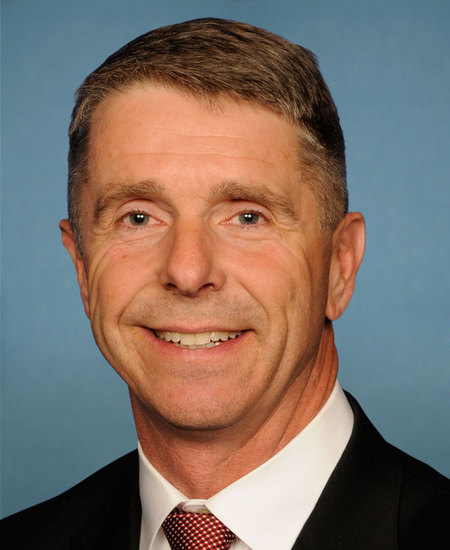
Rep. Robert J. Wittman
Sponsored bills
Maddy summaryThis bill requires the Secretary of the Interior to conduct an ongoing study on aluminum recycling and disposal. The study must assess how much aluminum ends up in landfills and examine related market factors. Every three years, the Secretary must submit a detailed report to Congress covering landfill amounts, export data, technology improvements, and policies to keep aluminum in the domestic supply chain. The report will also analyze how increased recycling affects U.S. dependence on foreign entities and domestic manufacturing capacity.
Maddy summaryThe MAWS Act of 2026 establishes a 3-year pilot program (2027-2029) to purchase invasive blue catfish from watermen and seafood processors within the Chesapeake Bay Watershed. It authorizes $2 million annually to fund covered entities - manufacturers of pet food, animal feed, or aquaculture feed - to buy blue catfish caught in the watershed, requiring certification of origin and setting minimum prices based on market factors. The program mandates detailed reporting on environmental impacts, economic effects on watermen, and market responses to inform future policy. This directly supports watermen and processors by creating a market for invasive blue catfish while collecting data for potential expansion to other watersheds.
Enhanced Iran Sanctions Act of 2025 This bill imposes sanctions on certain foreign persons (individuals and entities) that are involved in Iran's petroleum sector as well as certain associated persons. The bill also requires or authorizes actions to facilitate the enforcement of sanctions on Iran. Specifically, the bill requires the President to impose visa- and property-blocking sanctions on any foreign person that, after the bill's enactment, knowingly engages in any transaction related to the processing, export, or sale of oil, condensates, gas, liquefied natural gas, or other petrochemical products in whole or in part from Iran. The President must also impose sanctions on certain foreign persons associated with a sanctioned individual or entity. For example, the President must sanction the subsidiaries and corporate officers of a sanctioned business. The bill provides certain exceptions to these sanctions, including specifying that sanctions do not apply to the importation of goods or to conducting or facilitating transactions for humanitarian assistance. The Department of State must establish an interagency working group that shall seek to establish a multilateral contact group to coordinate international efforts to enforce sanctions on Iran. The bill expands the State Department rewards program to authorize a reward payment to any individual who furnishes information leading to the identification of a person (1) subject to sanctions under this bill, or (2) that has attempted or is attempting to evade sanctions under this bill.
Maddy summaryHR 7932, the HONOR Gold Star Families Act, increases the death gratuity paid to families of service members who died in the line of duty. It raises the current $100,000 payment to $200,000 for deaths occurring on or after January 1, 2026. The bill also adds an annual cost-of-living adjustment to this amount, increasing it each January 1 based on the previous year’s inflation rate as measured by the Consumer Price Index. This directly affects Gold Star Families - those who have lost a service member in military service - by providing a larger initial payment and ensuring future payments keep pace with inflation.
This bill reauthorizes through FY2031 the Young Fishermen’s Development Grant Program, which supports local and regional training, education, outreach, and technical assistance initiatives for young fishermen.
Maddy summaryThis bill, known as the Quantum in Practice Act, amends the National Quantum Initiative Act to formally include quantum modeling and simulation as a core area of research. It directly affects federal agencies and researchers involved in quantum information science by updating the legal definition and adding specific funding priorities for quantum molecular modeling. The legislation aims to support scientific work that could lead to breakthroughs in areas like fertilizer production, drug development, battery technology, and new materials. By making these changes, the bill ensures that federal quantum research programs explicitly cover the development and study of quantum simulations for practical applications.
Maddy summaryThis bill would allow Indian tribes to access the Defense Community Infrastructure Program, which currently provides funding for infrastructure improvements near military installations. By amending Title 10 of the U.S. Code, the legislation adds "Indian tribes" as eligible recipients alongside local governments and other entities. The bill defines "Indian tribe" using the existing legal definition from the Indian Self-Determination and Education Assistance Act. This change expands the pool of organizations that can apply for infrastructure support related to defense facilities.
Maddy summaryThe SECURE Minerals Act of 2026 establishes a Strategic Resilience Reserve Corporation to secure U.S. supply chains for critical minerals and materials essential to defense, energy, technology, and renewable energy sectors. The Reserve will provide financing and acquisition support for domestic and partner country projects focused on producing, recycling, reusing, and repurposing critical minerals, with the goal of reducing U.S. dependence on foreign sources to no more than 75% for each mineral. It authorizes $2.5 billion in funding and establishes a Board of Governors with specific expertise requirements to oversee operations, while requiring regular risk assessments and annual reporting. This legislation directly affects mineral production and processing companies, federal agencies managing mineral resources, and partner countries working with the U.S. on supply chain security.
Maddy summaryHR 2969, the Finding ORE Act, authorizes the U.S. Secretary of the Interior to enter into memorandums of understanding (MOUs) with partner countries that supply critical minerals and rare earth elements. The bill requires these MOUs to include cooperative mapping of mineral reserves, give U.S. or allied foreign country companies the "right of first refusal" for development, and facilitate U.S. private-sector investment through financial institutions like the Development Finance Corporation. It also mandates data protection for mapping information against unauthorized access by non-partner or non-allied countries. This legislation directly affects partner foreign countries (mineral sources), U.S. companies, and the U.S. Geological Survey, focusing on securing supply chains through international scientific collaboration.