

Safeguard American Voter Eligibility Act or the SAVE America Act This bill requires individuals to provide documentary proof of U.S. citizenship when registering to vote, and requires photo identification to vote, in federal elections. Specifically, the bill prohibits states from accepting and processing an application to register to vote in a federal election unless the applicant presents documentary proof of U.S. citizenship. The bill specifies what documents are considered acceptable proof of U.S. citizenship, such as identification that complies with the REAL ID Act of 2005 that indicates U.S. citizenship. Further, the bill (1) prohibits states from registering an individual to vote in a federal election unless, at the time the individual applies to register to vote, the individual provides documentary proof of U.S. citizenship; and (2) requires states to establish an alternative process to demonstrate U.S. citizenship. Each state must take affirmative steps on an ongoing basis to ensure that only U.S. citizens are registered to vote, which shall include establishing a program to identify individuals who are not U.S. citizens using information supplied by certain sources. Additionally, states must remove noncitizens from their official lists of eligible voters. The bill (1) provides for a private right of action for certain violations, and (2) establishes criminal penalties for certain offenses. Individuals voting in federal elections must present an eligible photo identification document. An individual who votes by absentee ballot must submit a copy of their identification document with both the request for, and the submission of, the absentee ballot.
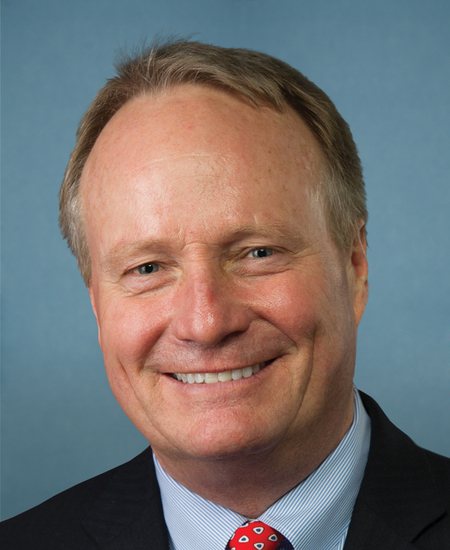
Rep. David P. Joyce
Sponsored bills
Maddy summaryHR 7279, the Nurse Faculty Shortage Reduction Act of 2026, creates a federal program to address nurse faculty shortages by covering the pay gap between nursing faculty salaries and clinical nursing salaries. It authorizes $15 million annually (2027-2031) for nursing schools to supplement faculty salaries for up to three years, targeting faculty who previously worked in clinical practice or are new hires. Schools must submit detailed salary data comparing clinical nurse pay to faculty pay and demonstrate plans to sustain funding after the grant period. The program prioritizes schools in health professional shortage areas, serving vulnerable populations, or focusing on underrepresented faculty, with a report due to Congress within three years of enactment.
Maddy summaryHRES 1019 is a symbolic House resolution recognizing Certified Registered Nurse Anesthetists (CRNAs) for their 150+ years of service in providing anesthesia care across the U.S. health system. It highlights CRNAs' critical role in rural areas, military medicine, and during public health emergencies, noting they administer over 58 million anesthetics annually and serve as primary providers for 69,000 CRNAs nationwide. The resolution encourages the public, healthcare leaders, and policymakers to acknowledge CRNAs' contributions and participate in National CRNA Week (January 18-24, 2026), though it does not create new laws or policy changes.
Maddy summaryHR 7178, the U.S.-Israel Anti-Killer Drone Act of 2026, requires enhanced U.S.-Israel cooperation to counter Iranian unmanned systems. The bill directs the U.S. and Israel to jointly develop, test, and deploy counter-drone technologies through their existing Operations Technology-Working Group, including sharing threat intelligence and conducting joint training. It increases annual funding for this cooperation from $55 million to $100 million and mandates detailed annual reports to Congress on progress, threat assessments, and the adequacy of current counter-drone capabilities. The bill directly affects U.S. and Israeli military forces by accelerating joint efforts to address threats from Iran-origin drones targeting U.S. allies and military assets in the Middle East.
Maddy summaryHR 909, the Crime Victims Fund Stabilization Act of 2025, modifies how funds from the False Claims Act are deposited into the Crime Victims Fund. It specifies that from 2025 through 2029, certain False Claims Act proceeds (specifically those for qui tam plaintiff payments and government damage reimbursements) cannot be deposited into the fund. This change directly affects the composition of the Crime Victims Fund by excluding these specific revenue streams during the specified period. The bill does not create new benefits or alter victim services; it only adjusts fund allocation rules for existing False Claims Act revenues.
Maddy summaryThe AIRSHIP Act directs NASA to establish new research programs focused on airships, adding them to existing aeronautics research categories. It creates competitive grant opportunities for teams - including universities, industry, and government - to develop airship technology for sustainable cargo transport, disaster response, and humanitarian aid. The bill specifically amends federal law to require NASA to fund airship research alongside rotorcraft and fixed-wing vehicles. This affects NASA’s research budget and enables new collaborative projects, though it does not fund actual airship operations or mandate specific outcomes. The legislation aims to advance airship technology through federally supported R&D, without imposing new regulations or direct impacts on the public.
Maddy summaryThis bill, titled "Pet and Livestock Protection Act," is misleading; it actually focuses on gray wolf management. It requires the Secretary of the Interior to reissue a 2020 rule removing gray wolves from the endangered species list within 60 days of enactment. The bill also prohibits courts from reviewing this reissuance. This directly affects gray wolf populations and management policies in states where wolves are present, shifting regulatory control away from federal endangered species protections.
Miracle on Ice Congressional Gold Medal Act This act provides for the award of Congressional Gold Medals to the members of the 1980 U.S. Olympic men's ice hockey team in recognition of the team's achievement at the 1980 Winter Olympic Games.
Maddy summaryThis bill prohibits public elementary and secondary schools receiving federal education funds from accepting money or entering contracts with the Chinese government, Chinese Communist Party, or their agents. Schools must also disclose any foreign funding or contracts within 30 days, including the source's name, country, amount, and terms. It directly affects all public K-12 schools participating in federal education programs. The law focuses solely on restricting funding sources and requiring transparency, with no provisions related to curriculum content or "combating lies" as referenced in the title.
Building Resources and Access for Veterans' Mental Health Engagement Act of 2025 or the BRAVE Act of 2025 This bill addresses mental health services and care provided by the Department of Veterans Affairs (VA), including matters related to personnel, Vet Center administration, care for women veterans, and access to care. The bill authorizes the VA to waive the licensure or certification requirement for individual licensed professional mental health counselor appointees for a reasonable period of time. The bill also extends the Staff Sergeant Parker Gordon Fox Suicide Prevention Grant Program and increases the maximum annual grant amount. The VA must provide Vet Centers with guidance for assessing outreach activities and implement processes to periodically assess the extent to which (1) veterans and eligible members of the Armed Forces experience barriers to obtaining services at Vet Centers, and (2) Vet Center staff may encounter barriers to providing services. Among other requirements, the VA must also survey and host listening sessions with women veterans to gauge the effectiveness of the VA’s suicide prevention, lethal-means safety, and mental health resources and messaging campaigns; initiate efforts to modify the Recovery Engagement and Coordination for Health-Veterans Enhanced Treatment (REACH VET) program to incorporate risk factors weighted for women; annually offer a mental health consultation to veterans who are receiving compensation for a service-connected disability relating to a mental health diagnosis; and implement a pilot program to provide access to mental health residential treatment programs for veterans with a spinal cord injury or disorder.