Maddy summaryThis bill prevents the Forest Service from initiating or implementing layoffs until after full-year funding for fiscal year 2026 is secured. It specifically stops reductions in force and involuntary separations for most Forest Service employees (including competitive service, excepted service, and senior executive roles), except for misconduct, poor performance, or delinquency. The moratorium applies to all personnel actions under the Secretary of Agriculture’s authority until FY2026 appropriations are enacted. This directly affects Forest Service workers and ensures their job stability during the budget process.
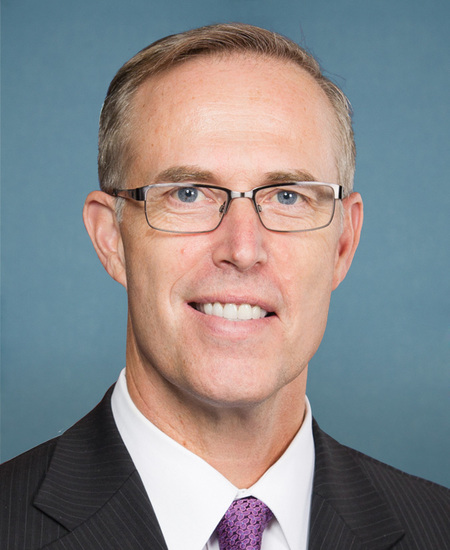
Rep. Jared Huffman
Sponsored bills
Maddy summaryHR 4818, the Gas Pipeline Leak Detection and Repair Act of 2025, mandates that the Pipeline and Hazardous Materials Safety Administration's (PHMSA) existing January 2025 rule on gas pipeline leak detection and repair (Docket No. PHMSA-2021-0039) becomes effective immediately upon the bill's enactment. This directly affects gas pipeline operators, requiring them to implement the specific leak detection and repair protocols outlined in the PHMSA rule. The bill allows the Secretary to later adopt stricter regulations but does not alter the current rule's requirements. It is a procedural measure to finalize an existing safety rule, not a new policy.
Maddy summaryThis bill removes a barrier preventing most low-income students from accessing SNAP benefits. It amends the Food and Nutrition Act to explicitly allow students enrolled at least half-time in recognized higher education programs to qualify for SNAP, reversing a prior exclusion. The key change eliminates the previous requirement that students meet specific exceptions (now deleted) and adds a new eligibility category under Section 3(m)(5). This directly affects low-income undergraduate and graduate students at colleges and training programs who were previously ineligible. The changes take effect January 2, 2026.
Maddy summaryHR 4796, the Restoring Essential Healthcare Act, repeals a provision that blocked Medicaid payments to certain healthcare providers during a specific period. It directly affects Medicaid beneficiaries who received care from these providers between the enactment of the prior law (Public Law 119-21) and this bill's enactment. The key provision retroactively restores Medicaid payments for services already provided during that blocked period, treating the payment restriction as if it never existed. This change ensures eligible individuals and providers receive reimbursement for covered care delivered during the prohibited timeframe.
Maddy summaryThe Ethics in Energy Act of 2025 prohibits large electric and natural gas utilities from charging customers (ratepayers) for expenses related to political influence activities. It directly affects major covered utilities - defined as electric companies with high annual sales volumes or major natural gas companies - and their customers. Key provisions require these utilities to publicly report all political-related expenses (including lobbying, PR campaigns, or trade association dues) and prevent them from recovering such costs through customer bills. The Federal Energy Regulatory Commission must create rules within 18 months to enforce this, impose penalties (up to triple the expense amount for large violations), and distribute half of collected penalties as customer rebates.
Maddy summaryHR 4763, the PTO Act, requires most employers to provide employees with at least 1 hour of paid annual leave for every 25 hours worked, with a maximum of 80 hours per year. It applies to private-sector workers and certain government employees, protecting their right to use paid leave for any purpose without disclosing the reason. The bill mandates employers to maintain health benefits during leave, allow carryover of up to 40 hours of unused leave, and pay out unused leave upon separation. It also prohibits employers from discriminating against employees for using paid leave or requiring them to find replacements while on leave. The law includes enforcement mechanisms, allowing employees to file complaints with the Department of Labor or pursue private lawsuits.
Maddy summaryThe ACHE Act of 2025 requires the National Institute of Environmental Health Sciences to study health impacts of mountaintop removal coal mining on communities in Kentucky, Tennessee, West Virginia, and Virginia. It imposes a temporary moratorium on new federal permits for such mining until the study concludes, while mandating ongoing pollution monitoring (water, air, soil) at existing sites with public reporting of results. Coal mining companies must pay a fee to cover federal costs for the study and monitoring program. The bill directly affects coal mining operations in the specified Appalachian regions and the communities living near them, focusing on evidence-based health research and transparency.
Maddy summaryHCONRES 46 is a non-binding congressional resolution expressing support for climate restoration. It declares Congress' commitment to restoring atmospheric CO2 levels to below 300 ppm (pre-industrial levels) and identifies climate restoration alongside achieving net-zero emissions as key climate policy priorities. The resolution specifically calls on the President, Secretary of State, and U.S. Ambassador to the UN to take actions toward restoring the climate and stabilizing greenhouse gas concentrations at preindustrial levels. It does not create new laws or funding, but formally recognizes an obligation to future generations to reverse climate change impacts. The resolution directly affects U.S. climate policy direction and international climate diplomacy efforts.
Maddy summaryHR 4696 amends Section 249 of the Immigration and Nationality Act to update eligibility for a registry program that provides a pathway to legal status for long-term residents. It changes the requirement from entering the U.S. before January 1, 1972, to entering at least 7 years before the application date. This adjustment bases eligibility on a rolling 7-year window instead of a fixed historical cutoff, allowing more recent long-term residents to qualify. The bill directly affects individuals who entered the U.S. after 1972 but maintained continuous residence for at least seven years prior to applying.
Maddy summaryThe PRIME Act exempts custom slaughter facilities from federal meat inspection requirements when they follow state laws and sell meat exclusively within the same state. It specifically allows facilities to slaughter animals and prepare meat without federal oversight if the products go only to household consumers or local businesses (like restaurants, hotels, or grocery stores) serving consumers directly in that state. The bill clarifies that this exemption does not override stricter state regulations governing custom slaughter or meat sales. This primarily affects small-scale slaughter operations and local food businesses operating within a single state's borders.