Maddy summaryThis bill (HJRES 115) terminates a presidential emergency declaration made on August 11, 2025, which claimed a "crime emergency" in Washington, D.C. It directly affects the District of Columbia by ending federal restrictions that prevented D.C. from using $1 billion in locally-raised funds for public safety, law enforcement, fire services, and schools. The resolution cites that the emergency declaration was legally flawed - section 740 of the DC Home Rule Act does not permit federalizing the Metropolitan Police Department - and notes that D.C. violent crime has reached a 30-year low. The bill formally ends the emergency under the DC Home Rule Act, restoring D.C.'s authority over its own budget and public safety resources.
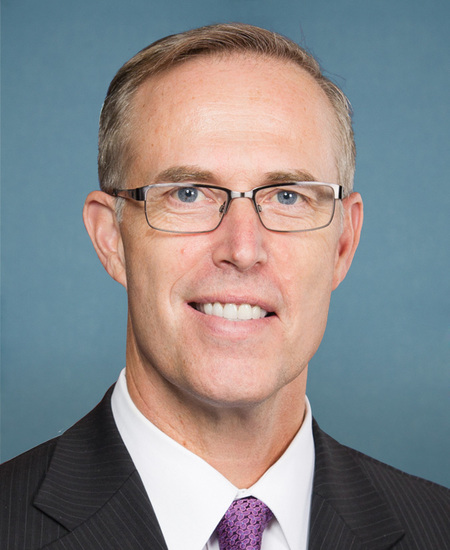
Rep. Jared Huffman
Sponsored bills
Maddy summaryHR 4976, the Shielding Students from Wildfire Smoke Act, requires the Environmental Protection Agency to commission the National Academies of Sciences to review existing policies protecting children from wildfire smoke in K-12 schools, childcare centers, and related activities like sports or camps. The review will assess current standards, identify research and policy gaps, and provide recommendations to Congress for better protection, especially in under-resourced settings. This bill does not create new regulations but mandates a formal evaluation of current approaches to safeguard children during smoke events. It directly affects children in educational and childcare environments across the U.S., particularly in communities frequently impacted by wildfires.
Maddy summaryHR 4961, the Public Utility Remediation and Enhancement for Water Act, creates a federal grant program to help municipal water systems address harmful chemicals like PFAS (perfluoroalkyl substances) in drinking water. The bill authorizes $200 million annually (2026-2028) to fund 75% of costs for planning, building, or upgrading treatment systems to prevent or treat these emerging contaminants. It directly affects publicly owned water treatment facilities by providing financial support to comply with federal water pollution standards for these chemicals. The program requires states to manage grants similarly to existing water fund programs, with non-federal funds covering the remaining 25% through local or private sources.
Maddy summaryThis bill extends the expiration date for a provision allowing certain vehicles to use High Occupancy Vehicle (HOV) lanes without meeting standard occupancy requirements. Specifically, it amends federal law to change the deadline from September 30, 2025, to September 30, 2031. The change directly affects drivers and vehicle operators who currently qualify for this exemption under existing rules. It is a procedural reauthorization, not a policy change, maintaining the current HOV lane exemption rules for an additional six years.
Maddy summaryHR 4937, the EQUAL Parks Act, codifies the 2017 Presidential Memorandum on promoting diversity and inclusion in national parks and public lands, giving it the force of law. It requires federal agencies managing public lands - such as the National Park Service and U.S. Forest Service - to implement the diversity and inclusion guidelines outlined in that memorandum. The bill does not create new programs but mandates that these agencies formally adopt and follow the memorandum’s requirements for improving access and representation. This affects how federal land management agencies operate and engage with diverse communities.
Maddy summaryHR 4894, the Deceptive Practices and Voter Intimidation Prevention Act of 2025, prohibits the intentional spread of false information about voting procedures, eligibility, or penalties within 60 days of an election. The bill specifically targets deceptive communications through social media, text messages, and AI-generated content designed to prevent voters from casting ballots, including false claims about voting locations, registration status, or legal consequences. It creates a private right of action for individuals harmed by these deceptive practices and authorizes the Attorney General to issue corrective information to counter false claims. The law directly affects voters, election officials, social media platforms, and anyone spreading false voting information, with penalties including fines and imprisonment for violations.
Maddy summaryThe CLEAR ID Act (HR 4843) requires U.S. Immigration and Customs Enforcement (ICE) and other authorized officers conducting civil immigration enforcement actions to visibly identify themselves. Specifically, it prohibits wearing masks that hide identity, mandates clear agency vehicle markings, and requires officers to verbally state their agency and show a badge. The law applies to all "covered immigration officers" from DHS agencies and partner agencies conducting enforcement under immigration law. Exceptions exist for medical needs or approved undercover operations meeting strict safety and legal criteria. The bill directly affects federal, state, and local officers performing immigration enforcement duties.
Maddy summaryHR 4847 extends deadlines for states to advance federally funded emergency highway projects after a declared disaster. It prevents the federal government from requiring projects to move to construction before the end of the sixth fiscal year following either a state governor's emergency declaration or the president's major disaster declaration. States can request up to one year extensions for these deadlines, with additional extensions possible if the state provides justification. The bill also requires the federal government to update and publicly share emergency relief manuals every two years to guide states on handling disaster-related highway projects. This directly affects states managing federal highway emergency funds following disasters.
Maddy summaryThis bill blocks the Department of the Interior from implementing layoffs or involuntary separations (except for misconduct or performance issues) at any agency or bureau until Congress passes full-year funding for fiscal year 2026. It directly affects all employees in the competitive service, excepted service, and Senior Executive Service within the Department of the Interior. The key provision creates a moratorium on workforce reductions, requiring full FY2026 appropriations before any layoff actions can proceed.
Maddy summaryThis bill adjusts health insurance subsidies by modifying the premium tax credit structure under the Internal Revenue Code. It replaces previous income thresholds with a sliding-scale formula, increasing subsidies for households earning between 150% and 400% of the federal poverty level - reducing their required premium payments as income rises within these tiers. The changes apply to tax years beginning after December 31, 2025, directly affecting middle-income individuals and families purchasing coverage through health insurance marketplaces. It also repeals specific provisions from a prior reconciliation law related to health care.