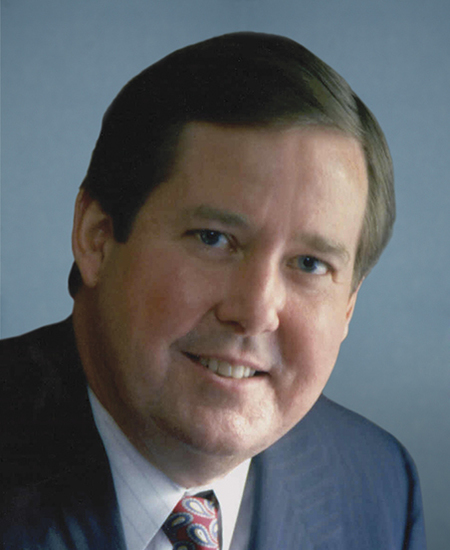
Photo of Ken Calvert
R United States House · District 41 · California

Rep. Ken Calvert

Compare
Total votes
2,837
all sessions
Attendance
99%
22 missed
Higher than 89% of chamber peers
With party
92%
of cast votes
Near the chamber average
Bipartisan score
4%
crosses aisle rarely
Near the chamber average
Sponsored
759
bills & resolutions
Near the chamber average
Committees
3
assignments
759 bills and resolutions

Sponsored bills

Total
759
Primary
69
Co-sponsor
690
This page
759
matching current filters
Co-sponsor HR 6001
In committee · Missouri House · Co-sponsor
Veterans with ALS Reporting Act

Maddy summaryHR 6001, the Veterans with ALS Reporting Act, requires the Department of Veterans Affairs (VA) to report to Congress on ALS incidence and care for veterans. Within one year of enactment, the VA must submit a report assessing ALS rates among veterans, describing current support services, identifying gaps in care, and proposing strategies for risk reduction and clinical trial access. The VA must also track ALS prevalence using the CDC’s registry and submit updated reports every three years. This bill focuses on gathering data to inform future policy, directly affecting veterans with ALS and VA/CDC operations.

In committee Apr 16, 2026 1 co-sponsor
Primary HR 4638
Passed · Missouri House · Lead sponsor
Federal Working Animal Protection Act

Bill to Outlaw Wounding of Official Working Animals Act or the BOWOW Act This bill establishes that a non-U.S. national ( alien under federal law) convicted of, or who admits to having committed, an offense related to harming animals used in law enforcement is inadmissible and deportable.

Passed Mar 19, 2026 0 co-sponsors
Co-sponsor HR 556
Passed · Missouri House · Co-sponsor
Protecting Access for Hunters and Anglers Act

Maddy summaryHR 556, the Protecting Access for Hunters and Anglers Act, prevents federal agencies from banning lead ammunition or tackle on public lands and waters managed for hunting or fishing. It directly affects hunters and anglers using federal lands (like national wildlife refuges, public forests, and BLM lands) by blocking nationwide restrictions on lead products. The bill allows limited exceptions only for specific locations where wildlife decline is directly linked to lead use, and the restriction must align with state law or get approval from the state wildlife agency. This changes how federal land managers can regulate lead, requiring state coordination for any local restrictions.

Passed Mar 19, 2026 1 co-sponsor
Co-sponsor HR 5688
In committee · Missouri House · Co-sponsor
Non-Domiciled CDL Integrity Act

Maddy summaryHR 5688, the Non-Domiciled CDL Integrity Act, changes rules for issuing commercial driver's licenses (CDLs) to people who don't live in the state where the license is issued. It allows states to issue CDLs to foreign nationals with lawful U.S. immigration status and work-related visas (valid for up to one year or until their stay ends), requiring states to verify status before issuing and keep records for two years. For residents of U.S. territories like Puerto Rico, it requires proof of U.S. citizenship or permanent residency before issuing CDLs, with similar verification and record-keeping rules. The bill directly affects commercial drivers from foreign countries and U.S. territories seeking CDLs in states where they are not residents.

In committee Mar 18, 2026 1 co-sponsor
Co-sponsor HR 2766
In committee · Missouri House · Co-sponsor
Special District Fairness and Accessibility Act

Maddy summaryThis bill requires federal agencies to clarify how they recognize special districts (like water, fire, or school districts operating separately from cities or counties) as eligible for federal grants. It mandates the OMB Director to issue guidance within 180 days, directing agencies to adopt this standard within one year for all federal financial assistance programs. The bill ensures special districts - defined as state-created entities with budgetary autonomy for specific services - can consistently access existing federal funding they currently face barriers to. A report on agency implementation must be submitted to Congress two years after enactment.

In committee Mar 18, 2026 1 co-sponsor
Co-sponsor HR 1422
Passed · Missouri House · Co-sponsor
Enhanced Iran Sanctions Act of 2025

Enhanced Iran Sanctions Act of 2025 This bill imposes sanctions on certain foreign persons (individuals and entities) that are involved in Iran's petroleum sector as well as certain associated persons. The bill also requires or authorizes actions to facilitate the enforcement of sanctions on Iran. Specifically, the bill requires the President to impose visa- and property-blocking sanctions on any foreign person that, after the bill's enactment, knowingly engages in any transaction related to the processing, export, or sale of oil, condensates, gas, liquefied natural gas, or other petrochemical products in whole or in part from Iran. The President must also impose sanctions on certain foreign persons associated with a sanctioned individual or entity. For example, the President must sanction the subsidiaries and corporate officers of a sanctioned business. The bill provides certain exceptions to these sanctions, including specifying that sanctions do not apply to the importation of goods or to conducting or facilitating transactions for humanitarian assistance. The Department of State must establish an interagency working group that shall seek to establish a multilateral contact group to coordinate international efforts to enforce sanctions on Iran. The bill expands the State Department rewards program to authorize a reward payment to any individual who furnishes information leading to the identification of a person (1) subject to sanctions under this bill, or (2) that has attempted or is attempting to evade sanctions under this bill.

Passed Mar 17, 2026 1 co-sponsor
Primary HR 831
Passed · Missouri House · Lead sponsor
Lower Colorado River Multi-Species Conservation Program Amendment Act of 2025

Lower Colorado River Multi-Species Conservation Program Amendment Act of 2025 This bill establishes an interest-bearing account for the nonfederal contributions for the Lower Colorado River Multi-Species Conservation Program, a cooperative effort between federal and nonfederal entities in Arizona, California, and Nevada. The program works to recover multiple species listed under the Endangered Species Act. Currently, the pace of funding exceeds the pace of work. The bill allows the nonfederal contributions deposited in the fund to be made available, without further appropriation, for the program in the future. However, amounts derived from interest earned on amounts in the fund are subject to the availability of appropriations.

Passed Mar 17, 2026 0 co-sponsors
Co-sponsor HR 7794
In committee · Missouri House · Co-sponsor
Stop Child Care Funding Fraud Act of 2026

Maddy summaryThis bill, known as the Stop Child Care Funding Fraud Act of 2026, requires states to report on the rate of improper payments made with federal child care funds and outlines specific penalties for high error rates. States must submit reports by June 30 of each program period detailing payment errors and plans to reduce them, with penalties ranging from 5 to 15 percent funding reductions if improper payment rates exceed 6 percent. The law also mandates that states create corrective action plans when error rates are too high and requires the Secretary to publish state-by-state data on payment accuracy in annual reports. These provisions aim to increase transparency and accountability in how states manage federal child care block grant money.

In committee Mar 4, 2026 1 co-sponsor
Co-sponsor HR 7705
In committee · Missouri House · Co-sponsor
Tribal Tax and Investment Reform Act of 2026

Maddy summaryThis bill, the Tribal Tax and Investment Reform Act of 2026, treats federally recognized Indian tribes and Alaska Native entities as states for specific tax purposes, allowing them to issue tax-exempt bonds and maintain employee pension plans under the same rules as state governments. It creates a new $175 million annual tax credit allocation for investments in tribal areas, expands existing employment tax credits, and clarifies how tribal general welfare benefits and trust funds are treated for federal assistance programs. The legislation also establishes uniform fiduciary standards for tribal pension plans, provides technical assistance for tribal area investments, and ensures tribal areas qualify for certain affordable housing tax incentives.

In committee Feb 25, 2026 1 co-sponsor
Co-sponsor HR 2189
Passed · Missouri House · Co-sponsor
To modernize Federal firearms laws to account for advancements in technology and less-than-lethal weapons, and for other purposes.

Law-Enforcement Innovate to De-Escalate Act This bill removes less-than-lethal projectile devices (e.g., certain TASERs) from regulation under the Gun Control Act. The term less-than-lethal projectile device means a device that (1) is not designed or intended to expel (and may not be readily converted to discharge) commonly used ammunition or projectiles exceeding a velocity of 500 feet per second; (2) is designed and intended to be used in a manner not likely to cause death or serious bodily injury; and (3) does not accept (and cannot be readily modified to accept) an ammunition feeding device. The bill also requires the Bureau of Alcohol, Tobacco, Firearms and Explosives to determine whether a device satisfies the definition of a less-than-lethal projectile device within 90 days of a request.

Passed Feb 24, 2026 1 co-sponsor
Showing 81 to 90 of 759 bills
Previous 1 … 8 9 10 … 76 Next