Maddy summaryHF 140 establishes a Minnesota state-funded grant program to help counties and cities improve cybersecurity. It appropriates $20 million for fiscal year 2026 to provide grants covering up to $25,000 per project (with supplemental grants for larger needs up to $1 million total per jurisdiction) for eligible cybersecurity expenses like software, hardware, data backups, and professional services. Local governments lacking resources to access other cybersecurity programs can apply, with grants prioritized based on risk reduction, critical infrastructure protection, and geographic equity. The commissioner must annually report grant details - including recipient, amount, and use - to the legislature by January 15 each year.
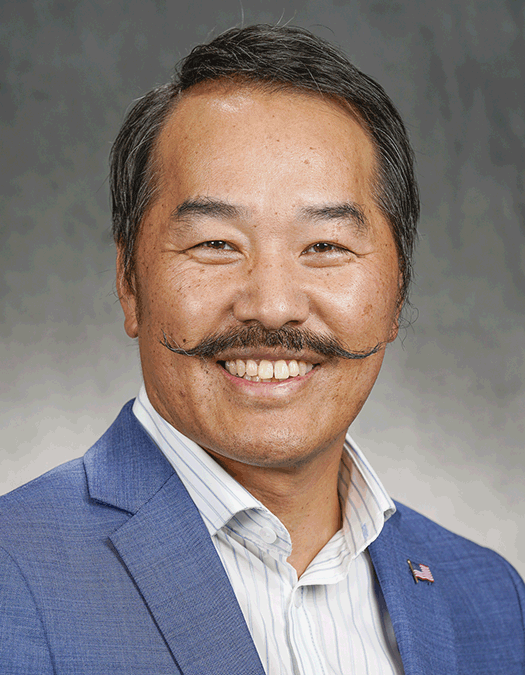
Rep. Ethan Cha
Sponsored bills
Maddy summaryHF 901 allows liquor store owners who operate multiple locations under a single license to transfer wine between those stores. The bill amends Minnesota Statutes 340A.412 to permit this transfer, requiring written notification to the wine wholesaler and the Division of Alcohol and Gambling Enforcement, and limiting transfers to one per location every three months. This directly affects multi-location liquor store chains licensed under the same entity. The change streamlines internal wine inventory management without altering broader alcohol sales regulations.
Maddy summaryHF 114 appropriates $500,000 for fiscal year 2026 and $500,000 for fiscal year 2027 from the arts and cultural heritage fund to provide grants to all 95 Minnesota county agricultural societies. The funds must be distributed equally to each county fair to enhance arts access, education, and the preservation of Minnesota's agricultural, historical, and cultural heritage. This grant program operates in addition to existing funding under Minnesota Statutes section 38.02. The commissioner of agriculture will develop grant criteria and seek public input to guide funding for projects supporting these goals.
Maddy summaryHF 501 proposes a constitutional amendment to guarantee equal rights under Minnesota law and prohibit state discrimination based on race, color, national origin, ancestry, disability, or sex - including pregnancy decisions, gender identity, and sexual orientation. If approved by voters in 2026, it would add a new section to the Minnesota Constitution requiring state actions to use the least restrictive means to achieve compelling government interests. The amendment would directly apply to all Minnesotans and state agencies, ensuring equal protection in all state laws and programs. It requires voter approval at the 2026 general election, with the question asking whether the state constitution should include these equal rights protections.
Maddy summaryHF 209 appropriates $3 million from state bond proceeds to fund specific capital improvements for the Brown's Creek State Trail in Washington County. The bill directs funds for constructing a trail connection from County State-Aid Highway 5 to the trail and for building an overlook at the historic Point Douglas-Saint Louis River Road Bridge. It authorizes the state to issue bonds up to $3 million to cover these costs, following established bond procedures under Minnesota law. The project directly affects Washington County infrastructure and provides public access to recreational trail and bridge viewing areas.
Maddy summaryThis bill (HF 139) increases annual cost-of-living adjustments for retirees in Minnesota's Public Employees Police and Fire Retirement Plan and State Patrol Retirement Plan. It raises the standard adjustment from 1% to up to 1.5% annually (based on federal Social Security COLA), and shortens the required waiting period from 36 months to 12 months for full benefits. Retirees receiving benefits for less than 12 months will now get a pro-rated increase based on months served. The changes take effect for adjustments starting January 1, 2026, and apply automatically unless retirees opt out in writing.
Maddy summaryHF 108 appropriates $2.5 million from the general fund for fiscal year 2026 and another $2.5 million for fiscal year 2027 to provide grants to Ujamaa Place. The funds are designated to support workforce development services specifically targeting African American men, including job training, employment preparation, internships, education, and vocational housing. The bill also allocates resources for Ujamaa Place's organizational capacity building. This legislation directly affects Ujamaa Place as the recipient organization and the African American men in Minnesota who will receive these targeted workforce services.
Maddy summaryThis bill prevents the Minnesota Public Utilities Commission from issuing permits to build pipelines designed to transport carbon dioxide. It directly affects energy companies and regulators by legally barring the approval of any new carbon dioxide pipeline routes in the state. The law takes effect immediately upon final passage, ensuring that no such permits can be granted under the current statute.
Maddy summaryThis bill proposes adding a new section to the Minnesota Constitution to guarantee equal rights and prohibit discrimination for all people. It specifically protects individuals from discrimination based on race, color, national origin, ancestry, disability, and sex, with the definition of sex explicitly including pregnancy, gender identity, and sexual orientation. If voters approve the amendment at the 2026 general election, the change will become effective on January 1, 2027. The text also establishes that any state action denying these rights must be the least restrictive way to achieve a very important government goal.
Maddy summaryThis bill proposes adding a new section to the Minnesota Constitution to guarantee equality under the law. The amendment would prohibit the state, its cities, counties, and other political subdivisions from denying or abridging rights based on race, color, creed, sex, sexual orientation, gender identity or expression, age, disability, ancestry, or national origin. If approved by voters at the 2024 general election, the change would take effect on January 1, 2025. The measure is titled the "Equal Rights Amendment" and requires a simple yes or no vote from the public.