Issue · Criminal Justice

Criminal Justice

Every criminal justice bill, vote, and legislator stance in Michigan, automatically classified by Maddy, our AI policy reader.

Total bills
337
2025-2026 Regular Session
Top supporter
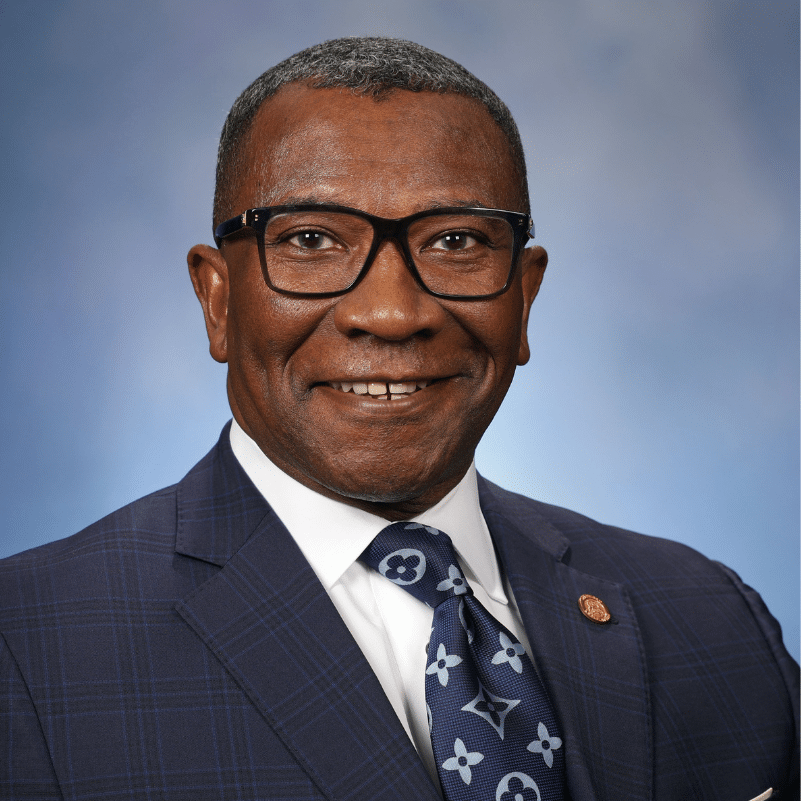
Amos O'Neal
100% support rate
Top opponent
Lana Theis
27% support rate
Ranked legislators
10
5 support · 5 oppose
Key legislators

Who's moving criminal justice in Michigan

Legislators moving criminal justice in Michigan
Legislator Party Stance Support rate Votes
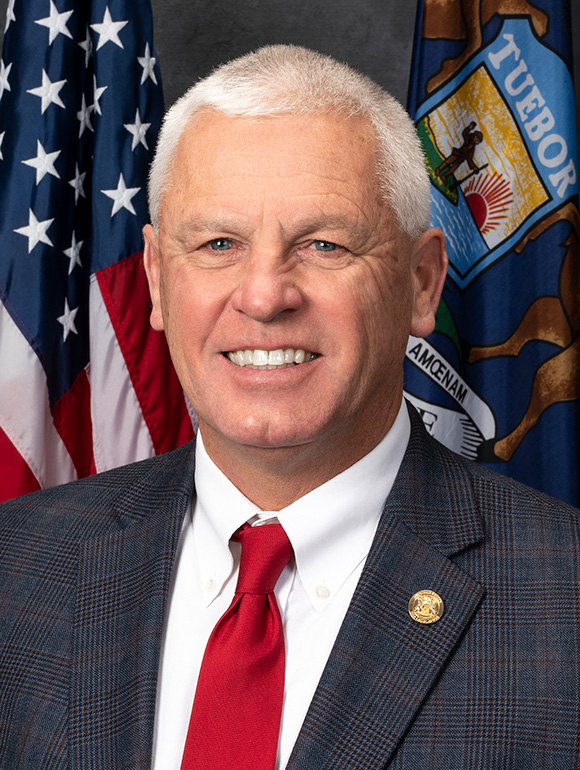
Amos O'Neal
Amos O'Neal House · District 94
D
Strong +
100% 18
Erika Geiss
Erika Geiss Senate · District 1
D
Support
77% 43
Jeremy Moss
Jeremy Moss Senate · District 7
D
Support
73% 48
Veronica Klinefelt
Veronica Klinefelt Senate · District 11
D
Support
73% 48
Sarah Anthony
Sarah Anthony Senate · District 21
D
Support
73% 48
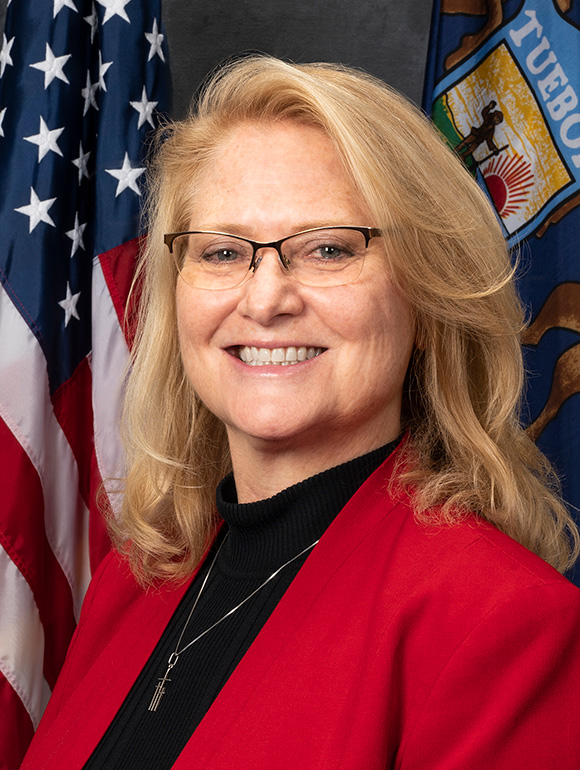
Lana Theis
Lana Theis Senate · District 22
R
Oppose
27% 43
Thomas Albert
Thomas Albert Senate · District 18
R
Oppose
27% 48
Michele Hoitenga
Michele Hoitenga Senate · District 36
R
Oppose
27% 48
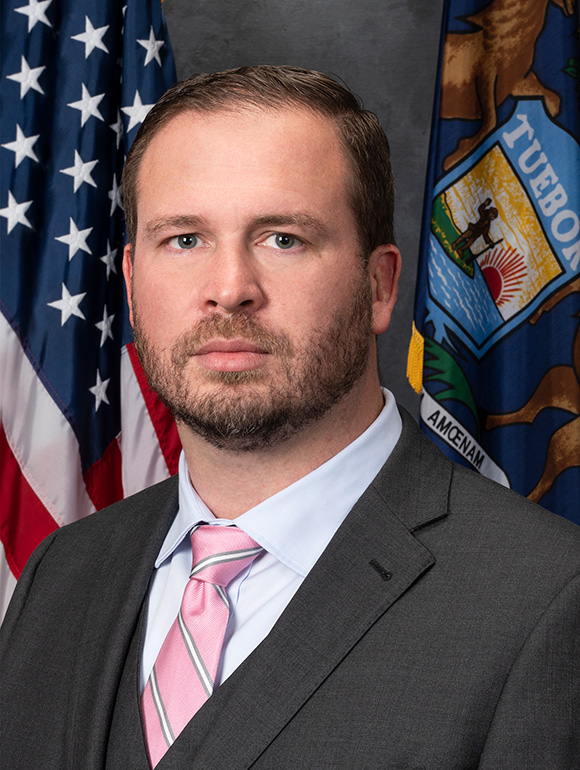
Jonathan Lindsey
Jonathan Lindsey Senate · District 17
R
Oppose
27% 47
Jon Bumstead
Jon Bumstead Senate · District 32
R
Oppose
29% 44
Showing 11–20 of 337 bills

All criminal justice bills

in committee · Michigan · House Aug 27, 2026

HB 6262: Crimes: criminal sexual conduct; penalties for criminal sexual conduct in the third degree; modify.

Michigan House Bill 6262 amends the state penal code to expand the definition of third-degree criminal sexual conduct, which applies to individuals who engage in sexual penetration under specific circumstances such as involving a minor, using force, or exploiting a position of trust. The bill adds new provisions that criminalize such acts when the victim is a student aged 16 to 17 with a school employee, a person receiving special education services up to age 25, or a resident of a child care or foster home who is at least 16 years old. It also introduces an affirmative defense for victims in incest cases where they were coerced by an authority figure and excludes married couples from certain incest charges. The legislation increases the minimum prison sentence for this felony from five to 15 years, with a maximum penalty of life imprisonment, and takes effect 90 days after enactment.
Sub-Topics Corrections
in committee · Michigan · House Jul 14, 2026

HB 6192: Financial institutions: mortgage brokers and lenders; consolidation of certain licensing statutes related to residential mortgages; make conforming changes in the debt management act. Amends sec. 8a of 1975 PA 148 (MCL 451.418a). TIE BAR WITH: HB 6177'26

HB 6192 amends Michigan's Debt Management Act to strengthen the state director's authority to investigate and punish mortgage brokers and lenders who engage in fraud. The bill allows the director to issue immediate suspensions or permanent prohibitions against individuals found guilty of fraud, dishonesty, or felony convictions involving financial misconduct. It establishes a formal process where accused individuals receive written notice, have the right to a hearing within 60 days, and can apply to have an order lifted after five years. Additionally, the law clarifies that violating a final prohibition order is a misdemeanor punishable by up to one year in jail or a fine of $5,000. This legislation is tied to another bill, HB 6177, and will only become effective if that companion bill is also passed.
Sub-Topics Corrections Mortgages
in committee · Michigan · House Jul 14, 2026

HB 6199: Financial institutions: mortgage brokers and lenders; consolidation of certain licensing statutes related to residential mortgages; make conforming changes in the Michigan penal code. Amends secs. 219e & 219f of 1931 PA 328 (MCL 750.219e & 750.219f). TIE BAR WITH: HB 6177'26

HB 6199 amends Michigan's penal code to strengthen laws against mortgage fraud by clarifying the criminal penalties for individuals who prepare or submit loan applications in someone else's name without their authorization. The bill explicitly prohibits receiving or forwarding such fraudulent applications or related financial instruments when the person knows or should know they are illegal. While the penalties for non-exempt individuals remain severe, including up to four years in prison or a fine of up to $2,500, the legislation provides specific exemptions for licensed financial institutions and their employees who handle these documents in good faith, such as when submitting them to law enforcement or credit bureaus. This update aims to align the state's fraud statutes with current mortgage industry practices and regulatory frameworks.
in committee · Michigan · House Jul 14, 2026

HB 6157: Civil rights: public records; regulation of disclosure of certain information; provide for. Creates new act.

This bill, known as the Shielding Information for Lawful and Ethical Disclosure Act, prevents Michigan government agencies from sharing large amounts of personal data with federal immigration officials without specific authorization. It defines "bulk disclosure" as transferring data on multiple people without reviewing each case individually and allows such sharing only if a court order exists, the transfer serves a specific law enforcement purpose, or it is immediately necessary to protect health and safety. The law applies to all state, county, and municipal departments and officers, while giving the state attorney general the power to seek court orders to stop illegal data sharing.
in committee · Michigan · House Jul 14, 2026

HB 6158: State management: other; access to certain facilities by federal immigration authorities; regulate. Creates new act.

This bill, titled the Safe Access to Facilities Act, prohibits Michigan state and local government agencies from allowing federal immigration officers into nonpublic areas unless a court issues a judicial warrant. The law specifically targets the conduct of government employees, requiring them to refuse entry to private spaces without a warrant based on probable cause. However, the legislation includes exceptions that allow access without a warrant during criminal investigations, when there is an immediate threat to public safety, or when emergency medical care is needed.
in committee · Michigan · House Jul 14, 2026

HB 6211: Corrections: jails; certain federal employees certified or recertified as local corrections officers; prohibit. Amends sec. 13 of 2003 PA 125 (MCL 791.543).

This bill prohibits the certification or recertification of certain individuals as local corrections officers in Michigan if they have worked for specific federal immigration agencies between September 1, 2025, and January 20, 2029. The law directly affects people seeking to become local corrections officers on or after January 1, 2005, by adding a new requirement that they must not have been employed by U.S. Immigration and Customs Enforcement, U.S. Customs and Border Protection, or U.S. Citizenship and Immigration Services during that three-year window. While the bill maintains existing requirements for U.S. citizenship, age, and high school education, it introduces this specific employment restriction to prevent federal immigration workers from transitioning into local correction roles.
in committee · Michigan · Senate Jul 2, 2026

SB 1090: Courts: funding; trial court funding; provide for. Amends sec. 13, ch. II, secs. 1k & 5, ch. IX & secs. 1, 3, 3c & 3e, ch. XI of 1927 PA 175 (MCL 762.13 et seq.). TIE BAR WITH: SB 1089'26

This bill updates Michigan's criminal procedure code to clarify how courts assess and collect financial costs from defendants. It requires judges to determine if a defendant is financially unable to pay before ordering fines or court fees. If a defendant is not indigent, the court can impose specific minimum state costs and additional expenses related to the trial, such as personnel salaries and facility maintenance, but must waive these charges for those who qualify as indigent. The legislation also establishes a fee structure for probation supervision, charging $30 per month without electronic monitoring or $60 per month with it, while allowing courts to waive these fees for indigent individuals.
in committee · Michigan · Senate Jul 2, 2026

SB 1089: Courts: funding; trial court funding; provide for. Amends secs. 880d, 8727 & 8827 of 1961 PA 236 (MCL 600.880d et seq.); adds secs. 1495, 1496 & 1497 & repeals secs. 8729 & 8829 of 1961 PA 236 (MCL 600.8729 & 600.8829). TIE BAR WITH: SB 1090'26

This bill establishes a standardized process for courts to determine whether individuals can afford court-related fees and fines. It requires judges to conduct a three-part financial assessment before imposing costs, which includes checking if a person receives public assistance, has income below a specific low-income threshold, or faces unique financial hardships. Under the new rules, people currently incarcerated are automatically considered indigent, and those found to be unable to pay will not be ordered to cover court costs or fees. Additionally, the legislation allows individuals to request a review of their financial status after sentencing if their circumstances have changed, potentially leading to the waiver of previously imposed charges.
Sub-Topics Courts Sentencing
in committee · Michigan · Senate Jul 2, 2026

SB 1091: Courts: funding; trial court funding; provide for. Amends sec. 907 of 1949 PA 300 (MCL 257.907) & repeals sec. 908 of 1949 PA 300 (MCL 257.908). TIE BAR WITH: SB 1089'26

This bill amends the Michigan Vehicle Code to clarify how civil traffic infractions are handled in court, specifically preventing them from being treated as lesser included offenses of criminal charges. It establishes specific fine ranges for various violations, such as speeding and equipment failures, while also setting a maximum cost limit of $100 for court expenses. The legislation allows judges to order treatment or education programs for offenders and requires courts to publish schedules of fines that must account for indigent defendants. Additionally, it mandates that courts waive fines and costs if a driver repairs defective safety equipment before their court date.
Sub-Topics Courts
in committee · Michigan · House Jul 14, 2026

HB 6173: Animals: animal shelters; cross-references to 1969 PA 287 in Michigan penal code; update. Amends sec. 49 of 1931 PA 328 (MCL 750.49). TIE BAR WITH: HB 6167'26

HB 6173 updates the Michigan penal code to clarify definitions and strengthen penalties related to animal fighting and baiting. The bill explicitly defines "animal control agencies" as shelters licensed under the Animal Protection Act and expands prohibitions to include renting or obtaining venues for these illegal activities. It also mandates that animal control agencies sterilize or secure a deposit for sterilization before adopting animals with fighting histories. Additionally, the legislation imposes stricter sentencing guidelines for owners whose trained fighting animals attack people and establishes specific misdemeanor charges for failing to restrain such animals on their property.
Sub-Topics Sentencing
Showing 11 to 20 of 337 bills