Issue · Labor & Employment

Labor & Employment

Every labor & employment bill, vote, and legislator stance in Maryland, automatically classified by Maddy, our AI policy reader.

Total bills
181
2026 Regular Session
Top supporter
Nick Charles
100% support rate
Top opponent
William Folden
0% support rate
Ranked legislators
10
5 support · 5 oppose
Key legislators

Who's moving labor & employment in Maryland

Legislators moving labor & employment in Maryland
Legislator Party Stance Support rate Votes
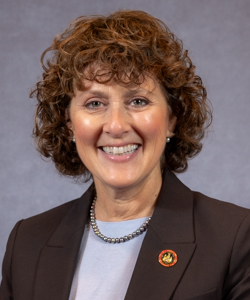
Nick Charles
Nick Charles Senate · District 25
D
Strong +
100% 83
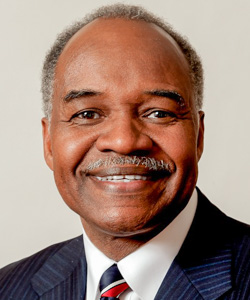
Shelly Hettleman
Shelly Hettleman Senate · District 11
D
Strong +
100% 100
Dalya Attar
Dalya Attar Senate · District 41
D
Strong +
100% 70
Ben Brooks
Ben Brooks Senate · District 10
D
Strong +
100% 99
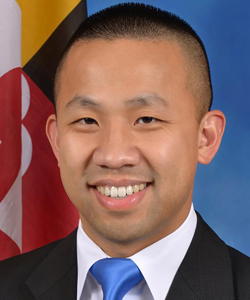
Clarence Lam
Clarence Lam Senate · District 12
D
Strong +
100% 97
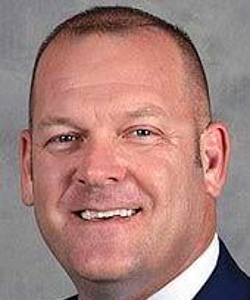
William Folden
William Folden Senate · District 4
R
Strong −
0% 81
Jason Gallion
Jason Gallion Senate · District 35
R
Strong −
0% 100
Steve Hershey
Steve Hershey Senate · District 36
R
Strong −
0% 97
Johnny Mautz
Johnny Mautz Senate · District 37
R
Strong −
0% 100
J.B. Jennings
J.B. Jennings Senate · District 7
R
Strong −
0% 100
Showing 51–60 of 181 bills

All labor & employment bills

in committee · Maryland · Senate Feb 14, 2026

SB 978: Community Colleges - Collective Bargaining - Definition of Supervisory Employee

SB 978 defines "supervisory employee" for collective bargaining purposes in Maryland community colleges. It specifies that a supervisory employee must have authority to hire/fire/promote, direct over 50% of another employee's work hours, and resolve complaints. The bill excludes department heads, comparable positions, and faculty below assistant dean level from this classification. This definition directly affects community college staff whose bargaining rights depend on their supervisory role.
signed · Maryland · House of Delegates Apr 28, 2026

HB 1102: Correctional Officers' Retirement System - Allegany County

HB 1102 requires Allegany County to mandate membership in the Correctional Officers’ Retirement System for certain local detention center officers if the county joins this system. It applies to officers employed by Allegany County before June 1, 2026, who remain employed through that date. If the county participates, these officers must transition from the Employees’ Pension System to the Correctional Officers’ Retirement System, forfeiting all future benefits from the old plan. The bill takes effect June 1, 2026, with service credit for prior employment transferred to the new system.
in committee · Maryland · House of Delegates Feb 13, 2026

HB 1153: Maryland Medical Assistance Program and Health Insurance - Claims for Reimbursement - Downcoding

HB 1153 prohibits health insurers, nonprofit health service plans, HMOs, and managed care organizations in Maryland from unilaterally lowering medical claim payments (downcoding) without clinical justification. The bill requires these entities to notify providers within 30 days if they intend to downcode, including specific reasons, references to clinical guidelines, and the original vs. revised codes. It bans practices like downcoding based solely on diagnosis codes, using AI without reviewing medical records, or targeting providers treating complex conditions, and mandates emergency claims be downcoded based on documented symptoms - not final diagnoses. A downcoding decision resulting in nonpayment is treated as a coverage denial, allowing providers to appeal under existing law.
Sub-Topics Insurance
in committee · Maryland · House of Delegates Feb 16, 2026

HB 1521: Income Tax - Credit for Contributions, Volunteerism, and Employment Initiatives for At-Risk Youth

HB 1521 creates a Maryland state income tax credit for individuals and businesses that support at-risk youth through donations, volunteering, or hiring. It allows a 50% credit on contributions to certified organizations (max $5,000 for individuals, $100,000 for businesses), $25 per volunteer day at schools/recreation centers (max $500 annually), and $1,000 per hired at-risk youth (max $5,000 annually). The credit applies only to youth aged 12-25 facing challenges like homelessness, foster care aging out, or living in designated high-poverty areas. Taxpayers must apply for certification through the Department of Commerce, with a $10 million annual cap on total credits.
passed · Maryland · Senate Mar 23, 2026

SB 957: Education - Career Ladder - National Board Certification Associated Salary Increases

SB 957 clarifies that Maryland public school teachers holding a National Board Certification (NBC) with a 10-year award period are eligible for specific salary increases tied to their career ladder status. It establishes a $8,000 salary increase for renewing a 10-year NBC, plus $7,000 for a first maintenance renewal after 5 years, and $6,000 for a second maintenance renewal. The bill applies retroactively to teachers with eligible 10-year certifications and ensures these salary increases are separate from other career ladder benefits like the $10,000 increase for initially becoming an NBC teacher. It directly affects certified classroom teachers in Maryland public schools who hold or renew this specific type of National Board Certification.
in committee · Maryland · House of Delegates Mar 11, 2026

HB 1245: Baltimore First Responders Child Care Support and Accessibility Program - Establishment

HB 1245 establishes the Baltimore First Responders Child Care Support and Accessibility Program within Maryland’s State Department of Education. It provides monthly child care allowances to first responders (including Baltimore City police, fire, and emergency medical personnel) in Baltimore City to support their dependent children’s early development and address recruitment/retention challenges. The program requires $600,000 in annual state funding starting fiscal year 2028, administered with Baltimore City public safety departments and nonprofit partners. Annual reports must track participation by agency, children served, and impacts on recruitment, retention, and public safety.
Tags Public Safety
passed both · Maryland · House of Delegates Apr 13, 2026

HB 1433: Community Colleges - Collective Bargaining - Definition of Supervisory Employee

HB 1433 defines "supervisory employee" for collective bargaining purposes in Maryland community colleges. It specifies that a supervisory employee must have authority to hire, discipline, direct over 50% of work hours, or resolve complaints, while excluding department heads and faculty below assistant dean level. This definition determines which staff (non-supervisory employees) can participate in union negotiations. The bill amends Maryland’s Education Code and takes effect July 1, 2026.
signed · Maryland · Senate Apr 28, 2026

SB 710: Correctional Officers' Retirement System - Reemployment After Retirement - Exemption from Earnings Offset

SB 710 exempts retirees from Maryland's Correctional Officers' Retirement System from having their retirement benefits reduced if they return to work as correctional officers or parole/probation staff in specific state correctional facilities. The bill amends pension law to remove the earnings offset requirement for these retirees when reemployed by the Division of Corrections, Division of Pretrial Detention, or Patuxent Institution for up to four years. This directly affects correctional officers who retired from the system and are rehired in authorized roles within state correctional facilities. The change ensures their retirement payments remain unchanged during this reemployment period, unlike the standard rule that reduces benefits for most other retirees returning to work.
in committee · Maryland · Senate Feb 11, 2026

SB 930: State Police Retirement System - Special Disability Retirement

SB 930 allows certain Maryland State Police retirees who participated in the Deferred Retirement Option Program (DROP) to apply for special disability retirement benefits if they became totally and permanently disabled due to a work-related injury while enrolled in DROP. It specifically targets DROP participants who: enrolled after July 1, 2020; had a work-related accident before enrolling; and stopped participating in DROP before July 1, 2026. These retirees must submit an application by December 31, 2026, to qualify for disability benefits calculated based on their final compensation date. The bill modifies existing retirement rules to create this eligibility window without changing the medical requirements for disability certification.
passed · Maryland · House of Delegates Mar 18, 2026

HB 1068: Health Insurance - Special Enrollment Period for Newly Hired Employees of Small Businesses

HB 1068 requires health insurance carriers in Maryland to provide a 60-day special enrollment period for individuals who become newly hired by small businesses that do not offer employer-sponsored health plans. This applies to people purchasing coverage through the state’s health insurance marketplace (Individual Exchange) or outside it. The special enrollment period begins on the first day of employment and allows new hires to enroll in health insurance without waiting for the standard open enrollment period. The law takes effect January 1, 2027, directly benefiting newly employed workers at small businesses without health benefits.
Sub-Topics Insurance
Showing 51 to 60 of 181 bills
Previous 1 5 6 7 19 Next