Issue · Immigration

Immigration

Every immigration bill, vote, and legislator stance in Maryland, automatically classified by Maddy, our AI policy reader.

Total bills
34
2026 Regular Session
Top supporter
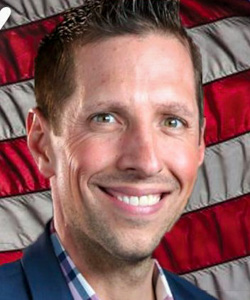
Stuart Schmidt
85% support rate
Top opponent
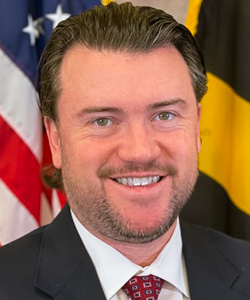
Frank Conaway
23% support rate
Ranked legislators
10
5 support · 5 oppose
Key legislators

Who's moving immigration in Maryland

Legislators moving immigration in Maryland
Legislator Party Stance Support rate Votes
Stuart Schmidt
Stuart Schmidt House · District 33B
R
Strong +
85% 190
Katie Hester
Katie Hester Senate · District 9
D
Support
77% 104
Kevin Hornberger
Kevin Hornberger House · District 35B
R
Support
76% 203
Terry Baker
Terry Baker House · District 1C
R
Support
75% 187
Brian Crosby
Brian Crosby House · District 29B
D
Support
75% 83
Frank Conaway
Frank Conaway House · District 40
D
Oppose
23% 212
Kevin Anderson
Kevin Anderson House · District 38A
R
Oppose
25% 139
Aletheia McCaskill
Aletheia McCaskill House · District 44B
D
Oppose
27% 193
Lily Qi
Lily Qi House · District 15
D
Oppose
27% 190
Andrea Harrison
Andrea Harrison House · District 24
D
Oppose
28% 197
Showing 21–30 of 34 bills

All immigration bills

in committee · Maryland · House of Delegates Jan 19, 2026

HB 23: Motor Vehicle Administration - Identification Cards - Issuance to Minors

HB 23 allows minors aged 15 and older in Maryland to apply for state-issued identification cards without requiring a parent or guardian to cosign or be present. It directs the Motor Vehicle Administration to establish new acceptable proof-of-residency documents, including school transcripts, homeless shelter records, or notarized affidavits from adults. The bill does not change federal REAL ID requirements but permits non-REAL ID compliant cards for minors unable to meet federal documentation standards. The law takes effect October 1, 2026.
passed · Maryland · House of Delegates Apr 13, 2026

HB 598: Physicians - Licensing - Internationally Trained Physicians and Licensed Physicians Residing in Other Jurisdictions

HB 598 creates a temporary license for internationally trained physicians to practice medicine in Maryland under specific conditions. It allows the State Board of Physicians to issue a 3-year license (non-renewable) to doctors who hold a WHO-recognized medical degree outside the U.S., completed 2 years of equivalent postgraduate training, practiced medicine for 5 of the last 7 years abroad, passed U.S. medical exams (USMLE Steps 1-3), and meet other criteria like English proficiency and Maryland residency. The license requires physicians to pursue full licensure through board-established pathways after the temporary period ends. This directly affects internationally trained doctors seeking to work in Maryland’s healthcare system, providing a structured but limited pathway to practice.
Sub-Topics Medical Licensing
signed · Maryland · House of Delegates May 26, 2026

HB 573: Fair Housing and Housing Discrimination - Regulations, Intent, and Discriminatory Effect

HB 573 updates Maryland's fair housing laws to prohibit discriminatory housing practices based on *effect* - not just *intent*. It explicitly states that actions creating segregated housing patterns or disproportionately harming protected groups (based on race, disability, sexual orientation, etc.) are illegal, regardless of whether the actor intended harm. The bill requires the Department of Housing to adopt regulations ensuring local governments and housing authorities actively "affirmatively further fair housing" through assessments in comprehensive planning. This directly affects housing providers, landlords, local governments, and housing authorities by expanding prohibited conduct and mandating proactive fair housing measures.
Sub-Topics Tenant Rights Zoning
in committee · Maryland · House of Delegates Feb 2, 2026

HB 109: Institutions of Higher Education and Elementary and Secondary Schools - Title VI Coordinators

HB 109 requires all Maryland public colleges, universities, and local school systems to appoint a designated Title VI Coordinator by July 1, 2026. These coordinators must ensure compliance with federal civil rights law (Title VI of the 1964 Civil Rights Act), which prohibits discrimination based on race, color, or national origin in federally funded programs. The bill establishes a direct complaint process, allowing students, parents, or others to file discrimination complaints with a school or college's Title VI Coordinator instead of (or in addition to) the State Superintendent. Coordinators must investigate complaints, maintain records, provide training, and promote equal access to programs. This law directly affects all Maryland public K-12 schools and higher education institutions.
in committee · Maryland · House of Delegates Feb 16, 2026

HB 495: Criminal Procedure - Immigration Arrest - Immunity in Connection With Court Proceeding

HB 495 provides legal immunity from immigration arrests for individuals attending court hearings as parties, witnesses, or as family/household members of such individuals. It prohibits immigration arrests during travel to, at, or from court unless authorized by a judicial warrant. Violations of this provision are punishable as misdemeanors (up to 1 year in jail or $1,000 fine) or felonies (up to 4 years in jail or $5,000 fine), and affected individuals can seek legal remedies including injunctions and attorney fees. The law directly affects people participating in court proceedings and their close relatives living in the same household, aiming to prevent immigration enforcement from disrupting court access.
signed · Maryland · House of Delegates May 31, 2026

HB 711: Data Privacy - Consumer Data, Public Records, and Message Switching System (Data Privacy Act)

HB 711, the Data Privacy Act, prohibits businesses from selling consumer data they know or should know will be used for immigration enforcement. It requires public record custodians to prevent unauthorized access to records, especially for immigration purposes, and mandates reasonable rules to block such access. The bill also defines "sensitive data" to include immigration status, health information, racial background, and biometric data, requiring entities to handle this data carefully. Additionally, it sets new rules for message switching systems (like messaging apps) to prevent misuse of user data. These changes directly affect businesses handling consumer data, government record keepers, and digital service providers in Maryland.
signed · Maryland · House of Delegates Feb 17, 2026

HB 444: Public Safety - Immigration Enforcement Agreements - Prohibition

HB 444 prohibits Maryland state and local governments, including county sheriffs and agencies, from entering into new agreements with federal authorities to enforce civil immigration law. It requires existing agreements to be terminated by July 1, 2026, or immediately upon the law’s effective date (June 1, 2026). The bill specifically targets contracts, memorandums, or agreements that allow local entities to assist in federal immigration enforcement under federal laws like 8 U.S.C. § 1103 or § 1357. This directly affects local law enforcement agencies and government bodies that previously collaborated with federal immigration authorities. The law aims to prevent state/local resources from being used for immigration enforcement under federal programs.
in committee · Maryland · House of Delegates Feb 5, 2026

HB 719: Public Safety - Immigration Enforcement - Prohibition Against Sanctuary Policies

HB 719 prohibits Maryland state and local government entities, including county sheriffs and agencies, from adopting "sanctuary policies" that restrict cooperation with federal immigration enforcement. It repeals existing laws that previously limited police from asking about immigration status during routine stops or detaining individuals solely for immigration violations. The bill requires local law enforcement to comply with federal immigration detainers when legally required and removes barriers to federal agents accessing sensitive locations (like schools) with valid warrants. This directly affects police departments, sheriffs' offices, and local government agencies in their daily interactions with federal immigration authorities.
in committee · Maryland · House of Delegates Mar 11, 2026

HB 630: Correctional Services - Immigration Detention Facilities - Original Design and Construction

HB 630 prohibits private entities from operating immigration detention facilities in buildings not originally designed and constructed for housing or detaining people. It specifically bans converting existing structures (like warehouses or offices) into detention centers. The bill also prevents state/local governments from entering agreements, providing funding, or approving zoning for such facilities operated by private entities. This directly affects private operators seeking to establish immigration detention centers and local governments considering facility partnerships.
in committee · Maryland · House of Delegates Feb 6, 2026

HB 454: Election Law - Voter Registration Eligibility - U.S. Citizenship Verification (SAVE Our Elections Act of 2026)

HB 454, the "SAVE Our Elections Act of 2026," requires Maryland to join the federal SAVE Program (Systematic Alien Verification of Entitlement) to verify U.S. citizenship for voter registration applicants. It directly affects individuals applying to register to vote in Maryland, mandating that the State Board of Elections use the federal SAVE system to confirm citizenship during the registration process. Key provisions include requiring the State Administrator to enroll in SAVE, establishing a verification process for applicants, and creating an appeal mechanism for voters who dispute citizenship determinations. The bill replaces current self-declaration requirements with federal verification, amending election law sections governing voter registration eligibility and processing.
Showing 21 to 30 of 34 bills
Previous 1 2 3 4 Next