Issue · Healthcare

Healthcare

Every healthcare bill, vote, and legislator stance in Maryland, automatically classified by Maddy, our AI policy reader.

Total bills
366
2026 Regular Session
Top supporter
C.T. Wilson
100% support rate
Top opponent
Jason Gallion
0% support rate
Ranked legislators
10
5 support · 5 oppose
Key legislators

Who's moving healthcare in Maryland

Legislators moving healthcare in Maryland
Legislator Party Stance Support rate Decisive votes
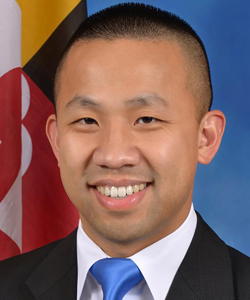
C.T. Wilson
C.T. Wilson House · District 28
D
Strong +
100% 34
Ben Kramer
Ben Kramer Senate · District 19
D
Strong +
100% 23
Bill Ferguson
Bill Ferguson Senate · District 46
D
Strong +
100% 23
Carl Jackson
Carl Jackson Senate · District 8
D
Strong +
100% 23
Clarence Lam
Clarence Lam Senate · District 12
D
Strong +
100% 23
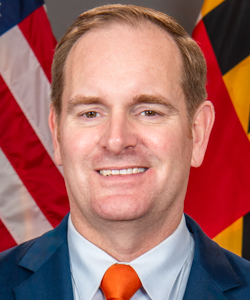
Jason Gallion
Jason Gallion Senate · District 35
R
Strong −
0% 23
Jack Bailey
Jack Bailey Senate · District 29
R
Strong −
0% 22
J.B. Jennings
J.B. Jennings Senate · District 7
R
Strong −
4% 23
Johnny Salling
Johnny Salling Senate · District 6
R
Strong −
4% 23
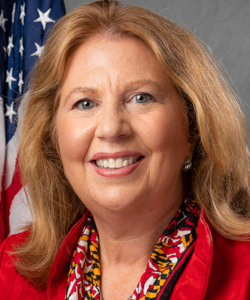
Mary Beth Carozza
Mary Beth Carozza Senate · District 38
R
Strong −
5% 22
Showing 131–140 of 366 bills

All healthcare bills

passed · Maryland · House of Delegates Mar 25, 2026

HB 1617: Public Health - Health Innovation Zones - Establishment

HB 1617 establishes "Health Innovation Zones" in Maryland counties to address health disparities. It defines zones as areas with documented health gaps (like high maternal complications, chronic diseases, or low access to care) in communities of color, low-income areas, or immigrant populations. Counties must create incentives for grocery stores, pharmacies, and healthcare providers to locate in these zones, and Prince George’s County must designate specific zones (including the Blue Line Corridor and areas near DC) while seeking additional zones meeting the same criteria. The bill requires annual $5 million state funding starting in 2028 for the Maryland Economic Development Corporation to support these businesses and exempts them from local zoning laws within designated zones.
Sub-Topics Public Health
in committee · Maryland · Senate Feb 12, 2026

SB 568: Health Occupations - Licensed Psychologists - Prescriptive Authority

SB 568 would allow licensed psychologists in Maryland to prescribe certain medications under specific conditions, but only after obtaining certification from the State Board of Examiners of Psychologists. The bill creates new requirements for certification, establishes a Prescriptive Authority Advisory Committee to oversee implementation, and adds new sections (18-3B-01 to 18-3B-09) to the health occupations code. It directly affects licensed psychologists who meet the new certification standards and complete required training, expanding their scope of practice beyond traditional psychological services. The policy change modifies existing licensing rules to include prescriptive authority as a defined part of "practice psychology" under specific board-certified conditions.
in committee · Maryland · Senate Mar 9, 2026

SB 913: Motor Vehicles - Enhanced Tinted Windows - Medical Exemption

SB 913 amends Maryland's vehicle tinting law to allow out-of-state physicians licensed to practice medicine to issue medical exemptions for window tint darker than the standard 35% light transmittance requirement. It directly affects Maryland drivers with medical conditions (like light sensitivity) requiring darker tint, who previously needed an exemption from a Maryland-licensed physician. The bill removes the 2-year expiration limit for medical exemptions, allowing indefinite validity if a physician certifies a permanent condition. This change simplifies the process for out-of-state medical providers and individuals with ongoing health needs, while maintaining the core 35% light transmittance rule for non-exempt vehicles.
in committee · Maryland · House of Delegates Feb 16, 2026

HB 1121: Public Health – Perimenopausal, Menopausal, and Postmenopausal Conditions

HB 1121 requires health occupations boards to grant at least 2 hours of continuing education credit for every hour of training on perimenopausal, menopausal, and postmenopausal evaluation and treatment. This directly affects healthcare professionals (like doctors, nurses, and specialists) who must complete continuing education to renew their licenses. The bill also adds a specialized representative with expertise in these conditions to the State Advisory Council on Health and Wellness. Additionally, it directs three state agencies - the Maryland Health Care Commission, Maryland Commission for Women, and Maryland Department of Health - to take specific actions related to these health conditions. The law focuses on improving provider knowledge and resources through mandatory education credits and advisory input.
Sub-Topics Public Health
in committee · Maryland · House of Delegates Feb 11, 2026

HB 1136: Nonprofit Hospitals - Community Benefits

HB 1136 requires most nonprofit hospitals in Maryland to provide annual community benefits equal to either 100% of their tax-exempt value or 5% of net patient revenue (if charity care meets a 4% minimum). Hospitals must report their compliance to the Health Services Cost Review Commission within 120 days after their fiscal year ends. Starting in 2028, the Commission will annually report non-compliant hospitals to the Attorney General and Comptroller, who can revoke a hospital’s tax-exempt status for the next tax year if it fails to meet requirements. Hospitals may correct unintentional errors by providing the missing benefits. This applies to all nonprofit hospitals except those in counties with fewer than 50,000 residents.
in committee · Maryland · House of Delegates Mar 13, 2026

HB 1380: Health Insurance - Prescriptions for Gender-Affirming Care and Hormone Therapy - Coverage and Dispensing Requirements

HB 1380 requires health insurers, nonprofit health plans, and health maintenance organizations in Maryland to cover prescriptions for gender-affirming care and hormone therapy (defined as lawful treatment under state law) for up to a 12-month supply per prescription. It prohibits insurers from forcing patients to accept a full 12-month supply if the patient or their provider requests a smaller amount. Pharmacists must dispense qualifying prescriptions (after January 1, 2027) in quantities up to a 12-month supply unless exceptions apply, such as acute drug shortages (limiting to 90 days) or prior coverage in the same plan year. The bill applies to all health plans issued or renewed in Maryland on or after January 1, 2027.
Sub-Topics Insurance
in committee · Maryland · House of Delegates Mar 10, 2026

HB 1159: Public Health and Health Insurance - Access to Abortion Care - Reporting Requirements

HB 1159 modifies reporting requirements related to abortion care in Maryland. It requires the Department of Health to include specific recommendations in its annual report on the Abortion Care Clinical Training Program to address provider shortages, and mandates the Insurance Commissioner to collect annual data from insurers on funds set aside under federal law (Affordable Care Act) for abortion services. This data must be submitted by January 1 each year to the Senate Finance and House Health committees, covering the previous two calendar years. The bill affects health departments, insurers, and legislative committees, focusing on transparency around abortion care funding and training programs.
signed · Maryland · House of Delegates May 26, 2026

HB 1091: Health Insurance and Dental Plan Organizations - Dentists - Assignment of Benefits and Reimbursement of Nonpreferred Providers

HB 1091 requires health insurers and dental plan organizations to directly reimburse dentists not in their network (nonpreferred dentists) when a patient assigns their insurance benefits to the dentist, and prohibits them from blocking such assignments. It also mandates that nonpreferred dentists inform patients about their non-network status, potential out-of-pocket costs, and payment terms before providing care, and submit a disclosure form to the insurer for the assignment. Insurers may still refuse direct payment only in specific cases, such as if the assignment was received too late, an error occurred, the patient withdrew the assignment, or the patient paid the dentist at the time of service. The bill directly affects non-network dentists, their patients, and insurance companies covering dental services.
Sub-Topics Insurance
signed · Maryland · Senate May 26, 2026

SB 521: Health Insurance - Material Changes to Provider Networks - Notification and Special Enrollment Period

SB 521 requires health insurance companies to notify patients in writing when a primary care provider or behavioral health provider is removed from their network, including the reason for termination and the right to continue seeing that provider for up to 90 days if the removal isn't due to fraud or misconduct. It mandates insurers to provide advance notice (60 days) to Maryland's Insurance Commissioner before terminating provider contracts that materially impact patient access, and to update their access plans within 5 business days after termination. This bill directly affects insured patients who rely on specific providers and health insurance carriers operating in Maryland. The key change is creating a standardized 90-day special enrollment period for affected patients to transition care, improving transparency during network changes.
passed · Maryland · House of Delegates Apr 9, 2026

HB 1014: Mental Health Law - Danger to the Life or Safety of the Individual or of Others - Definition (Right to Treatment)

HB 1014 defines "danger to the life or safety of the individual or of others" for Maryland's mental health law, directly affecting individuals with mental disorders who might face involuntary admission. It specifies four concrete scenarios that constitute this danger: causing bodily harm, engaging in conduct leading to criminal involvement, inability to meet basic needs (food, shelter, medical care), or substantial deterioration in judgment that impairs treatment decisions. The definition requires a "substantial risk" considering the person's current condition and available history, replacing the prior standard. This change clarifies the legal threshold for involuntary hospitalization and emergency evaluations under Maryland law.
Sub-Topics Mental Health
Showing 131 to 140 of 366 bills
Previous 1 … 13 14 15 … 37 Next