Issue · Healthcare

Healthcare

Every healthcare bill, vote, and legislator stance in Maryland, automatically classified by Maddy, our AI policy reader.

Total bills
376
2026 Regular Session
Top supporter
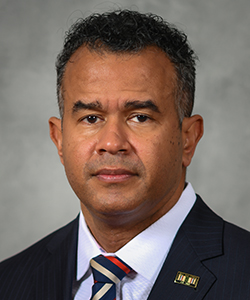
Alonzo Washington
100% support rate
Top opponent
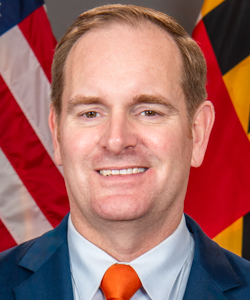
Jason Gallion
0% support rate
Ranked legislators
10
5 support · 5 oppose
Key legislators

Who's moving healthcare in Maryland

Legislators moving healthcare in Maryland
Legislator Party Stance Support rate Votes
Alonzo Washington
Alonzo Washington Senate · District 22
D
Strong +
100% 68
Brian Feldman
Brian Feldman Senate · District 15
D
Strong +
100% 70
C.T. Wilson
C.T. Wilson House · District 28
D
Strong +
100% 98
Kevin Harris
Kevin Harris Senate · District 27
D
Strong +
100% 70
Pam Beidle
Pam Beidle Senate · District 32
D
Strong +
100% 71
Jason Gallion
Jason Gallion Senate · District 35
R
Strong −
0% 71
Jack Bailey
Jack Bailey Senate · District 29
R
Strong −
0% 69
Johnny Salling
Johnny Salling Senate · District 6
R
Strong −
4% 71
J.B. Jennings
J.B. Jennings Senate · District 7
R
Strong −
4% 71
Mary Beth Carozza
Mary Beth Carozza Senate · District 38
R
Strong −
5% 70
Showing 121–130 of 376 bills

All healthcare bills

signed · Maryland · Senate May 26, 2026

SB 892: Health Occupations, Public Health, and Insurance - Menopause - Provider Training Coverage Requirements, Policy Initiatives, and Access to Care

SB 892 modifies Maryland's State Advisory Council on Health and Wellness to include a member with expertise in perimenopausal, menopausal, and postmenopausal care. It requires health occupations boards (like those for nurses or doctors) to grant at least two continuing education credits for every hour of training on these conditions, directly affecting healthcare professionals renewing their licenses. The bill also mandates the Maryland Health Care Commission, Commission for Women, and Department of Health to take specific actions related to these health conditions. These changes aim to improve provider knowledge and care for women experiencing these common health transitions.
in committee · Maryland · House of Delegates Mar 18, 2026

HB 1537: Public Health - Newborn Screening Program - Metachromatic Leukodystrophy

HB 1537 requires Maryland’s newborn screening program to test for metachromatic leukodystrophy (MLD), a rare genetic disorder affecting nerve function. The bill adds MLD to the list of conditions screened for at birth under Maryland law, directly affecting all newborns in the state. The Maryland Department of Health must include MLD screening in its public health laboratory system and coordinate follow-up care for infants with positive results. This aligns with federal recommendations and updates the state’s mandatory newborn screening program without altering existing fee structures or procedural timelines.
Sub-Topics Public Health
in committee · Maryland · House of Delegates Feb 16, 2026

HB 1437: Income Tax - Credit for Long-Term Care Premiums

HB 1437 creates a Maryland income tax credit for long-term care insurance premiums paid by residents aged 45 or older. It allows taxpayers to claim a credit equal to 100% of eligible premiums (capped at $250 per year per insured person), covering the taxpayer, spouse, or certain family members. The credit is restricted to policies purchased after December 31, 2026, and cannot be claimed for individuals already covered before January 1, 2027, or for multiple taxpayers claiming the same person. The bill also requires annual reports to the legislature on credit usage and its impact on state medical assistance savings.
signed · Maryland · Senate Apr 28, 2026

SB 707: Mental Health Law - Danger to the Life or Safety of the Individual or of Others - Definition (Right to Treatment)

SB 707 amends Maryland's Mental Health Law to clarify the definition of "danger to the life or safety of the individual or of others" for involuntary admission and emergency evaluations. It specifies that this danger includes four key scenarios: causing bodily harm, engaging in conduct likely to result in criminal justice involvement, inability to meet basic needs (food, shelter, medical care) creating serious risk, or substantial deterioration in judgment preventing informed treatment decisions. The bill directly affects individuals with mental disorders who may be assessed for involuntary care, as well as healthcare providers making those determinations under the law. This definition replaces the current standard in Maryland Code, Section 10-601, and takes effect October 1, 2026.
Sub-Topics Mental Health
passed · Maryland · House of Delegates Mar 20, 2026

HB 986: Nurse Licensure - Educational Requirements - Enforcement

HB 986 requires nursing license applicants (both new and those seeking endorsement) to provide evidence that their nursing education meets Maryland's standards, including official transcripts. It directly affects registered nurses and licensed practical nurses applying for or renewing licenses in Maryland. The bill adds a new provision (§ 8-316(a)(37)) allowing the State Board of Nursing to take disciplinary action - such as reprimands, probation, suspension, or revocation - against licensees who fail to complete required educational standards. This clarifies the Board’s authority to enforce education requirements, including investigating applicants' qualifications and taking disciplinary steps for non-compliance. The bill amends existing sections of Maryland’s Health Occupations law and takes effect October 1, 2026.
signed · Maryland · Senate Apr 14, 2026

SB 562: State Board of Pharmacy - Prescriber-Pharmacist Agreements - Treatment of Opioid Use Disorders

SB 562 allows pharmacists in Maryland to treat opioid use disorders using medication therapy under specific conditions. It repeals a requirement that prescribers (like doctors) must submit agreements to their health board and instead authorizes pharmacists to enter into prescriber-pharmacist agreements if they meet qualifications such as holding a Doctor of Pharmacy degree, completing required training, and registering with federal agencies. The law mandates that any treatment protocol requires pharmacists to check the Prescription Drug Monitoring Program before starting or changing medication. This change aims to expand access to medication-based treatment for opioid use disorders by enabling pharmacists to provide care in pharmacy settings.
signed · Maryland · Senate Apr 14, 2026

SB 910: Health Insurance - Graduate-Level Clinical Interns - Required Reimbursement

SB 910 requires Maryland health insurers to reimburse patients for services provided by graduate-level clinical interns in counseling, social work, and psychology, under specific conditions. This affects insured individuals who receive these services and insurers who must cover them. Key conditions include services being provided at outpatient facilities, interns being enrolled in accredited graduate programs, working under direct supervision of a licensed professional, and billed by the supervising provider. The bill amends existing insurance codes (Sections 15-704, 15-707, and 15-714) to add these reimbursement requirements for each profession’s interns.
Sub-Topics Insurance
signed · Maryland · House of Delegates Apr 28, 2026

HB 1016: Noncompete and Conflict of Interest Clauses - Licensed Architects - Employer Workforce Relocation and Out-of-State Employers

HB 1016 invalidates noncompete and conflict-of-interest clauses in employment contracts for certain employees if their employer relocates the majority of its employees or principal business location outside Maryland. It directly affects low-wage workers (earning ≤150% of state minimum wage), healthcare workers providing direct patient care (earning ≤$350,000 annually), and veterinary professionals. For high-earning healthcare workers ($350,000+), the bill allows limited 1-year noncompete restrictions within 10 miles of their prior workplace. The law takes effect October 1, 2026, and applies only to contracts signed after that date.
Sub-Topics Minimum Wage
in committee · Maryland · House of Delegates Feb 19, 2026

HB 737: Health Maintenance Organizations - Payments to Nonparticipating Providers - Reimbursement Rate

HB 737 requires health insurance plans (HMOs) to pay non-contracted healthcare providers at minimum rates: 140% of Medicare rates for trauma care, and 125% of the 2019 rate adjusted for inflation for other services. This affects independent doctors, hospitals, and clinics that treat HMO members but aren’t directly contracted with them. The law updates payment standards to better reflect current costs using Medicare’s inflation index, replacing older fixed-rate calculations. It ensures non-contracted providers receive fairer compensation for services rendered to HMO enrollees.
Sub-Topics Insurance Medicare
signed · Maryland · House of Delegates May 26, 2026

HB 1364: Public Health - Mammograms - Arterial Calcification Notice

HB 1364 requires mammography centers in Maryland to include a specific notice about breast arterial calcification in patients' screening results letters, starting October 1, 2026. This applies to facilities performing mammography testing (like hospitals, clinics, or radiology practices), excluding federal VA facilities. The notice informs patients that arterial calcification - common but potentially linked to higher cardiovascular risk - should be discussed with their physician to assess heart health needs. It does not change existing federal requirements for breast density notices but adds this new patient awareness element to standard mammogram results.
Sub-Topics Public Health
Showing 121 to 130 of 376 bills
Previous 1 12 13 14 38 Next