Issue · Education

Education

Every education bill, vote, and legislator stance in Maryland, automatically classified by Maddy, our AI policy reader.

Total bills
252
2026 Regular Session
Top supporter
Nick Charles
100% support rate
Top opponent
Robin Grammer
6% support rate
Ranked legislators
10
5 support · 5 oppose
Key legislators

Who's moving education in Maryland

Legislators moving education in Maryland
Legislator Party Stance Support rate Votes
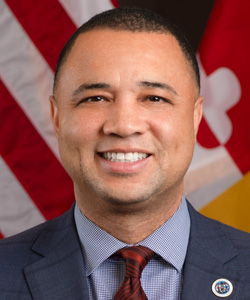
Nick Charles
Nick Charles Senate · District 25
D
Strong +
100% 48
Denise Roberts
Denise Roberts House · District 25
D
Strong +
96% 92
Adrian Boafo
Adrian Boafo House · District 23
D
Strong +
96% 48
Antonio Hayes
Antonio Hayes Senate · District 40
D
Strong +
95% 50
Shaneka Henson
Shaneka Henson Senate · District 30
D
Strong +
95% 51
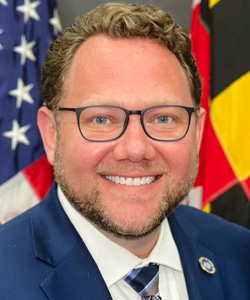
Robin Grammer
Robin Grammer House · District 6
R
Strong −
6% 85
Matt Morgan
Matt Morgan House · District 29A
R
Strong −
9% 98
Mark Fisher
Mark Fisher House · District 27C
R
Strong −
9% 98
Nic Kipke
Nic Kipke House · District 31
R
Strong −
9% 100
Lauren Arikan
Lauren Arikan House · District 7B
R
Strong −
9% 98
Showing 81–90 of 252 bills

All education bills

in committee · Maryland · Senate Feb 12, 2026

SB 711: Family Law - Child Neglect Definition - Alteration

SB 711 amends Maryland's definition of child neglect to explicitly include the failure or refusal to provide a child with education required by law. This change directly affects parents or caregivers who have legal responsibility for a child's education but do not enroll them in school as mandated. The bill alters Section 5-701(s) of Maryland's Family Law code to add that "neglect" now encompasses this educational neglect. The policy change takes effect October 1, 2026, updating how child neglect is legally defined under Maryland law.
signed · Maryland · Senate May 12, 2026

SB 833: Queen Anne's County - Authorized Uses of Revenues From Development Impact Fees - Expansion

SB 833 (introduced by Senator Hershey) amends Maryland law to allow Queen Anne’s County Commissioners to use development impact fees for capital costs related to replacing public school facilities. This expands the existing authorized uses of these fees under Section 20-706 of the Maryland Annotated Code, specifically adding school facility replacement as a permitted purpose. The bill applies only to Queen Anne’s County and takes effect July 1, 2026. It is a procedural change to the county’s fee usage rules, not a new tax or broad policy shift.
signed · Maryland · House of Delegates May 26, 2026

HB 1430: Maryland Public Charter School Program - School Facilities - Funding

HB 1430 requires Maryland's Interagency Commission on School Construction to distribute funds directly to public charter schools for maintaining and operating their facilities, bypassing local governments. It mandates that starting in fiscal year 2028, the state must appropriate $1,600 per enrolled student from the previous fiscal year for these facilities. The bill applies to all public charter schools occupying facilities used for K-12 education, including those that own or lease their buildings. This establishes a fixed per-student funding formula for facility costs, effective July 1, 2026.
in committee · Maryland · House of Delegates Feb 13, 2026

HB 1013: Prince George’s County Special Education Service Delivery, Transparency, and Accountability Act

HB 1013 requires Prince George’s County Public Schools to fund full-time salaries and benefits (including health insurance) for all one-to-one student aides starting in the 2027-2028 school year. It mandates quarterly reports to the county board and state education department on key metrics like aide vacancy rates, IEP service delivery, and compensatory services completion. The bill also requires the county superintendent to provide annual professional development for special education staff and directs the state to hire a third-party auditor to review the county’s special education department for fiscal years 2021-2025. These provisions directly affect Prince George’s County’s special education program, its staff, and students with individualized education plans (IEPs).
in committee · Maryland · House of Delegates Mar 11, 2026

HB 1397: School Construction - Gross Area Baseline Calculation - Aquatic Facilities

HB 1397 requires Maryland's Interagency Commission on School Construction to include dedicated square footage for aquatic facilities (like pools) in schools' Gross Area Baseline calculations for funding. It mandates that every local school system develop a facilities plan by the start of the 2026-2027 school year, outlining options for student access to aquatic facilities. The Commission must collaborate with each school system to create these plans. The law takes effect July 1, 2026, directly impacting how school construction funding is calculated and allocated for aquatic facilities.
in committee · Maryland · House of Delegates Feb 16, 2026

HB 1396: Commission on Blueprint Fiscal Sustainability and Student Achievement - Establishment

HB 1396 establishes a 18-member Commission to study and recommend improvements for Maryland's Blueprint for Maryland’s Future education plan. The Commission includes diverse stakeholders like legislative leaders, education officials, county representatives, teachers, advocates, parents, and students. It will specifically examine school funding formulas (including rural/urban poverty differences), statutory staffing ratios, and educator career ladder impacts. The Commission’s findings will inform future policy decisions but will not change current law directly. This is a study commission focused on long-term fiscal sustainability and student achievement implementation.
died · Maryland · House of Delegates Mar 4, 2026

HB 1003: Anne Arundel County Public Schools - Election Official Career and Technical Education Pilot Program

HB 1003 establishes a 5-year pilot program in Anne Arundel County Public Schools to prepare students for careers as election officials. The bill requires the Anne Arundel County Board of Education and the State Board of Elections (with input from the State Department of Education) to develop this career and technical education program. It directly affects high school students in Anne Arundel County by offering training pathways into election administration roles. The program will run from July 1, 2026, to June 30, 2031, after which it automatically ends without further legislative action.
Sub-Topics K-12 Education
signed · Maryland · Senate May 26, 2026

SB 509: Higher Education - Workforce Pell Grant Program - Implementation

This bill establishes Maryland's framework for implementing the federal Workforce Pell Grant Program. It requires the Governor, after consulting with workforce and education entities, to approve short-term education programs (150-600 hours, 8-15 weeks) that align with high-skill occupations and employer hiring needs. Approved programs must offer stackable credentials, provide academic credit transferability toward further education, and prepare students for in-demand careers. Institutions cannot disburse funds or advertise these programs to Maryland students without state approval, with biennial compliance reviews mandated for ongoing eligibility.
signed · Maryland · House of Delegates May 26, 2026

HB 1305: State Child Welfare System - Reporting

HB 1305 requires Maryland's State Department of Education to annually report specific data on students in the state's child welfare system, including school stability, graduation rates, college enrollment, and disciplinary rates. The report must break down data by county, age, gender, race, and ethnicity while protecting student confidentiality. Additionally, the Department of Education and Department of Human Services must submit a 2026 report identifying service gaps, best practices from other states, and recommendations to improve educational outcomes for foster youth. This bill directly affects foster youth in Maryland's child welfare system and the state agencies responsible for their education and care.
Sub-Topics Higher Education
signed · Maryland · House of Delegates May 26, 2026

HB 1530: Higher Education - Undocumented Students - Out-of-State Tuition Exemption Eligibility

HB 1530 repeals a requirement that undocumented students (or their parents/guardians) must file Maryland income tax returns annually for three years to qualify for in-state tuition rates at public colleges. The bill directly affects undocumented students who attended Maryland high schools and meet other existing criteria (graduation from a Maryland school, applying within six years). Instead of tax filings, students must now submit an affidavit committing to apply for permanent residency within 30 days of eligibility, plus proof of Selective Service compliance if required. The bill maintains other eligibility conditions like Maryland high school attendance but removes the tax documentation burden, aiming to simplify access to in-state tuition rates.
Showing 81 to 90 of 252 bills
Previous 1 8 9 10 26 Next