Issue · Education

Education

Every education bill, vote, and legislator stance in Maryland, automatically classified by Maddy, our AI policy reader.

Total bills
252
2026 Regular Session
Top supporter
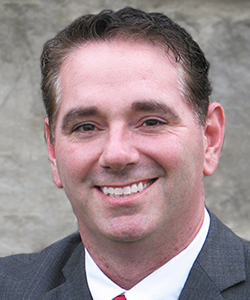
Nick Charles
100% support rate
Top opponent
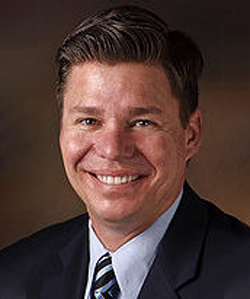
Robin Grammer
6% support rate
Ranked legislators
10
5 support · 5 oppose
Key legislators

Who's moving education in Maryland

Legislators moving education in Maryland
Legislator Party Stance Support rate Votes
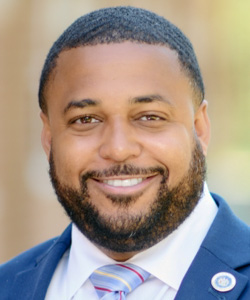
Nick Charles
Nick Charles Senate · District 25
D
Strong +
100% 48
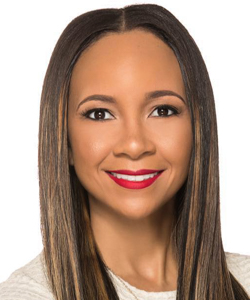
Denise Roberts
Denise Roberts House · District 25
D
Strong +
96% 92
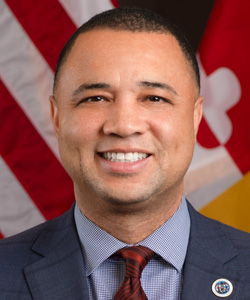
Adrian Boafo
Adrian Boafo House · District 23
D
Strong +
96% 48
Antonio Hayes
Antonio Hayes Senate · District 40
D
Strong +
95% 50
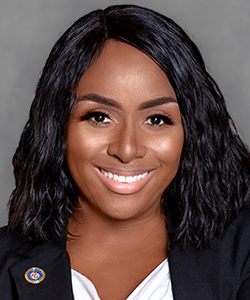
Shaneka Henson
Shaneka Henson Senate · District 30
D
Strong +
95% 51
Robin Grammer
Robin Grammer House · District 6
R
Strong −
6% 85
Matt Morgan
Matt Morgan House · District 29A
R
Strong −
9% 98
Mark Fisher
Mark Fisher House · District 27C
R
Strong −
9% 98
Nic Kipke
Nic Kipke House · District 31
R
Strong −
9% 100
Lauren Arikan
Lauren Arikan House · District 7B
R
Strong −
9% 98
Showing 211–220 of 252 bills

All education bills

passed · Maryland · House of Delegates Mar 25, 2026

HB 352: Concentration of Poverty School Grant Program - Personnel and Per Pupil Grants - Eligible Uses

HB 352 removes a fiscal year 2027 deadline that previously limited how schools could use personnel and per-pupil grants under Maryland's Concentration of Poverty School Grant Program. The bill specifically allows eligible schools with high poverty rates to use these funds for fine arts instructional programs, as defined in COMAR Title 13A, Subtitle 04, Section 13A.04.16.01. This change applies to schools serving a high concentration of eligible students and takes effect July 1, 2026. The bill modifies existing law to expand allowable uses of grant funds without altering the program's core structure or eligibility criteria.
signed · Maryland · House of Delegates May 26, 2026

HB 141: State Personnel - Collective Bargaining - Graduate Assistants

HB 141 grants collective bargaining rights to graduate assistants at Maryland's public universities (including the University System of Maryland, Morgan State University, and St. Mary’s College of Maryland). It directly affects graduate students working as teaching, research, or administrative assistants in these institutions by creating a separate bargaining unit for them. The bill amends state law to explicitly include graduate assistants in eligible bargaining units, allowing them to negotiate wages, work conditions, and benefits as a distinct group. This change takes effect July 1, 2026, and applies to all graduate assistants not previously excluded under the law.
in committee · Maryland · Senate Jan 16, 2026

SB 254: Education - Sexual Abuse and Assault Awareness and Prevention Program - Human and Sex Trafficking

SB 254 requires Maryland public and approved private schools to include age-appropriate human and sex trafficking awareness and prevention education in their health curriculum for students in grades 6 through 8. This amends existing law that already mandated sexual abuse and assault prevention programs, adding specific content about trafficking to those programs. The bill directs the State Board of Education to adopt regulations implementing this change, which takes effect July 1, 2026. It directly affects schools serving middle school students by expanding their required health education content.
signed · Maryland · House of Delegates May 26, 2026

HB 102: Education - Dependent Children of Active Service Members - Advance Enrollment Procedures

HB 102 requires Maryland counties to allow dependent children of active-duty military members to enroll in schools *before* relocating to the area, using remote registration without fees or in-person visits. It ensures children with disabilities continue receiving their Individualized Education Programs (IEPs) or 504 plans without delay when enrolling. The bill also mandates that counties coordinate with the sending state’s school system and allows military families to use temporary housing addresses for residency proof. Additionally, children who enroll through this process may stay in their school for the full academic year, even if their residency status changes.
in committee · Maryland · Senate Feb 10, 2026

SB 478: Washington County - Institutions of Higher Education - Dually Enrolled Students

SB 478 expands eligibility for two financial aid programs at Washington County institutions of higher education. It amends Maryland law to include homeschool students and nonpublic secondary school students in Washington County as "dually enrolled students," directly affecting these students and their access to the Part-Time Grant Program and Early College Access Grant. The bill updates definitions in education codes to cover these groups, ensuring they qualify for tuition support and grants previously available only to public school students. County boards must still cover 75% of tuition costs for eligible students under existing agreements, with periodic review options for schools and colleges. The changes take effect July 1, 2026.
signed · Maryland · House of Delegates May 12, 2026

HB 329: Criminal Law - School Resource Officers - Prohibition on Sexual Activity with Students

HB 329 prohibits school resource officers (SROs) in Maryland from engaging in sexual activity, contact, or intercourse with students enrolled in schools where they are assigned. The bill amends Maryland's Criminal Law (Section 3-314) to explicitly add students at an SRO's assigned school as a protected group under this prohibition, with penalties including up to 3 years in jail or a $3,000 fine for violations. It defines "school resource officer" in Education Law (Section 7-1501) to clarify the scope of the restriction. The law applies directly to law enforcement officers serving in school settings and takes effect July 1, 2026.
signed · Maryland · House of Delegates May 26, 2026

HB 340: School Psychologist Interstate Licensure Compact

HB 340 would allow Maryland to join the School Psychologist Interstate Licensure Compact, enabling licensed school psychologists from member states to practice in Maryland without reapplying for separate state licenses. This directly affects school psychologists seeking to work across state lines, particularly in areas facing staffing shortages. The compact establishes standardized requirements for multistate licensure and creates a commission to manage the agreement, while ensuring states maintain authority to protect public safety through their own scope-of-practice laws. The goal is to improve access to school psychological services by streamlining licensing for qualified professionals.
Sub-Topics Medical Licensing
passed · Maryland · House of Delegates Mar 12, 2026

HB 538: 4-Year Institutions of Higher Education - Mandatory Disclosures for New and Prospective Students (Informed Enrollment Act)

HB 538, the Informed Enrollment Act, requires Maryland colleges and universities that admit first-time undergraduate students to provide prospective and current students with clear, standardized information about costs, graduation rates, post-graduation salaries, and debt outcomes. Starting July 1, 2027, institutions must prominently display a link to the federal U.S. Department of Education College Scorecard on their public websites, accompanied by a plain-language explanation of the data it offers. They must also share this link and explanation during student orientation, in recruitment materials, on social media at least once per semester, and on campus career center websites. The law automatically terminates if the federal College Scorecard resource is discontinued, ensuring it only applies while the federal data remains available.
Sub-Topics Higher Education
in committee · Maryland · Senate Jan 14, 2026

SB 107: Criminal Law – Distribution of Students’ Personal Information – Prohibition

SB 107 prohibits individuals from intentionally sharing students' personal identifying information (like names, addresses, Social Security numbers, or school details) without the student's or parent's consent if the information could cause harm. It directly affects students in secondary schools (grades 6-12) and postsecondary institutions (colleges offering associate/bachelor's degrees). The law allows exceptions for journalists, academic activities, legal disclosures, and safety-related sharing with campus officials. Violations are misdemeanors punishable by up to one year in jail or a $5,000 fine.
in committee · Maryland · House of Delegates Jan 26, 2026

HB 90: Property Taxes - Authority of Counties to Establish a Subclass and Set a Special Rate for Commercial and Industrial Property

HB 90 allows Maryland counties and Baltimore City to create a special property tax rate for commercial and industrial properties - including mixed-use buildings - to fund transportation projects or school budgets. It requires counties to automatically exempt the residential portion of mixed-use properties from this special tax using public records, without requiring owner applications. The special rate must be in addition to the general tax rate, cannot exceed 12.5 cents per $100 assessed value total, and cannot apply to residential parts of qualifying buildings. This directly affects commercial/industrial property owners, particularly those with mixed-use properties, by modifying how their taxes are calculated for specific public funding purposes.
Showing 211 to 220 of 252 bills
Previous 1 21 22 23 26 Next