

Maddy summaryThe Classification Reform Act of 2023 aims to modernize how the U.S. government classifies and declassifies information to reduce unnecessary secrecy while protecting national security. It establishes the Director of National Intelligence as Executive Agent for Classification and Declassification, requiring agencies to declassify information after 25 years unless specific national security reasons justify longer classification, with automatic declassification for records over 50 years old. The bill creates a Declassification Working Capital Fund to support technological solutions for declassification, mandates written justifications for classification decisions, and requires agencies to identify records of public interest through transparency officers. This reform directly affects all federal agencies that handle classified information, including intelligence agencies and executive departments. The law also includes provisions for security reviews of Presidential records and mandatory counterintelligence risk assessments for mishandling of classified information.
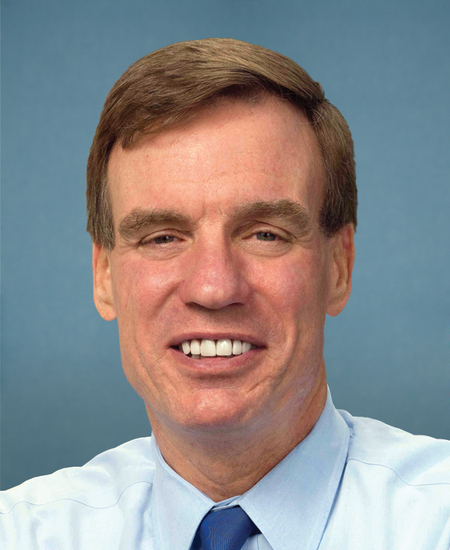
Sen. Mark R. Warner
Sponsored bills
Maddy summaryThe Sensible Classification Act of 2023 aims to reform how the U.S. government classifies and declassifies information to reduce unnecessary secrecy. It requires federal agencies to review and reduce the number of personnel with access to classified information, particularly at Top Secret and Secret levels, and mandates studies on whether security clearances are truly necessary. The bill mandates training to prevent over-classification and promotes classifying information only at the minimum level required for national security. Agencies must report on the number of personnel with access to classified information at different levels and how they will maintain the smallest possible number of clearances. Additionally, the bill directs the development of technology using machine learning and AI to improve classification and declassification processes across government agencies.
Maddy summaryThis bill strengthens protections for election records, digital data, and equipment by expanding existing Civil Rights Act provisions. It requires election officials to preserve all records (including digital ones) and election equipment, with a specific rule allowing equipment reuse within 22 months if all related data is retained. The bill also mandates CISA to issue compliance guidance within a year and creates a new court process for quickly addressing violations related to election record preservation. These changes directly affect state and local election officials and agencies responsible for managing election infrastructure.
Maddy summaryThe SECURE IT Act (S 1500) requires federal testing labs to conduct simulated cyberattacks (penetration testing) on voting systems before certification, directly affecting election system vendors and state/local election officials. It establishes a 5-year voluntary program where cybersecurity researchers can legally test election systems (like voting machines and software) and report vulnerabilities to vendors, with researchers protected under federal law from legal action for good-faith testing. Vendors must fix critical or high-risk vulnerabilities within 180 days, send patches to election officials, and undergo expedited federal review for certified systems. The law also creates a public database for disclosed vulnerabilities while exempting them from public disclosure laws.
Maddy summaryThe Access Technology Affordability Act of 2023 creates a new federal tax credit for individuals who purchase qualifying access technology for blind family members. It allows taxpayers to claim a credit of up to $2,000 per year (adjusted for inflation after 2024) for hardware, software, or IT that converts visual information into formats usable by blind individuals, such as screen readers or braille displays. The credit applies to the taxpayer, their spouse, or dependent blind family members, with a lifetime limit of $2,000 over any three consecutive years. The credit expires after 2028 and cannot be claimed for expenses already covered by other tax benefits.
Maddy summaryThe Rural Jobs Act allocates $500 million annually (for 2023 and 2024) of the New Markets Tax Credit specifically for investments in designated rural areas called "Rural Jobs Zones." These zones must exclude cities/towns over 50,000 population or adjacent urban areas, and require at least 25% of funds to target persistent poverty counties or high migration rural counties. The bill directly affects community development groups focused on job creation in rural regions by providing tax credit funding for equity investments in these areas. It modifies existing tax credit rules to prioritize economic development in underserved rural communities without changing overall tax rates.
Maddy summaryThis bill allows the Federal Deposit Insurance Corporation (FDIC) to recover compensation from bank executives and directors who contributed to a bank's failure. It permits the FDIC to seek repayment of payments received in the two years prior to the bank's collapse (with no time limit for fraud), and to ban individuals from future financial roles for at least two years if they violated laws, breached fiduciary duties, or engaged in unsafe practices that caused the failure. The bill also requires liability insurance for these executives to exclude coverage for such recoupments. It directly affects senior bank leaders and their insurers, focusing on accountability for failures that required government intervention.
Maddy summaryThis bill directs the Federal Aviation Administration (FAA) to fund research contracts for integrating drones into national airspace. It requires the FAA to award contracts for projects addressing specific drone integration challenges, such as detect-and-avoid technology, beyond visual line-of-sight operations, and drone traffic management systems. The bill authorizes $12 million annually from 2024 to 2028 for these contracts, prioritizing proposals with technical merit and partnerships with designated drone test ranges. It also extends the FAA's authority to operate drone test ranges until 2028. The primary beneficiaries are drone technology developers and FAA contractors working on airspace integration solutions.
Maddy summarySJRES 4 is a joint resolution that removes the 1972 deadline for states to ratify the Equal Rights Amendment (ERA), which was originally proposed in House Joint Resolution 208. It declares that the ERA is valid as part of the U.S. Constitution if ratified by three-fourths of states (38), regardless of the expired deadline. The resolution directly affects the ERA ratification process, making it possible for states to complete ratification without time constraints. As of 2023, 38 states had already ratified the ERA, and this resolution would finalize its inclusion in the Constitution if enacted.
Maddy summaryThe Election Worker Protection Act of 2023 provides federal grants to states for recruiting and training election workers (including poll workers and election volunteers) with specific requirements for cultural competence and diversity in recruitment efforts. It also funds physical security services and social media threat monitoring for election workers to protect them from threats. The bill establishes new criminal penalties for intimidating, threatening, or harassing election workers while they perform their duties, and creates a grant program to help protect election workers' personally identifiable information from public disclosure. These provisions apply to workers involved in federal elections and require states to submit reports on how the funds are used.