

Afghanistan Withdrawal Oversight and Liability Act or the AWOL Act This bill prohibits using federal funds appropriated for FY2021 to provide support to the Taliban. The bill also requires reports and certifications related to Afghanistan. Specifically, no FY2021 funds may be used to (1) make payments or contributions of material support to the Taliban, or (2) provide relief from sanctions against the Taliban or its leaders. The bill requires the President to report to Congress on efforts to evacuate U.S. citizens and lawful permanent residents from Afghanistan. The President must also certify to Congress when all such individuals seeking evacuation from Afghanistan have been evacuated. The Department of State must periodically report to Congress on any agreements between the United States and the Taliban. Within seven days of the United States reaching an agreement with the Taliban, the State Department must provide to Congress all materials relevant to that agreement. The bill also requires the Office of the Inspector General of the State Department to report to Congress about the State Department's compliance with legal requirements in connection to agreements with the Taliban. Specifically, the office must assess compliance with a law that requires the State Department to provide certain information to Congress when the United States enters certain international agreements. The Department of Defense must report to Congress concerning U.S. equipment, property, and classified material that was destroyed, surrendered, or abandoned in Afghanistan during a period starting from February 29, 2020.
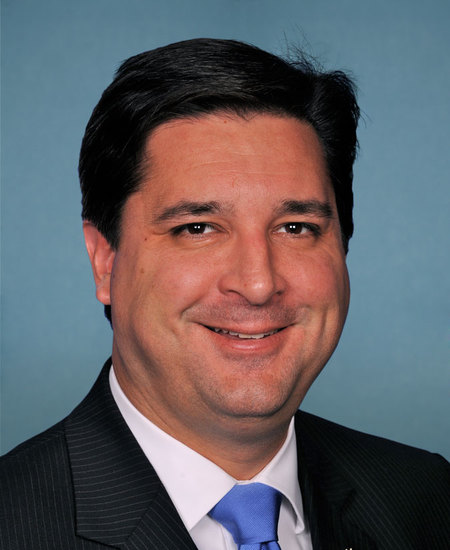
Rep. David Rouzer
Sponsored bills
This concurrent resolution condemns and censures President Joseph R. Biden for the military withdrawal from Afghanistan, which the resolution states was executed in a haphazard manner.
Puppies Assisting Wounded Servicemembers for Veterans Therapy Act or the PAWS for Veterans Therapy Act This bill implements a program and a policy related to service dog therapy for veterans. Specifically, the bill requires the Department of Veterans Affairs (VA) to implement a five-year pilot program to provide canine training to eligible veterans diagnosed with post-traumatic stress disorder as an element of a complementary and integrative health program. Eligible veterans are those who are enrolled in the VA health care system and have been recommended for participation by a qualified mental health care provider or clinical team. The VA must seek to enter agreements containing specified elements with accredited nongovernmental entities that have demonstrated ability to provide canine training. Veterans who participate in the program are authorized to adopt the dog they assisted in training if their health provider determines it is in the best interest of the veteran. The VA must establish processes to document and track the progress of participating veterans with respect to health benefits and improvements. The Government Accountability Office must brief Congress and submit a report on the program. The bill also authorizes the VA to provide service dogs to veterans with mental illnesses, regardless of whether they have a mobility impairment.
This resolution condemns the President's failure to heed military and intelligence advisors about the speed and nature of the Taliban offense in Afghanistan and urges the President to commit to maintaining the evacuation operation as long as necessary to evacuate any U.S. citizen, lawful permanent resident, or Afghan partner who requests evacuation assistance .
This bill requires the Department of Defense (DOD) to report daily on the efforts to evacuate U.S. citizens and legal permanent residents from Afghanistan until the President certifies to Congress that all such individuals who sought evacuation have been evacuated. Until such certification is submitted, DOD may not use FY2021 funds for activity which would have the effect of reducing the total number of service members deployed to Afghanistan, except in specified circumstances.
Blocking Lawlessness from Undermining Enforcement Act or the BLUE Act This bill generally prohibits the use of Highway Safety Program or National Priority Safety Program funds for traffic control or enforcement by a state or locality that defunds the police (i.e., reduces its police budget and reallocates the funds to other government agencies). However, states and localities may use such funds for traffic control and enforcement if (1) reducing the police budget is part of an overall budget reduction, or (2) the police chief decides to reallocate a portion of the police budget for mental health programs. Additionally, a state or locality may request an exemption from the prohibition.
VA Hiring Enhancement Act This bill modifies requirements and procedures related to the hiring of physicians at the Department of Veterans Affairs (VA). Specifically, the bill negates enforcement of a noncompete agreement that an applicant for a specified appointee position (e.g., physician) in the Veterans Health Administration (VHA) has entered into with a non-VA facility or party. As a condition of terminating the noncompete agreement, the physician must agree to serve at the VHA for one year or until the expiration of the noncompete agreement, whichever is later. The bill also authorizes the VA to offer a contingent physician's appointment to a person if the VA anticipates that the person will have completed a residency program leading to board eligibility in a specialty and met other requirements for the appointment within two years after the VA offer. Eligibility requirements for a VA physician's appointment are revised to require completion of a residency program rather than an internship.
Alexander Lofgren Veterans in Parks (VIP) Act This bill makes the America the Beautiful-National Parks and Federal Recreational Lands Pass available, without charge, to members of the Armed Forces, veterans, and Gold Star Families. The pass covers the entrance fee and standard amenity recreation fee for all federal recreational lands and waters.
Healthy Dog Importation Act This bill imposes requirements on the importation of live dogs. Specifically, the bill prohibits the importation of a live dog into the United States unless the Department of Agriculture (USDA) determines the dog (1) is in good health, (2) has received all necessary vaccinations and demonstrated negative test results as evidenced by a certificate from a licensed veterinarian, and (3) is officially identified by a permanent method approved by USDA. Additionally, dogs entering the United States for transfer must be at least six months of age and accompanied by a USDA permit. Transfer is defined as a change of ownership or control of an imported dog to another person, including by sale, adoption, exchange, or donation. USDA must provide an exception to any requirements under the bill for dogs that are transferred for (1) research purposes; (2) veterinary treatment under certain conditions, including appropriate quarantining; or (3) lawful importation into the state of Hawaii if the dog is not transported out of Hawaii for resale at less than six months of age. USDA also has enforcement authority under the bill.
Listing Reform Act This bill modifies requirements concerning the review of petitions to add a species to the list of endangered or threatened species or to remove a species from the list. Specifically, the bill allows the Department of the Interior and the Department of Commerce to prioritize the consideration of petitions to list a species as endangered or threatened other than in the order in which the petitions are received. The appropriate department may not give general priority to petitions to add species to the list of endangered or threatened species over petitions to remove a species from the list. The deadline for the appropriate department to decide on whether or not a petition to list or remove a species should be granted is changed from within 12 months to as expeditiously as possible. The appropriate department is given the authority to preclude the listing of a species as threatened due to the likelihood of significant, cumulative economic effects that would result from such listing or from the likely resulting designation of critical habitat of the species. Once a petition is precluded due to those economic effects, the appropriate department may not reconsider that finding unless the department (1) determines there is endangerment of extinction of the species; or (2) receives a new petition to add the species to the list that includes an analyses concluding that alternative actions are possible other than those resulting in significant, cumulative economic effects.