Disaster Mitigation and Tax Parity Act of 2021 This bill excludes from gross income, for income tax purposes, any qualified catastrophe mitigation payment made under a state-based catastrophe loss mitigation program. A qualified catastrophe mitigation payment means any amount received for making improvements to an individual's residence for the sole purpose of reducing the damage that would be done to such residence by a windstorm, earthquake, or wildfire.
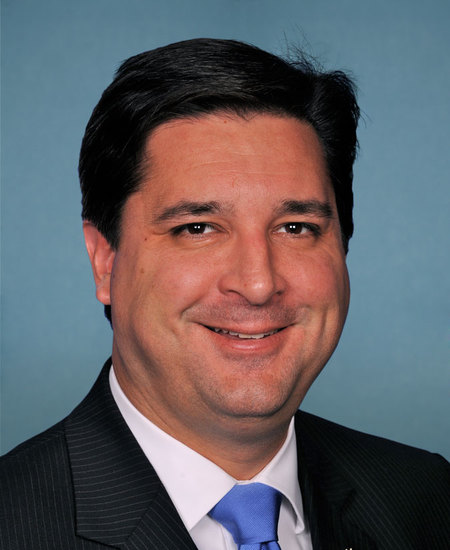
Rep. David Rouzer
Sponsored bills
PFAS Action Act of 2021 This bill establishes requirements and incentives to limit the use of perfluoroalkyl and polyfluoroalkyl substances, commonly referred to as PFAS, and remediate PFAS in the environment. PFAS are man-made and may have adverse human health effects. A variety of products contain PFAS, such as nonstick cookware or weatherproof clothing. The bill directs the Environmental Protection Agency (EPA) to designate the PFAS perfluorooctanoic acid (PFOA) and perfluorooctanesulfonic acid (PFOS) as a hazardous substances under the Comprehensive Environmental Response, Compensation, and Liability Act of 1980, thereby requiring remediation of releases of those PFAS into the environment. Within five years, the EPA must determine whether the remaining PFAS should be designated as hazardous substances. The EPA must publish human health water quality criteria under the Clean Water Act for each measurable PFAS and class of such substances and establish standards to limit discharges of PFAS from industrial sources into waters of the United States. In addition, the EPA must issue a national primary drinking water regulation for PFAS that, at a minimum, includes standards for PFOA and PFOS. Among other requirements, the EPA must also issue a final rule adding PFOA and PFOS to the list of hazardous air pollutants, test all PFAS for toxicity to human health, and regulate the disposal of materials containing PFAS. The EPA must also require PFAS manufacturers to submit analytical reference standards for PFAS. The EPA and states may use those standards for (1) the development of information, protocols, and methodologies, and (2) activities relating to the implementation of enforcement of requirements. Finally, the bill provides incentives to address PFAS, such as grants to help community water systems treat water contaminated by PFAS and grants to schools for testing and filtrating PFAS from drinking water.
This resolution denounces socialism and opposes the implementation of socialist policies in the United States.
Entrepreneurs Need Timely Replenishment (for) Eating Establishments Act or the ENTRÉE Act This bill provides FY2021 supplemental appropriations for the Restaurant Revitalization Fund and modifies requirements related to administration of the fund. The fund was established in response to COVID-19 to make grants to eligible food and beverage purveyors for covering specified costs such as payroll, operational expenses, and paid sick leave. The bill correspondingly rescinds unobligated amounts previously made available for the Economic Injury Disaster Loan Program and coronavirus state and local fiscal recovery funds. Further, the bill requires the Small Business Administration (SBA) to (1) review and process grant applications in the order in which they are received; (2) impose requirements on applicants that reduce waste, fraud, and abuse; and (3) submit and report monthly on an oversight and audit plan outlining the SBA's policies, procedures, and activities with respect to these grants.
Conservatorships Immoral Relationship with Contraception in the United States Act or the CIRCUS Act This bill excludes from participation in federal health care programs providers who (1) require the approval of the conservator before removing a contraceptive device from an individual under a conservatorship, or (2) prescribe birth control medications to an individual under a conservatorship without that individual's written consent.
Drug Testing for Welfare Recipients Act This bill requires the Temporary Assistance for Needy Families (TANF) program, the Supplemental Nutrition Assistance Program, and specified public housing programs to subject individuals to substance-abuse screening and to deny benefits for individuals who test positive for a controlled substance.
Broadband for Rural America Act This bill modifies and consolidates Department of Agriculture (USDA) programs for expanding broadband internet in rural areas. Specifically, the bill modifies a program that provides grants, loans, and loan guarantees to support broadband expansion in rural areas. Modifications include revising the criteria used to prioritize applications and projects and changing the name of the program to the ReConnect Rural Broadband Program. Additionally, the bill terminates on June 30, 2022, a Department of Agriculture (USDA) COVID-19 response program that supports broadband expansion in rural areas for distance learning and telemedicine. Any remaining program funds available after the termination date shall be used for the ReConnect Rural Broadband Program. The bill also expands coordination requirements that apply to the Department of Commerce, USDA, the Federal Communications Commission (FCC), and the National Telecommunications and Information Administration. This includes requiring the use of specified FCC maps when assessing a community's access to broadband.
This bill modifies certain boundaries of the John H. Chafee Coastal Barrier Resources System Unit located in North Topsail Beach, North Carolina.
PFAS Exposure Assessment and Documentation Act This bill requires the Department of Defense (DOD) to include in various health evaluations an assessment of whether a member of the Armed Forces has been exposed to perfluoroalkyl or polyfluoroalkyl substances, commonly referred to as PFAS. Specifically, the bill requires DOD to ensure that any periodic health assessment, physical assessment for recently separated members, pre-deployment medical examination, post-deployment medical examination, and post-deployment health reassessment provided to a member of the Armed Forces includes an evaluation of whether the member has been exposed to PFAS or was based or stationed at a military installation with a known or suspected release of PFAS during the period the member was there. If any of the evaluations result in a positive determination of potential exposure to PFAS, DOD must provide blood testing during the evaluation to be included in the member's health record. DOD must pay for blood testing to determine and document potential exposure to PFAS for former members of the Armed Forces or family members of such members who lived at a location identified by DOD as having a known or suspected PFAS release during the time the individuals lived there. DOD must share results of the evaluations with the Department of Veterans Affairs and establish a registry of members of the Armed Forces who have been exposed to, or suspected to have been exposed to, PFAS. Members may elect to be excluded from the registry.
SNAP Reform Act of 2021 This bill modifies eligibility under the Supplemental Nutrition Assistance Program (SNAP) with respect to individuals who receive other forms of assistance. Currently, households may be considered categorically eligible for SNAP if all members receive certain other assistance, such as under the Temporary Assistance for Needy Families (TANF) program. The bill specifies that members receiving TANF assistance must (1) receive at least $150 a month in cash assistance under TANF for an extended period with an income of up to 130% of the federal poverty level (FPL), or (2) be elderly or disabled and receive cash assistance or ongoing and substantial services under TANF with an income of up to 200% of the FPL. The bill also increases the maximum allowable resources for SNAP eligibility and specifies that certain allowances relating to energy assistance extend only to households with elderly members.