Maddy summaryThis bill appropriates over $15 billion in supplemental funding for U.S. security assistance to Israel following attacks in Israel. It includes specific allocations such as $5.2 billion for Israel's Iron Dome, David's Sling, and Iron Beam defense systems, as well as funds for military personnel, operations, and equipment across all branches of the military. The bill requires the Secretary of Defense and Secretary of State to submit regular reports to Congress detailing security assistance provided to Israel and designates all funding as "emergency requirements" under federal law. This funding directly supports U.S. security assistance programs with Israel to respond to regional security threats.
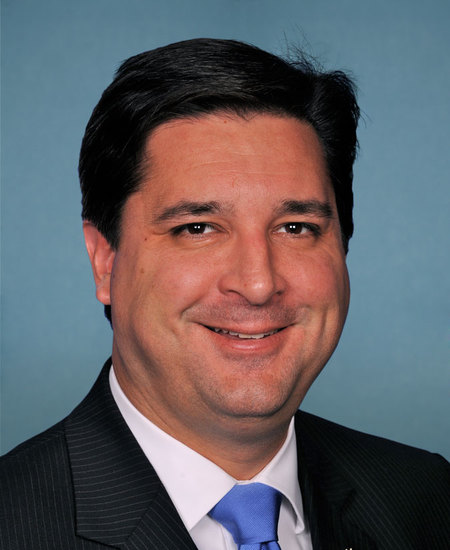
Rep. David Rouzer
Sponsored bills
Maddy summaryThis resolution disapproves a Department of Energy rule that would have set new energy efficiency standards for consumer furnaces. The rule, published in the Federal Register (88 Fed. Reg. 87502), aimed to require furnace manufacturers to produce models meeting higher energy conservation levels. If enacted, this resolution would cancel the rule, preventing it from taking effect. As a result, current energy efficiency standards for furnaces would remain unchanged, and manufacturers would not face the new requirements.
Maddy summaryHJRES 107 is a congressional resolution seeking to block a Federal Communications Commission (FCC) rule published on January 22, 2024 (89 Fed. Reg. 4128). The resolution aims to disapprove the FCC's rule implementing digital discrimination protections under the Infrastructure Investment and Jobs Act, which would have required internet providers to prevent discriminatory practices. If passed, this resolution would nullify the FCC rule, preventing it from taking effect under the Congressional Review Act (Chapter 8 of Title 5, U.S. Code). The bill directly affects the FCC's regulatory authority over digital discrimination enforcement in broadband services.
Maddy summaryHR 7183, the PROTECTS Act of 2024, prohibits federal funding from being used to provide or refer for specific gender transition procedures to individuals under 18. The bill defines prohibited procedures broadly to include surgeries (like hysterectomy, mastectomy, or genital reconstruction), puberty-blocking medications, and hormone treatments administered at supraphysiologic doses. It includes limited exceptions for medically necessary care, such as treating precocious puberty or correcting genetic disorders of sex development. The law directly affects minors seeking gender-affirming medical care covered by federal programs, restricting federal financial support for these services.
Abortion Funding Awareness Act of 2024 This bill establishes reporting requirements for states regarding certain Medicaid payments to abortion providers. Specifically, the bill requires states that make Medicaid payments using federal funds for any items or services furnished by an abortion provider to annually (1) submit a report to the Centers for Medicare & Medicaid Services on all such payments, and (2) publish the report on the state's website. The report must include specified information, including the number of abortions performed by the providers and the gestational age with respect to each such abortion. (Current law restricts the use of federal funds for abortions to cases of rape, incest, or life endangerment of the woman. States may use their own funds to cover abortions in other cases.)
Maddy summaryThis bill amends SNAP (food stamp) program rules to prevent misuse. It requires states to suspend SNAP benefits for households making exclusively out-of-state purchases via EBT cards for over 60 days unless they prove they still reside in the state. It also prohibits households with members who own approved retail food stores or wholesale food businesses from using SNAP benefits at those locations (except for publicly owned stores or government entities). The changes take effect one year after enactment.
Maddy summaryHR 7013, the Confidence in Clean Water Permits Act, clarifies what constitutes compliance with water pollution discharge permits under the Clean Water Act. It specifies that facilities must meet permit conditions for pollutants with set limits, as well as pollutants monitored via indicator parameters or identified during the application process. The bill also requires that any water quality-based permit limits must clearly state the specific pollutant and either a numerical discharge limit or defined waterbody conditions. This directly affects industrial and municipal facilities seeking or holding Clean Water Act discharge permits by making permit requirements more precise. The changes aim to reduce ambiguity in compliance expectations for regulated entities.
Maddy summaryHR 7021 requires the EPA to issue new or revised water quality standards through formal rulemaking procedures, rather than informal guidelines. It also specifies that legal challenges to these standards must follow the same judicial review process used for other EPA rules. The bill directly affects the EPA’s process for developing water quality criteria, which are used by states to set pollution limits for water bodies. This change aims to increase transparency and consistency in how water quality standards are established and challenged.
Maddy summaryThis bill establishes a 60-day deadline for filing lawsuits challenging federal permits for dredged or fill material under the Clean Water Act. It explicitly excludes reviews of state permit programs from this timeline and requires courts to remand non-compliant permits to agencies within 180 days, rather than vacating them. Courts may only block a permit if activities under it pose an "imminent and substantial danger" to health or the environment with no other remedy. The law directly affects permit applicants, federal agencies (like the Army Corps of Engineers), and state programs approved under the Clean Water Act.
Maddy summaryHR 7026, the "Reducing Permitting Uncertainty Act," modifies EPA authority under the Clean Water Act regarding dredge and fill permits. It requires the Army Corps of Engineers to notify the EPA when a permit application is ready for review, then mandates a minimum 30-day period during which the EPA cannot block the permit. This directly affects construction, development, and environmental projects needing federal dredge/fill permits by creating predictable timelines. The key provision sets a fixed 30-day window after notification before the EPA may deny or restrict a permit, reducing delays in the approval process.