Maddy summaryThe Death Tax Repeal Act would eliminate the federal estate tax and generation-skipping transfer tax for estates of people who die on or after the bill's enactment date, and for generation-skipping transfers made after that date. It would also establish a new $10 million lifetime gift tax exemption (adjusted annually for inflation) and replace the existing gift tax rate schedule with a revised structure. These changes would primarily affect high-net-worth individuals and their heirs, as the estate tax and gift tax typically apply to large estates or gifts exceeding the new exemption threshold. The bill's provisions would take effect on the date of enactment, with transitional rules for the year the bill is signed into law.
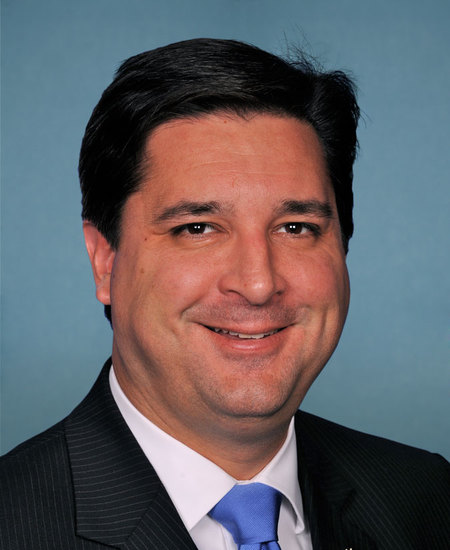
Rep. David Rouzer
Sponsored bills
Maddy summaryHR 7045 creates a new 50% federal tax credit for individuals and businesses that donate to eligible pregnancy centers. Donors can claim a credit equal to half their contribution, up to $10,000 per year ($20,000 for joint filers), for donations made to centers that provide free services like counseling, prenatal care, and material support to pregnant women. To qualify, centers must be 501(c)(3) organizations operating primarily to help women carry pregnancies to term without performing or promoting abortions. The bill directly affects donors seeking tax benefits and pregnancy centers receiving support, while requiring centers to meet specific service and non-abortion criteria.
Maddy summaryThe RIFLE Act of 2024 changes how the federal government handles violations by firearms licensees, affecting gun dealers and manufacturers who hold federal licenses. It creates a graduated penalty system where non-willful violations require the Attorney General to work with licensees to fix issues before taking action, while willful violations may lead to license suspension or revocation only after proper notice, hearing, and evidence of continued noncompliance. The bill establishes new procedures for administrative hearings, defines "willful" violations more clearly, and gives licensees 90 days to liquidate inventory after license expiration or revocation, with extensions possible for reasonable cause. These changes aim to create a more transparent process for addressing violations while maintaining public safety standards.
Maddy summaryHR 788, the Stop Settlement Slush Funds Act of 2023, prohibits federal agencies from entering settlement agreements that direct payments to third parties (other than the U.S. government) unless the payment directly reimburses actual harm caused by the defendant or covers services related to the case. It requires agencies to report annually on such settlements to Congress and mandates annual audits by agency Inspectors General to ensure compliance. The law applies to all federal agencies entering settlements after its enactment and includes a 7-year sunset provision. This directly affects how federal agencies handle settlements in civil cases, limiting their ability to divert settlement funds to external entities without clear, direct justification.
Maddy summaryH.J.Res. 92 seeks congressional disapproval of a 2022 rule from the Food and Nutrition Service (FNS) that updated how discrimination complaints are processed in federal nutrition programs (like SNAP) following the *Bostock v. Clayton County* Supreme Court decision. The bill aims to block the rule’s implementation, which would have required agencies to handle discrimination complaints under the expanded protections established by *Bostock* (covering LGBTQ+ individuals). If passed, the resolution would make the FNS policy update ineffective, maintaining the previous complaint processing approach. This affects how federal nutrition programs address discrimination claims but does not change the underlying anti-discrimination law.
Maddy summaryThis bill requires cabinet secretaries (like the Secretary of Defense or Health Secretary) to notify Congress in writing within 24 hours if they cannot perform their duties. It applies to all cabinet members whose appointments require Senate confirmation. If a secretary cannot notify due to a medical emergency or other urgent situation, their agency must submit the notice instead. The law aims to ensure Congress is promptly informed about temporary leadership gaps in major federal departments.
Maddy summaryThis bill increases loan limits for farmers under the Farm Service Agency. It raises the maximum farm ownership loan amount from $600,000 to $850,000 (and guaranteed loans from $1.75 million to $3.5 million), and operating loans from $400,000 to $750,000 (guaranteed from $1.75 million to $3 million). It also doubles the microloan cap from $50,000 to $100,000. Additionally, the bill creates a new process allowing distressed guaranteed loans to be refinanced into direct loans if borrowers can't resolve issues with lenders and the farm operation can become financially viable. These changes directly affect farmers and ranchers seeking credit through the Farm Service Agency.
Maddy summaryHRES 955 is a resolution commending Taiwan for its democratic election history and supporting Taiwan's democratic institutions. It recognizes Taiwan's transition to democracy since the late 1980s, including 7 presidential and 9 legislative elections held since then, all deemed free and fair. The resolution specifically expresses support for Taiwan's upcoming January 13, 2024, elections and condemns interference by the Chinese Communist Party. It affirms U.S. commitment to a strong partnership with Taiwan across multiple domains and supports Taiwan's self-defense and liberty. As a procedural resolution, it does not create new law but formally expresses congressional support for Taiwan's democratic development.
Maddy summaryHR 6926, the Safe and Open Streets Act, makes it a federal crime to intentionally block public roads or highways to disrupt the movement of goods or commerce. The bill adds a specific offense under federal law for purposefully obstructing, delaying, or affecting commerce by blocking roads, with penalties including fines or up to five years in prison. It directly affects individuals who block roads to interfere with transportation or delivery of goods, such as during protests or demonstrations. The law updates existing statutes to clarify and strengthen penalties for this specific type of obstruction, without changing broader traffic or protest laws.
Maddy summaryHR 6853, the SOS Act, requires the Congressional Budget Office to include a new graph in annual reports about Social Security trust funds. The graph must compare projected payments under a 1985 law (section 257(b)(1)) with actual outlays from current law. This procedural bill affects how Congress reports on Social Security funding, adding transparency about payment assumptions versus current spending. It does not change eligibility or benefit amounts for seniors or disability recipients.