

Maddy summaryHR 6344, the Simon Crosier Act, requires Medicare and Medicaid providers to establish written policies for do-not-resuscitate (DNR) orders involving unemancipated minors (under 18 without legal independence). It mandates that providers must inform at least one parent or legal guardian in person or by phone (with 72 hours of effort) before considering a DNR, allow parents/guardians to refuse consent, and prohibit overriding parental objections to life-sustaining treatment. The bill also requires providers to continue life-sustaining care for 15 days if a parent requests a transfer and explicitly prohibits using disability as the sole basis for DNR decisions. These requirements apply to all Medicare/Medicaid-covered facilities and directly affect minors, their parents, and healthcare providers.
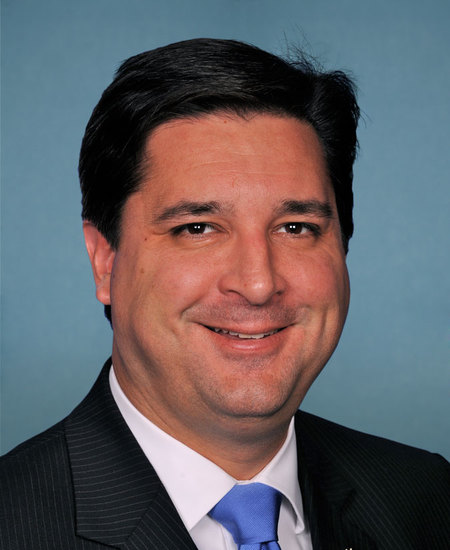
Rep. David Rouzer
Sponsored bills
Maddy summaryHR 6177 prohibits federal funding from the Department of Health and Human Services (HHS) for researchers involved in studies or experiments involving minors that: (1) affirm a minor's gender identity differing from their sex assigned at birth, (2) provide medical/surgical services to help minors disassociate from their biological sex, or (3) use social interventions for the same purpose. The bill directly affects researchers seeking HHS grants for such studies, requiring them to certify they have never led such projects. It defines "sex" biologically at birth (based on reproductive biology and genetics) and "minor" as anyone under 18. The law bans funding for any federally-supported research meeting these criteria, regardless of the study's focus.
Maddy summaryThe Maximum Pressure Act (HR 6114) is a legislative proposal that would maintain and expand U.S. sanctions against Iran. The bill would codify existing sanctions, require Iran to meet 12 specific conditions before sanctions could be lifted (including ending support for terrorism, releasing hostages, and ending nuclear enrichment), and expand sanctions on Iran's Revolutionary Guard Corps and missile programs. It also establishes new reporting requirements for the U.S. government to monitor Iran's activities and the impact of sanctions. The legislation would require congressional review before any sanctions could be lifted or modified, preventing the executive branch from unilaterally easing restrictions.
Maddy summaryHR 5840, the Transportation Security Screening Modernization Act of 2024, simplifies the process for transportation workers to obtain multiple TSA security credentials. It requires the TSA to allow individuals to apply for and renew programs like the TWIC (Transportation Worker Identification Credential) and HAZMAT Endorsement through a single enrollment at any TSA center, with a combined fee lower than separate applications. The bill mandates coordinated expiration dates for all credentials and ensures state-issued commercial driver's licenses reflect the correct HAZMAT endorsement validity. These changes aim to reduce duplication and costs for workers needing multiple security clearances. The TSA must implement these changes within two years and publish details online.
Maddy summaryThis bill establishes an Agricultural Trade Enforcement Task Force to address foreign trade barriers harming U.S. agricultural exports, specifically targeting India's WTO-violating price support programs for rice, wheat, and other commodities. The Task Force, led by the U.S. Trade Representative and Agriculture Department, must identify systemic trade barriers, develop enforcement strategies, and file a WTO dispute against India within 60 days of consultations if needed. It requires quarterly reports to Congress on progress, including a specific plan to challenge India's subsidies that exceed WTO limits (e.g., rice supports at 93.9% of production value). The bill directly affects U.S. farmers, ranchers, and exporters who face market access barriers due to these foreign subsidies.
Maddy summaryThis bill expands Health Savings Account (HSA) eligibility to cover more health plans and health care sharing ministries, allowing individuals with these plans to contribute to HSAs. It significantly increases annual HSA contribution limits to $10,800 for individuals and $29,500 for families (up from $3,850/$7,750), effective 2024. The bill also permits HSA funds to pay for periodic provider fees and health care sharing ministry costs (including administrative fees), and reduces penalties for non-qualified distributions to 10%. These changes directly affect HSA account holders who use non-traditional health coverage or share medical expenses through ministries.
Maddy summaryThis bill expands Medicare coverage to include home infusion treatment for people with Alpha-1 Antitrypsin Deficiency Disorder, a genetic condition causing lung and liver damage. It specifically covers "augmentation therapy" (a standard treatment using Alpha-1 Proteinase Inhibitor) when administered in a patient's home by qualified providers. Medicare will pay 80% of the cost for intravenous kits and up to 2 hours of nursing care during these home infusions, starting January 1, 2025. The change directly affects Medicare beneficiaries with this condition who require home-based treatment and their qualified home infusion providers.
Maddy summaryThis bill modifies the $800 de minimis exemption for small shipments entering the U.S. duty-free. It excludes goods from nonmarket economy countries and nations on the U.S. trade "priority watchlist" from this exemption. Importers must submit detailed documentation (including origin, value, shipper details, and classification) to U.S. Customs within 180 days of enactment. Providing false information could result in $5,000 civil penalties per violation. The changes apply to shipments entered on or after 180 days after the bill’s enactment.
Maddy summaryHR 3748, the SAFE Act of 2023, requires U.S. agricultural agencies to proactively negotiate trade agreements with foreign governments to minimize export disruptions caused by animal disease outbreaks. It directs the Secretary of Agriculture, in coordination with the U.S. Trade Representative, to establish regionalization, zoning, or compartmentalization agreements with key export markets for U.S. livestock and animal products. The bill also mandates that the Food Safety and Inspection Service notify state agricultural departments and producer groups within three days if export-related information is removed from official libraries. This directly affects livestock producers and exporters by aiming to stabilize access to international markets during disease events. The law amends the Animal Health Protection Act to formalize these negotiation and notification requirements.
Maddy summaryThis bill prohibits federal funding for gender transition procedures - including hormone therapy, puberty blockers, and surgeries like genital reassignment - across all federal programs and health plans. It exempts procedures for medical conditions (such as disorders of sex development) and treatment of complications arising from such procedures. The bill also blocks Affordable Care Act premium tax credits and cost-sharing reductions for health plans covering these services, though individuals may purchase separate non-federal-funded coverage. State and private insurers can still offer such coverage using their own funds, but federal subsidies cannot be applied to it.