

Maddy summaryThe Conservation Reinvestment Act provides $1.45 billion in 2025 for economic loss coverage to farmers, plus $1 billion for sales-based crops and $450 million for flat-rate crop payments, all funded through the Commodity Credit Corporation. It increases annual conservation funding under the Food Security Act to $700 million by 2031, requiring at least 30% of these funds to support practices that improve soil carbon or reduce emissions. The bill also allocates $10 million for dairy processing cost reporting, establishes a $7 billion contingency fund for 2028, and allows schools to serve organic or non-organic whole milk under lunch programs. These changes directly affect farmers, conservation programs, and school nutrition providers through specific funding mechanisms and updated eligibility rules.
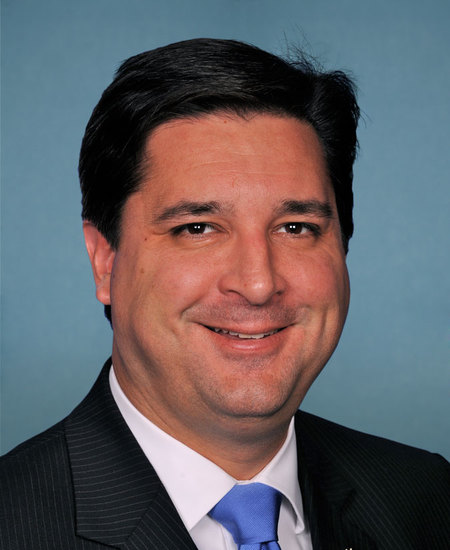
Rep. David Rouzer
Sponsored bills
Maddy summaryHR 3316 streamlines environmental reviews for port, pipeline, and airport infrastructure projects by requiring the Transportation Secretary to adopt highway project review procedures (from 23 U.S.C. §139) where feasible. It mandates agencies to maintain public databases tracking projects using "categorical exclusions" (projects not requiring full environmental review) and extends the claim resolution timeframe from 150 days to 2 years specifically for port projects. This affects infrastructure developers seeking federal approvals under the National Environmental Policy Act (NEPA) and federal agencies managing these projects. The bill directly changes how environmental reviews are conducted for major transportation infrastructure, aiming to reduce delays without altering NEPA's core requirements.
Maddy summaryThe Grown in America Act of 2024 creates a new tax credit for businesses that use predominantly domestically produced agricultural inputs in food manufacturing. It reduces tax liability for eligible food processors and manufacturers whose domestic input costs (expenses for U.S.-grown farm products used in food production) meet a minimum threshold, starting at 50% in 2025 and rising to 85% by 2032. The credit is capped at $100 million annually per taxpayer and requires a 3-year average of domestic input costs relative to total input costs. Cooperative businesses may elect to distribute the credit to their patrons based on business volume. The credit applies to taxable years beginning after the bill's enactment date.
Maddy summaryThe FOCA Act of 2023 requires federal agencies to stop mandating or banning contractor agreements with labor organizations (like union contracts) in construction project bids and contracts. It directly affects federal contractors, subcontractors, and agencies managing construction projects funded by the government. The bill prohibits favoring or penalizing contractors based on their labor affiliation status, aiming to promote fair competition and reduce costs. It also mandates updates to federal contracting rules within 60 days of enactment to implement these changes.
Maddy summaryThe Lumbee Fairness Act extends full federal recognition to the Lumbee Tribe of North Carolina, granting the Tribe and its members eligibility for all federal services and benefits provided to federally recognized tribes. It designates members residing in Robeson, Cumberland, Hoke, and Scotland counties as living "on or near an Indian reservation" for service delivery purposes. The bill authorizes the Secretary of the Interior to take land into trust for the Tribe and clarifies jurisdictional boundaries with North Carolina regarding tribal lands. These changes directly affect the Lumbee Tribe and its members in specific North Carolina counties, aligning their federal status with other recognized tribes.
Maddy summaryThis bill requires Medicare Advantage plans to implement electronic prior authorization systems by 2027 and publish detailed data on their approval and denial rates for medical services by 2026. It directly affects Medicare Advantage plans (private insurers offering Medicare coverage) and their enrollees (seniors 65+), mandating transparency about prior authorization decisions, processing times, and appeal outcomes. Key provisions include requiring plans to report annual statistics on request approvals/denials, average processing times, and use of technology, with this data published publicly by the Centers for Medicare & Medicaid Services. The bill also sets timelines for plan responses to prior authorization requests and mandates reports to Congress on implementation and impacts.
Maddy summaryHR 8411, the Defending American Property Abroad Act, blocks U.S. government funding for activities involving foreign ports or terminals where a U.S. entity owns the land needed for access, and a foreign government has taken actions like nationalizing that land or nullifying a related contract. It requires the Homeland Security Secretary to designate such "prohibited property" within 60 days, then prohibits funding for vessels using these locations to import goods, dock, or receive maintenance. The bill mandates annual reports to Congress tracking designated properties, affected vessels, and the foreign actions triggering designations, along with assessments of economic and national security impacts. This directly affects U.S. businesses with foreign port access and U.S. agencies managing maritime activities.
Maddy summaryThis bill modifies Social Security Number (SSN) requirements for claiming the Child Tax Credit and Earned Income Tax Credit. It specifies that qualifying SSNs must be issued to U.S. citizens (or under specific Social Security Act provisions) and issued before the tax return due date. The changes apply to tax years beginning after December 31, 2024, and update related tax code references to use "social security number" instead of "taxpayer identification number." These are technical adjustments to eligibility criteria, not new benefits or funding.
Maddy summary# Summary of Proposed Legislation This document outlines a comprehensive U.S. legislative proposal with several key components: 1. **Research Restrictions**: - Requires certification from Federal research grant recipients that they are not Chinese citizens or participants in Chinese talent programs - Prohibits employment of Chinese nationals in federally funded research - Requires institutions receiving Federal assistance to agree not to knowingly employ individuals participating in Chinese talent programs 2. **Foreign Gifts and Contracts Disclosure**: - Mandates disclosure of foreign gifts/contracts over $50,000 to universities - Requires public reporting of restricted/conditional gifts/contracts - Creates a searchable public database of foreign gifts to universities - Requires institutions to maintain policies regarding foreign gifts to faculty and staff 3. **Investment Restrictions**: - Restricts tax-exempt organizations from holding investments in "disqualified Chinese companies" (defined as corporations incorporated in China or with significant Chinese government ownership) - Requires annual reporting on such investments - Allows limited waivers with public disclosure 4. **Taiwan Policy**: - Prohibits U.S. government from recognizing PRC claims to sovereignty over Taiwan without Taiwan's consent - Requires U.S. government to treat Taiwan's democratically elected government as the legitimate representative of the people of Taiwan - Requires a strategy to protect U.S. businesses from Chinese coercion efforts 5. **Additional Provisions**: - Requires participants in Chinese talent programs to register as agents of the Chinese government - Amends economic espionage laws to include education and research - Mandates disclosure of certain funds received by visa holders The legislation represents a significant effort to limit Chinese influence in U.S. academic institutions, research, and business sectors while establishing a more robust policy framework regarding Taiwan.
Maddy summaryThis bill adds Ecuador to the list of countries eligible for trade benefits under the Caribbean Basin Economic Recovery Act (CBERA), specifically designating it as a "CBTPA beneficiary country" for preferential tariff treatment. It requires the President to issue a formal proclamation designating Ecuador as such within 90 days of the bill's enactment. The change would allow Ecuadorian goods to enter the U.S. with reduced or eliminated tariffs under the CBERA framework, directly affecting Ecuador's exporters and U.S. importers of Ecuadorian products. This is a procedural adjustment to existing trade law, not a new policy.