

Maddy summaryThis bill redesignates the existing National Parks and Public Land Legacy Restoration Fund as the America's Legacy Restoration Fund to address deferred maintenance on federal lands. It directs revenue from recreation fees and a portion of energy development income into the fund, which must be used primarily for repairing critical infrastructure like roads, trails, and buildings managed by agencies such as the National Park Service and the Forest Service. The legislation establishes strict rules requiring that most funds go toward non-transportation projects, mandates transparency through public dashboards tracking project status, and sets aside a small percentage for matching private donations. Additionally, the bill increases entrance fees for foreign visitors to ensure they contribute to the fund, while prohibiting the use of these specific funds for land acquisition or employee bonuses.
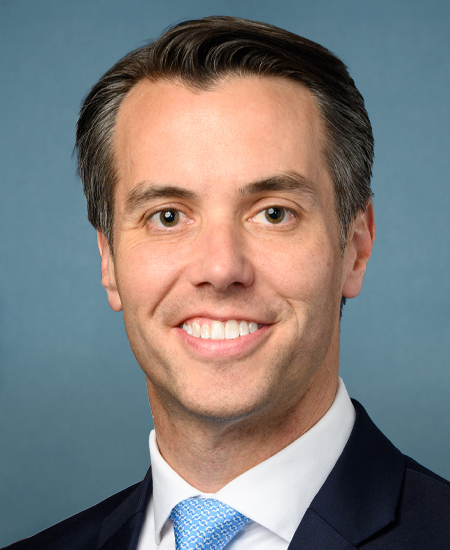
Rep. Morgan McGarvey
Sponsored bills
Maddy summaryThe Child Safety and Well-Being Act of 2026 establishes a new federal Children's Commission to advocate for the interests of all children and marginalized youth. This 15-member body, appointed by the Comptroller General, will include experts, advocates, and young people with lived experiences to review federal policies and regulations affecting child well-being. The Commission will conduct research, issue public reports, and provide written comments on agency actions to ensure children's perspectives are considered in government decisions. Additionally, the bill creates a Children's Commissioner to lead the commission and facilitates the collection of data on how laws impact vulnerable populations.
Maddy summaryHR 5408, the Faster Labor Contracts Act, requires employers to begin negotiating a first contract with a newly certified union within 10 days of written request. If no agreement is reached within 90 days, the parties must seek mediation, and if unresolved after 30 days of mediation, the dispute moves to binding arbitration by a three-member panel. The arbitration decision, based on factors like employer finances, industry standards, and cost of living, becomes binding for two years. This bill directly affects newly certified unions and their employers during initial contract negotiations, aiming to reduce delays that currently average 465 days.
Maddy summaryThe Helen Keller Education Act aims to improve educational outcomes for children with deafblindness by requiring states to identify and serve these students regardless of how they are currently classified. The bill mandates that schools evaluate deafblind children using qualified professionals who understand their unique communication needs, including tactile sign language and other non-symbolic methods. It also establishes new requirements for state plans to ensure sufficient availability of specialized teachers and interveners, while providing technical assistance and updated policy guidance to parents and educators. Additionally, the legislation strengthens early intervention services for infants and toddlers with deafblindness by including specific language and communication goals in their individualized plans.
Maddy summaryThis bill, known as the Alice Cogswell and Anne Sullivan Macy Act, amends the Individuals with Disabilities Education Act to improve special education services for children who are deaf, hard of hearing, deafdisabled, blind, visually impaired, or deafblind. It requires states to identify these students regardless of how they are currently classified, ensuring they receive specialized instruction in their primary language and access to qualified professionals. Key provisions mandate that state plans include specific strategies for language development, Braille instruction, and the use of assistive technologies, while also establishing a new national center to support research and training for educators of students with visual disabilities. Additionally, the legislation clarifies definitions for deafblindness and interveners, updates data reporting requirements to track these populations more accurately, and ensures early intervention services are delivered in natural environments to support language and communication milestones.
Maddy summaryThis bill, known as the Arlington National Cemetery Viewshed Protection Act, restricts the construction of large triumphal arches in the Washington, D.C. area to preserve visual sightlines. It specifically bans the building of any such arches within Lady Bird Johnson Park and prohibits the use of federal funds for these structures there. Additionally, the law prevents the erection of triumphal arches taller than 50 feet on any land managed by the National Park Service unless Congress explicitly approves them. These measures aim to limit new monumental structures that could obstruct views of the Arlington National Cemetery from the capital region.
Maddy summaryThe American High-Speed Rail Act expands federal funding and streamlines regulations to support the development of high-speed and higher-speed rail projects across the United States. It authorizes billions of dollars in grants for corridor planning, technology improvements, and construction, while allowing the federal government to cover up to 100% of project costs under specific conditions. The bill also introduces new provisions to facilitate land acquisition, prioritize border projects, and extend labor protections to workers involved in federally funded rail infrastructure. Additionally, the legislation defines higher-speed rail as trains traveling between 110 and 186 miles per hour and includes tax incentives for rail carriers that sell or lease property to support these projects.
Maddy summaryThe Young Adult Tax Credit Act creates a new $500 monthly tax credit for individuals aged 18 to 24 who are U.S. citizens or residents, with the amount adjusted annually for inflation. This credit is refundable, meaning eligible recipients can receive the full benefit even if they owe no federal taxes, and it is distributed through monthly advance payments starting after December 31, 2026. To manage these payments, the bill establishes an online portal for taxpayers to manage their accounts and includes specific rules to prevent fraud and ensure funds are not subject to garnishment for debts like child support. The legislation also mandates a government outreach campaign to help eligible young adults, particularly those from underrepresented populations, understand and claim the credit.
Maddy summaryThe DONOR Milk Act establishes new federal regulations to improve the safety and oversight of pasteurized donor human milk, which is milk collected from mothers and given to infants other than their own. This legislation requires facilities that produce or store this milk to undergo annual inspections, including unannounced visits, to ensure they meet food safety standards. To support these facilities in complying with the new rules, the bill authorizes an $8 million grant program to help with equipment upgrades and necessary certifications. These changes directly affect nonprofit organizations and food establishments that manufacture, process, pack, or hold donor human milk.
Maddy summaryThis bill authorizes the U.S. Mint to produce commemorative $5 gold and $1 silver coins marking the 25th anniversary of the September 11, 2001, terrorist attacks. The coins must feature designs honoring victims and first responders (including the inscription "Never Forget") and will be sold only during 2027-2028. All surcharges ($35 per gold coin, $10 per silver coin) collected from sales will fund the National September 11 Memorial and Museum at the World Trade Center, with no net cost to the federal government. The coins are legal tender but primarily intended for collectors, not circulation.