

Investing in Rural America Act of 2025 This bill allows Farm Credit System (FCS) institutions to make and participate in loans and commitments (and extend other technical and financial assistance) for essential community facility projects as part of the Department of Agriculture's Community Facilities Direct Loan & Grant Program. This program provides funding to develop essential community facilities in rural areas. The FCS financing and technical assistance may be provided in order to make capital available to develop, build, maintain, improve, or provide related equipment or other support for essential community facilities in rural communities (e.g., certain facilities that provide healthcare, community support, public safety, educational, or utility services). Under the bill, the financing provided by an FCS institution may not exceed 15% of the total of all outstanding loans of the institution. Further, an FCS institution must (1) offer at least one non-FCS lending institution an interest in the financing under reasonable terms and conditions acceptable to the borrower, and (2) report the offer to the Farm Credit Administration (FCA). The FCA must submit an annual report to Congress on the activities undertaken by FCS institutions under this bill, including through the partnerships between FCS institutions and other lending institutions. The FCA must post the report on the administration's website.
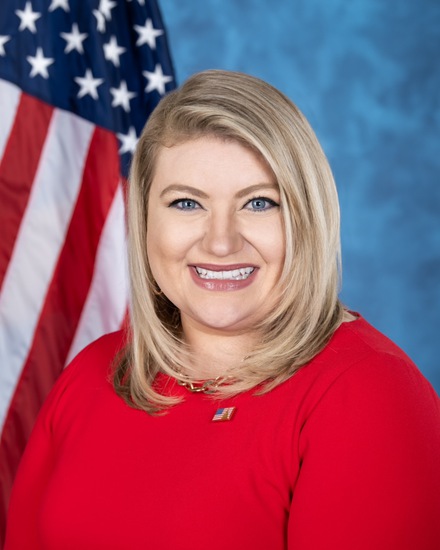
Rep. Kat Cammack
Sponsored bills
Maddy summaryThe FOCA Act of 2025 prohibits federal agencies from requiring or banning contractors from using union agreements in construction project bids or contracts. It directly affects federal agencies, contractors, and subcontractors working on federally funded or assisted construction projects (like buildings or infrastructure). The law requires bid documents to not favor or penalize contractors based on whether they have union agreements, aiming to promote open competition and prevent discrimination. This changes how agencies structure bids but does not affect union agreements themselves. The bill applies to all new contracts and subcontracts after enactment, with limited exemptions only for public health/safety emergencies or national security.
Homes for Every Local Protector, Educator, and Responder Act of 2025 or the HELPER Act of 2025 This bill establishes a program administered by the Department of Housing and Urban Development to provide mortgage assistance to law enforcement officers, elementary and secondary school teachers, firefighters, or other first responders. Specifically, these individuals may be eligible for a first-time mortgage on a primary family residence with no down payment. Instead, the mortgage is subject to a one-time, up-front mortgage insurance premium.
Maddy summaryThe Credit for Caring Act of 2025 creates a federal tax credit for family caregivers of elderly or disabled relatives. It allows eligible caregivers (with over $7,500 in earned income) to claim a credit equal to 30% of qualified caregiving expenses exceeding $2,000, capped at $5,000 per year. Qualified expenses include human assistance, home modifications, respite care, counseling, lost wages for unpaid time off, and transportation, all requiring certification from a licensed healthcare provider that the care recipient has long-term needs. The credit phases out for higher earners (over $75,000 single/$150,000 joint) and requires documentation of expenses and care recipient certification.
Maddy summaryThis bill prohibits federal funding, support, or approval for research using human fetal tissue obtained from induced abortions. It allows research on tissue from miscarriages (under 20 weeks) or stillbirths (20+ weeks) under existing Public Health Service Act rules, and permits development of new cell lines for vaccines or genetic vectors if not derived from abortion tissue. The bill amends the Public Health Service Act to restrict federal research to tissue from miscarriages or stillbirths and clarifies definitions for terms like "miscarriage" and "stillbirth." It directly affects federal agencies like the NIH and researchers relying on federal grants for biomedical studies.
Maddy summaryHR 1909 reauthorizes federal funding and updates programs to reduce maternal deaths. It requires maternal mortality review committees to include obstetricians/gynecologists and improves death certificate reporting by coordinating with death certifiers. The bill mandates the CDC to share annual best practices for preventing maternal mortality with hospitals, state health groups, and perinatal programs. It also increases annual funding from $58 million to $100 million for these initiatives, covering fiscal years 2025 through 2029. The law directly affects hospitals, state health agencies, and maternal health programs receiving these federal funds.
Maddy summaryThe SPEED for BEAD Act (HR 1870) amends the federal broadband deployment program (BEAD) to accelerate network expansion. It defines "gigabit-level broadband" as 1,000 Mbps download speeds, requires unused funds to be returned to the Treasury instead of reallocated, and allows states to remove high-cost locations from project areas. The bill prohibits grant conditions related to labor practices (e.g., union requirements), diversity initiatives, climate policies, or network management rules, while ensuring all broadband technologies meeting speed standards are eligible. It also explicitly bans government regulation of broadband pricing, directly affecting states administering BEAD funds and the internet providers they fund.
Maddy summaryHR 1846, the Federal Reserve Board Abolition Act, would end the Federal Reserve System by abolishing its Board of Governors and all 12 Federal Reserve banks after a one-year transition period following enactment. The bill requires liquidating the Fed's assets through the Office of Management and Budget, transferring all liabilities (including employee benefits) to the Treasury Secretary, and depositing net proceeds into the Treasury's General Fund. This bill directly affects the Federal Reserve's structure and operations, transferring its responsibilities to the Treasury without altering current monetary policy functions.
Federal Firearms Licensee Protection Act of 2025 This bill modifies criminal penalties for an offense involving the theft of a firearm from a licensed importer, manufacturer, or dealer, or from their business premises. Specifically, the bill does the following: increases from 10 to 20 years the maximum prison term, and creates a 3- or 5-year mandatory minimum prison term for an offense that occurs during the commission of a burglary or robbery. An attempt to commit an offense is subject to the same penalties as a substantive offense.
Maddy summaryHR 1595, the Defund NPR Act, would block all federal funding for National Public Radio (NPR) and any successor organization after the bill's enactment. It amends the Communications Act of 1934 to prohibit direct or indirect federal funds from supporting NPR, including through public broadcast stations using federal money for programming or dues. This would end federal financial support for NPR's operations, affecting the organization directly but not impacting other public broadcasting entities. The bill specifically targets NPR's funding stream without altering other public broadcasting rules.