

Maddy summaryHR 1599, the Dismantling Investments in Violation of Ethical Standards through Trusts Act, prohibits senior federal employees (those in Senior Executive Service positions), their spouses, and dependent children from holding, purchasing, or selling certain financial instruments - including stocks, bonds, and derivatives - during their federal service. The bill excludes diversified mutual funds, exchange-traded funds, and U.S. Treasury securities from the prohibition, while allowing investments held in qualified blind trusts. Senior employees must annually certify compliance with the rules, and violations may result in fines (up to 10% of the investment’s value) or forced profit disgorgement. The law aims to prevent conflicts of interest by restricting personal financial holdings that could influence official duties.
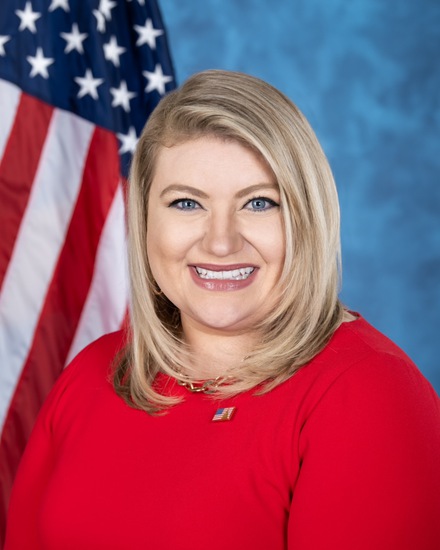
Rep. Kat Cammack
Sponsored bills
Maddy summaryHR 1502 authorizes the creation of a Congressional Gold Medal to honor the volunteers and communities (primarily from Nebraska, Colorado, and Kansas) who supported the North Platte Canteen during World War II. The bill directs the Treasury Secretary to design and strike the medal, which will be presented to the individuals who contributed to the canteen’s operations and then permanently displayed at the Lincoln County Historical Museum in North Platte, Nebraska. It also permits the sale of bronze duplicates to cover production costs, with proceeds going to the U.S. Mint. This is a commemorative measure recognizing historical service, not a policy change affecting current laws or programs.
Maddy summaryHR 1466, the Cardiac Arrest Survival Act of 2025, creates uniform federal liability protection for individuals and entities involved with automated external defibrillators (AEDs) used in cardiac emergencies. It directly affects businesses, public venues, and organizations that own, manage, or use AEDs - especially those operating across multiple states where inconsistent state laws previously discouraged AED deployment. The bill shields users, property owners/managers, and AED owners from civil lawsuits for harm caused during emergency AED use, unless the harm resulted from gross negligence or willful misconduct. This preempts conflicting state laws, removing legal barriers to wider AED placement without requiring any new AED installations.
Maddy summaryHR 1492 amends the Social Security Act to extend the negotiation period for standard drug manufacturers under the federal drug pricing program. Specifically, it changes the timeframe from 7 years to 11 years for small-molecule drugs (like traditional pills) to negotiate prices with the government, aligning it with the existing 12-year period for complex biologic drugs (like insulin or monoclonal antibodies). This adjustment directly affects pharmaceutical companies that produce small-molecule drugs, giving them a longer window to negotiate pricing terms. The bill makes this change effective as if it had been part of the 2022 law that established the program.
Maddy summaryHR 1301, the Death Tax Repeal Act, would eliminate the federal estate tax and generation-skipping transfer tax for estates of individuals dying on or after its enactment date. It directly affects individuals inheriting significant assets, as it removes taxes on estates exceeding $10 million (adjusted for inflation) and repeals taxes on large transfers between generations. The bill modifies the gift tax by establishing a $10 million lifetime exemption with annual inflation adjustments, replacing previous tax brackets. It applies to estates, gifts, and transfers occurring on or after the bill's effective date.
Maddy summaryHR 35, the Agent Raul Gonzalez Officer Safety Act, creates a new federal crime for operating a motor vehicle while intentionally fleeing U.S. Border Patrol agents or assisting law enforcement officers within 100 miles of the U.S. border. It imposes penalties of up to 2 years in prison for the basic offense, 5-20 years if serious injury occurs, and 10 years to life if death results. The bill also makes individuals convicted of this crime inadmissible to the U.S., deportable, and ineligible for immigration relief like asylum. Additionally, it requires annual reports from the Attorney General and Homeland Security Secretary detailing arrests, charges, and penalties related to this offense.
Alternatives to Prevent Addiction In the Nation Act or the Alternatives to PAIN Act This bill reduces cost-sharing and prohibits the imposition of certain utilization requirements under the Medicare prescription drug benefit for certain non-opioid pain management drugs. Specifically, the bill requires such drugs to be covered without a deductible and to be placed on the lowest cost-sharing tier (if any). The bill also prohibits the imposition of prior authorization requirements (i.e., requiring prior approval from a plan) or step therapy requirements (i.e., requiring the use of alternative drugs before a drug is covered under a plan) with respect to such drugs.
Maddy summaryHR 1232, the National Right-to-Work Act, would make union membership voluntary for workers in most private-sector jobs by removing legal requirements for employees to join a union or pay dues as a condition of employment. It directly affects workers in unionized workplaces covered by the National Labor Relations Act (including most private employers) and railroad workers covered by the Railway Labor Act. The key change eliminates provisions that allowed "union security agreements" (requiring dues or membership), meaning workers could no longer be forced to pay union fees to keep their jobs. This bill does not change other labor rights or create new programs - it only modifies existing laws to allow workers to opt out of union membership and financial obligations.
Maddy summaryHR 1184, the "Stop CCP Land Act," requires states to ban purchases of agricultural land by entities from designated countries (like China and Russia) to receive certain federal agricultural and environmental funds. It mandates states to prohibit such foreign purchases and require annual reporting from existing foreign landholders. The bill also directs the Agriculture Secretary to update federal reporting rules for foreign agricultural investment and the GAO to assess national security impacts and suggest safeguards. This directly affects states receiving specific federal programs and foreign entities from listed countries.
This bill prohibits the Big Cypress National Preserve in Florida from being designated as wilderness or as a component of the National Wilderness Preservation System. The National Park Service currently manages Big Cypress National Preserve, which is a freshwater swamp ecosystem of 729,000 acres. In general, development activities, commercial activities, permanent structures, and roads are prohibited in wilderness areas. In contrast, natural preserves typically allow some development activities, such as hunting or oil and gas exploration.