Maddy summaryThis symbolic House resolution (HRES 72) recognizes independent workers, contractors, and freelancers for their economic contributions to the U.S. It highlights their role in the growing flexible work economy and acknowledges the benefits of flexible work arrangements, such as freedom in hours and locations. The resolution does not create new laws or alter existing policies - it solely serves as a formal acknowledgment of these workers' significance to the economy. It references their $1.35 trillion economic contribution in 2022 and their growing share of the workforce (39% of U.S. workers).
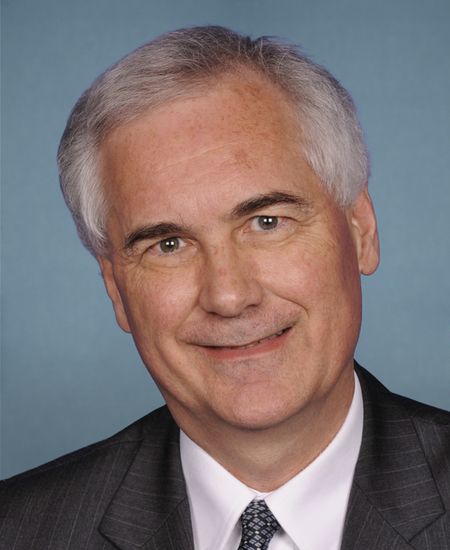
Rep. Tom McClintock
Sponsored bills
Maddy summaryHR 564 redirects unspent funds from the American Rescue Plan Act of 2021 (ARP) to reduce the federal deficit. It requires all unobligated ARP funds - money allocated but not yet spent - to be sent to the Treasury's general fund upon the bill's enactment. This action directly affects federal budget accounting by canceling unused appropriations rather than creating new programs or aiding specific groups. The bill does not alter existing laws or services but focuses solely on reallocating existing, unspent federal funds. It is a procedural budget measure with no direct impact on taxpayers or beneficiaries of the ARP.
Maddy summaryHR 570, the CRT Act, prohibits federal funding for elementary, secondary, and higher education institutions that promote specific race-based theories. It bans schools from using federal funds if they teach or require students to adopt beliefs such as "any race is inherently superior," the U.S. being "fundamentally racist," or individuals bearing racial responsibility for others' actions. The bill includes key exceptions: it protects outside speech, allows research access to prohibited materials, and permits teaching about these theories in educational contexts without endorsing them. The law directly affects schools receiving federal education funds, not individual students or teachers.
This concurrent resolution calls on the President to abandon the One China policy in favor of one that recognizes Taiwan as an independent country that is not a part of China. The resolution also urges the President to bolster diplomatic and economic relations between the United States and Taiwan through specified means.
Maddy summaryThis bill requires healthcare providers to give the same medical care to infants born alive during abortions as they would to any newborn, and to immediately admit such infants to a hospital. It mandates reporting of non-compliance to law enforcement and imposes penalties including up to 5 years in prison for violations. Women who undergo abortions can file civil lawsuits seeking money damages for injuries, three times the abortion cost, and punitive damages if care standards are not met. The bill also clarifies that abortion includes intentionally killing an unborn child or terminating pregnancy without specific exceptions (e.g., after viability to preserve life or removing a dead fetus).
Maddy summaryHR 23, the Family and Small Business Taxpayer Protection Act, rescinds unobligated funds previously allocated to the Internal Revenue Service (IRS) under the Inflation Reduction Act of 2022. Specifically, it cancels unused balances from certain IRS funding provisions (sections 10301(1)(A)(ii), (iii), (B), (2), (3), (4), and (5)) of the Inflation Reduction Act. This bill does not change tax laws or directly affect taxpayers; it only redirects unspent IRS budget authority. The provision applies solely to funds that were not obligated by the IRS as of the bill’s enactment date.
Maddy summaryHR 488, the SNOOP Act of 2023, modifies tax reporting requirements for third-party payment platforms like PayPal or Venmo. It sets new thresholds requiring these platforms to report transaction data to the IRS only when a business or individual receives over $20,000 in payments or has more than 200 transactions in a year. This directly affects payment processors by reducing the number of transactions they must report compared to current rules. The bill aims to streamline reporting for smaller transactions while maintaining oversight for significant activity. It applies to tax returns filed for calendar years starting after 2021.
Maddy summaryHCONRES 3 is a non-binding congressional resolution expressing support for pro-life facilities, groups, and churches targeted by vandalism and threats following the Supreme Court's Dobbs decision. It condemns specific incidents like graffiti, window-smashing, and arson at pregnancy centers and churches (e.g., in Frederick, MD, and Portland, OR), while recognizing the role of these organizations in supporting pregnant women. The resolution calls on the Biden Administration to use law enforcement to protect these facilities but does not create new laws or policies. As a symbolic measure, it has no legal effect on the incidents described.
Maddy summaryHR 380, the Federal Student Loan Integrity Act, restricts the Secretary of Education's authority to extend pandemic-related student loan payment pauses. It prohibits using the HEROES Act to extend moratoriums beyond 30 days or to cancel loan balances for borrowers under federal student loan programs (Title IV of the Higher Education Act). The bill explicitly limits any pause to a maximum 30-day period for payment or interest suspension, and bans any loan forgiveness. This directly affects borrowers currently benefiting from the pandemic-era payment pause and limits the Secretary's ability to modify loan terms during emergencies.
Maddy summaryHR 311, the Cost Estimates Improvement Act, requires the Congressional Budget Office (CBO) and Joint Committee on Taxation (JCT) to include debt servicing costs in their budget estimates where practicable and to list duplicative federal programs covered by legislation. The bill mandates that all CBO and JCT cost estimates must identify overlapping or redundant agency programs, initiatives, or activities within the proposed legislation. This change aims to improve transparency in federal budget analysis by providing clearer data on long-term debt impacts and program efficiency for lawmakers. The bill directly affects the CBO and JCT as they prepare budget estimates for Congress.