No Taxpayer Funding for the World Health Organization Act This bill prohibits the United States from providing any assessed or voluntary contributions to the World Health Organization.
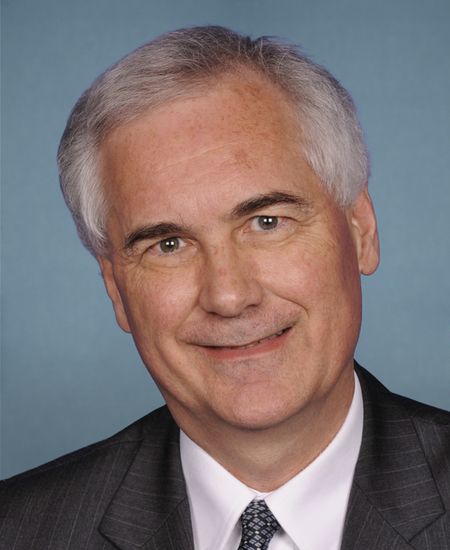
Rep. Tom McClintock
Sponsored bills
Maddy summaryThe GAS Act (HR 337) prohibits any federal agency from banning the sale or use of gas-burning stoves in the United States. This applies to all agencies defined under federal law, including the Environmental Protection Agency and Consumer Product Safety Commission. The bill directly blocks agencies from enacting new regulations that would restrict gas stoves, preventing future regulatory actions. It does not affect existing stove sales or current agency authority but sets a clear restriction on future rulemaking.
This bill allows a deduction from gross income (above the line deduction) for attorney fees and court costs awarded with respect to a qualifying wildfire disaster (i.e., any forest or range fire that is a federally declared disaster, occurs in a disaster area, and occurs in 2015 or later). The bill excludes from the gross income of a taxpayer, for income tax purposes, amounts paid to compensate victims for losses or damages in connection with a qualifying wildfire disaster.
This joint resolution proposes a constitutional amendment that authorizes the President to use a line item veto to reduce an appropriation in a bill or joint resolution. Under the amendment, the President must notify Congress within 10 days of using this authority to reduce an appropriation. The House and Senate may then consider disapproval of the reduction. If at least two-thirds of each chamber of Congress votes to disapprove the reduction, the amount of the appropriation that is subject to the reduction must be returned to the amount that was originally presented to the President.
Maddy summaryH.J. Res. 9 proposes a constitutional amendment requiring Congress to pass a law with a three-fourths majority in both the House and Senate to authorize any new federal debt, except for a specific purpose defined in that law. This would significantly raise the threshold for increasing the national debt, changing the current process that typically allows debt limits to be raised with a simple majority. The amendment would take effect ten years after ratification by three-fourths of state legislatures. It directly affects Congress, as it would require supermajority votes to approve new borrowing for any purpose.
Maddy summaryHJRES 8 proposes a constitutional amendment to permanently set the Supreme Court's size at nine justices. The bill would require any future changes to the Court's composition to follow this specific number, locking in the current structure. It does not alter the existing Court size (which has been nine since 1869) but aims to prevent future adjustments through legislative action. The amendment must be ratified by three-fourths of state legislatures within seven years to take effect. This is a procedural proposal focused on constitutional structure, not a direct policy affecting citizens or programs.
Maddy summaryHR 24, the Federal Reserve Transparency Act of 2023, requires a comprehensive audit of the Federal Reserve System's Board of Governors and Federal Reserve banks within 12 months of the bill's enactment. The Congressional auditor (Comptroller General) must then submit a detailed report to Congress within 90 days, including findings, conclusions, and recommendations for improving transparency. This bill directly affects the Federal Reserve System by mandating greater oversight of its operations and financial activities. The key provision repeals a prior limitation that prevented audits of certain Fed programs, aiming to clarify which activities are subject to audit under existing law.
Maddy summaryThis bill establishes nationwide recognition for valid concealed carry permits. It allows permit holders from any state to carry concealed handguns in states that either issue such permits or don't ban concealed carry, provided they carry a photo ID and their valid permit. Key provisions include making presentation of a valid permit and ID prima facie evidence of compliance, shifting the burden of proof to prosecutors if challenged, and requiring courts to award attorney fees to successful defendants. It does not override state laws prohibiting concealed carry on private property or government lands, nor does it affect restrictions on federal lands like national parks.
Maddy summaryHR 146, the "Old Glory Only Act," prohibits U.S. diplomatic and consular posts from flying any flag other than the U.S. flag above the buildings. This law directly affects all U.S. embassies, consulates, and other official diplomatic facilities abroad. The Secretary of State is required to ensure compliance with this rule, mandating that only the U.S. flag be displayed at these locations. The bill makes no exceptions for foreign flags or other symbols at these specific government properties.
Maddy summaryThis bill requires large district attorney offices (serving jurisdictions of 380,000+ people) that receive federal Byrne grant funds to submit annual reports to the Attorney General. The reports must detail prosecution decisions for 10 specific violent crimes and gun offenses (including murder, rape, robbery, aggravated assault, burglary, and firearm violations), such as cases declined, plea agreements, and defendant histories. The Attorney General must establish uniform reporting standards and share all collected data publicly with Congress and on a government website. This policy change directly affects major prosecutors' offices receiving federal crime-fighting funds, aiming to increase transparency in how they handle serious offenses.