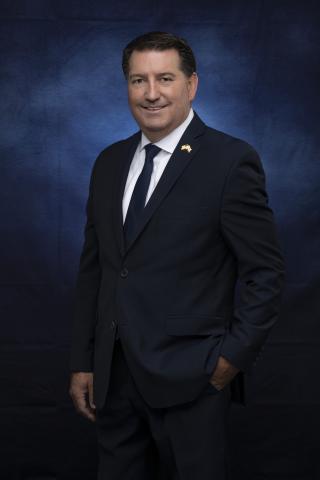
Photo of Tim Grayson
D California Senate · District 9

Sen. Tim Grayson

Compare
Total votes
25,590
all sessions
Attendance
95%
945 missed
Higher than 80% of chamber peers
With party
99%
of cast votes
Higher than 77% of chamber peers
Bipartisan score
0%
crosses aisle rarely
Lower than 85% of chamber peers
Sponsored
1,741
bills & resolutions
Near the chamber average
Committees
14
assignments
1,741 bills and resolutions

Sponsored bills

Total
1,741
Primary
246
Co-sponsor
1,495
This page
1,741
matching current filters
Co-sponsor SCR 139
Signed into law · California Senate · Co-sponsor
Relative to Afghan American Heritage Month.

This measure would proclaim the month of March 2026 as Afghan American Heritage Month and recognize Afghan Americans as an essential part of cultural and civic life of this state.

Signed into law Apr 17, 2026 1 co-sponsor
Primary SCR 120
Signed into law · California Senate · Lead sponsor
National Consumer Protection Week: Slam the Scam Day.

This measure would proclaim March 1, 2026, to March 7, 2026, inclusive, as National Consumer Protection Week, and March 5, 2026, as Slam the Scam Day, and would encourage all Californians to engage in consumer education efforts and to utilize available resources to prevent fraud, protect personal information, and promote transparency and fairness in the marketplace.

Signed into law Apr 7, 2026 0 co-sponsors
Co-sponsor AB 2156
Signed into law · California House · Co-sponsor
Holidays: Farmworkers Day.

Existing law designates specific days as holidays in this state, including Cesar Chavez Day on March 31, and requires the Governor to annually proclaim March 31 as Cesar Chavez Day. This bill would instead designate March 31 as Farmworkers Day and would require the Governor to annually proclaim March 31 as Farmworkers Day. This bill would declare that it is to take effect immediately as an urgency statute.

Signed into law Mar 26, 2026 1 co-sponsor
Co-sponsor SR 76
Passed · California Senate · Co-sponsor
Relative to Women's History Month.

Maddy summaryThis Senate Resolution formally declares March 2026 as Women's History Month in California to honor the historical and ongoing contributions of women across all fields of society. The measure recognizes women's roles in building the nation and state while acknowledging that many of their achievements have been overlooked or undocumented. By joining the United States Congress and state organizations in this observance, the resolution aims to raise awareness of women's accomplishments and encourage continued efforts to address gender inequity. The text is a commemorative proclamation rather than a law that changes specific regulations or mandates new programs.

Passed Mar 16, 2026 1 co-sponsor
Co-sponsor SR 82
Passed · California Senate · Co-sponsor
Relative to Children's Dental Health Month.

Maddy summarySenate Resolution 82 declares February 2026 as Children's Dental Health Month in California to raise awareness about the importance of oral health. The resolution highlights that tooth decay is a major public health issue affecting many children, particularly those from disadvantaged backgrounds, and notes that untreated dental problems can lead to missed school days and learning difficulties. While acknowledging recent improvements in access to Medi-Cal dental services, the bill emphasizes the need for continued efforts to prevent cavities through education and preventive care. This measure serves as a symbolic recognition rather than establishing new laws or funding, aiming to encourage policymakers and the public to focus on childhood oral health.

Passed Mar 5, 2026 1 co-sponsor
Co-sponsor SCR 115
Signed into law · California Senate · Co-sponsor
Relative to Wear Red Day.

Maddy summaryThis resolution designates February 6, 2026, as "Wear Red Day" in California to raise public awareness about heart health, aligning with the national Heart Disease Awareness initiative. It does not create new laws or requirements but formally recognizes the day for voluntary public observance by California residents. The measure is ceremonial and procedural, solely intended to highlight heart health awareness through state-level acknowledgment.

Signed into law Mar 4, 2026 1 co-sponsor
Co-sponsor SB 404
Vetoed · California Senate · Co-sponsor
Hazardous materials: metal shredding facilities.

Existing law authorizes the Department of Toxic Substances Control (DTSC) , in consultation with the Department of Resources Recycling and Recovery, the State Water Resources Control Board, and affected local air quality management districts, to adopt regulations to establish management standards for metal shredding facilities for hazardous waste management activities within the DTSC's jurisdiction, as provided. Existing law provides that treated metal shredder waste that is managed in accordance with those regulations is deemed to be solid waste, and not hazardous waste, as provided. This bill would repeal those provisions. The bill would establish a comprehensive scheme for the regulation of metal shredding facilities that would be administered by the DTSC pursuant to authority separate from laws governing the control of hazardous waste. The bill would prohibit an owner or operator from operating a metal shredding facility, as defined, in the state unless they have a permit from the DTSC or are deemed to have a permit. The bill would prescribe the requirements for obtaining a permit, for being deemed to have a permit, for operating a metal shredding facility, and for transporting certain materials related to metal shredding, as specified. The bill would require, before a decision is made to approve or deny the application, the DTSC to hold a public meeting, as provided. The bill would require the department to take final action on a permit application by an existing facility within 3 years, as provided. The bill would require the department to post on its internet website general information about each metal shredding facility that has applied for or obtained a permit, and to conduct at least one site visit to the applicant's facility after receipt of the permit application. The bill would provide that certain materials related to metal shredding are not hazardous waste if they meet specified requirements. The bill would require any report required to be submitted by a metal shredding facility pursuant to a permit issued to be signed by the owner or operator and certified under penalty of law, including criminal penalties, as specified. The bill would require the DTSC to have primary responsibility for enforcing these provisions, would require the DTSC to conduct an annual compliance evaluation inspection of each metal shredding facility, and would authorize the DTSC to refer violations to a district attorney or the Attorney General for prosecution. The bill would also require the DTSC to inform the local health officer and the director of environmental health of a county, city, or district within 15 days after the DTSC becomes aware of any unlawful disposal of materials, as provided, and of any enforcement action against a metal shredding facility as a result of that unlawful disposal. Because the bill would expand the scope of a crime, the bill would impose a state-mandated local program. The bill would require an owner or operator of a metal shredding facility to report to the DTSC certain emergency situations, as specified. The bill would require an owner or operator of a metal shredding facility to submit to the DTSC a closure plan and a cost estimate for closing the metal shredding facility, as specified. The bill would also require the owner or operator of a metal shredding facility to provide written notice to the department at least 60 days before transferring ownership or operation of the facility. The bill would authorize the DTSC to enforce these provisions by revoking permits and by other specified means. The bill would authorize the DTSC to adopt regulations for the operation of metal shredding facilities as necessary to implement the requirements of the bill. The bill would require the DTSC to post information provided by owners and operators regarding a metal shredding facility on the department's internet website in a manner that is readily accessible to the public, except as otherwise required pursuant to existing law. Existing law authorizes the DTSC to collect an annual fee from all metal shredding facilities subject to the requirements of hazardous waste control laws or the DTSC's management standards for metal shredding facilities, as provided. Existing law requires the DTSC to adopt regulations necessary to administer the fee and authorizes the DTSC to adopt those regulations using emergency procedures, as provided. Existing law requires the Controller to establish a separate subaccount in the Hazardous Waste Control Account and for all fees collected to be placed into that subaccount, to be available for expenditure by the DTSC upon appropriation by the Legislature. This bill would instead require the DTSC to impose an annual fee on all metal shredding facilities subject to the provisions of this bill, as specified. The bill would require, beginning in the 2026–27 fiscal year, the rates established by the DTSC to be reviewed and increased or decreased annually, as provided. The bill would require the DTSC to adopt regulations necessary to administer the fee and would authorize the DTSC to adopt the regulations using emergency procedures, as specified. The bill would require a person who applies for a metal shredding facility permit to enter into a written agreement with the department pursuant to which that person would be required to reimburse the department for the direct costs reasonably incurred by the department in processing the application, as provided. The bill would require the Controller to establish a new and separate Metal Shredding Facility subaccount to be administered by the Director of Toxic Substances Control and would require all fees collected to be placed into that subaccount and made available for expenditure by the DTSC solely for the purpose of implementation and administration of these provisions, upon appropriation by the Legislature. Existing law requires the DTSC to require metal shredding facilities to monitor hazardous waste constituents requested by the DTSC and to report the results of that monitoring to the DTSC. Existing law also requires the DTSC to collect and analyze light fibrous material at the fence lines to determine the potential for release of hazardous waste. Existing law requires, on or before July 1, 2027, the DTSC to develop a procedure for community notification of the public for the area in which the metal shredding facility is located if that monitoring indicates any release of light fibrous material. In addition, existing law requires, on or before January 1, 2027, an air pollution control district or an air quality management district the jurisdiction of which includes metal shredding facilities, in consultation with the DTSC and the Office of Environmental Health Hazard Assessment (OEHHA) , to develop requirements for facilitywide fence-line air quality monitoring at metal shredding facilities. Existing law authorizes any reasonable regulatory costs incurred by the DTSC in implementing, and requires that the OEHHA's costs to implement, the above-described duties be reimbursed from a subaccount established in the Hazardous Waste Control Account for the deposit of fees from metal shredding facilities. This bill would limit the scope of those provisions to metal shredding facilities that are subject to the other provisions of the bill and would provide for the reimbursement of those costs from the Metal Shredding Facility Subaccount. The bill would include findings that changes proposed by this bill address a matter of statewide concern rather than a municipal affair and, therefore, apply to all cities, including charter cities. The California Constitution requires the state to reimburse local agencies and school districts for certain costs mandated by the state. Statutory provisions establish procedures for making that reimbursement. This bill would provide that no reimbursement is required by this act for a specified reason.

Vetoed Mar 2, 2026 1 co-sponsor
Co-sponsor SB 641
Vetoed · California Senate · Co-sponsor
Department of Consumer Affairs and Department of Real Estate: states of emergency: waivers and exemptions.

Existing law establishes in the Business, Consumer Services, and Housing Agency the Department of Real Estate to license and regulate real estate licensees, and the Department of Consumer Affairs, which is composed of various boards that license and regulate various businesses and professions. This bill would authorize the Department of Real Estate and boards under the jurisdiction of the Department of Consumer Affairs to waive the application of certain provisions of the licensure requirements that the board or department is charged with enforcing for licensees and applicants who reside in or whose primary place of business is in a location damaged by a natural disaster for which a state of emergency is proclaimed by the Governor, as specified, or for which an emergency or major disaster is declared by the President of the United States, including certain examination, fee, and continuing education requirements. The bill would require a board to notify the director of the Department of Consumer Affairs in writing of any waiver approved by that board, and would prohibit the waiver from taking effect for a period of 5 business days after the director receives the notification from the board. The bill would authorize the director to approve or disapprove a waiver within the 5 business days described above, and require the director to notify the board of any decision to approve or disapprove a waiver within those 5 business days. The bill would prohibit a waiver from taking effect if the director disapproves the waiver, and require a waiver that is approved by the director, or that fails to be approved or disapproved by the director within the 5 business days described above, to take effect the following day. The bill would require the Department of Consumer Affairs to, among other things, post each waiver that takes effect on its website. The bill would exempt the above-described licensees of boards from, among other requirements, the payment of duplicate license fees. The bill would require all applicants and licensees of the boards under the Department of Consumer Affairs to provide the board with an email address. The bill would prohibit a contractor licensed pursuant to the Contractors State License Law from engaging in debris removal unless the contractor has one of specified license qualifications or has been authorized by the registrar of contractors during a declared state of emergency or for a declared disaster area due to a natural disaster. The bill would require a licensee authorized to perform debris removal to pass an approved hazardous substance certification examination, and comply with certain occupational safety and health requirements concerning hazardous waste operations and emergency response, as specified. The bill would require the Real Estate Commissioner, immediately upon the declaration of a natural disaster for which a state of emergency, emergency, or major disaster is proclaimed or declared as described above, to determine the nature and scope of any unlawful, unfair, or fraudulent practices, as specified, and provide specified notice to the public regarding those practices. The bill would authorize the commissioner to suspend or revoke a real estate license if the licensee, until one year following the declaration of a natural disaster for which a state of emergency, emergency, or major disaster is proclaimed or declared as described above, makes an unsolicited offer to an owner of real property to purchase or acquire an interest in the real property, when that property is located in an area included in a declared federal, state, or local emergency or disaster, for an amount less than the fair market value, as defined, of the property or interest of the property, as specified. This bill would declare that it is to take effect immediately as an urgency statute.

Vetoed Mar 2, 2026 1 co-sponsor
Co-sponsor SB 88
Vetoed · California Senate · Co-sponsor
Air resources: carbon emissions: biomass.

The California Global Warming Solutions Act of 2006 establishes the State Air Resources Board as the state agency responsible for monitoring and regulating sources emitting greenhouse gases and requires the state board to ensure that statewide greenhouse gas emissions are reduced to at least 40% below the 1990 level by 2030. Existing law requires the state board, in consultation with the Department of Forestry and Fire Protection, to develop a standardized system for quantifying the direct carbon emissions and decay from fuel reduction activities for purposes of meeting the accounting requirements for Greenhouse Gas Reduction Fund expenditures, as specified. This bill would require the state board, on or before January 1, 2028, to publish on its internet website an assessment of the life-cycle emissions from alternative uses of forest and agricultural biomass residues, as specified. The bill would require the state board, on or before January 1, 2029, to publish on its internet website a strategy to support beneficial carbon removal products, including, but not limited to, biochar, that are generated from agricultural or forest biomass resources. The bill would require the Department of Forestry and Fire Protection to require, to the extent feasible, all state-funded forest health projects to include an appropriate forest biomass resource disposal component that includes a scientifically based, verifiable method to determine the amount of biomass to be physically removed and the amount to be burned by prescribed burn. The bill would require the State Energy Resources Conservation and Development Commission to include the value proposition of using agricultural and forest biomass resources for low- and negative-carbon liquid and gaseous fuels, including hydrogen, from noncombustion conversion technology methods and other emerging and innovative approaches in relevant reports and other agency-sponsored documentation.

Vetoed Mar 2, 2026 1 co-sponsor
Showing 81 to 90 of 1,741 bills
Previous 1 8 9 10 175 Next