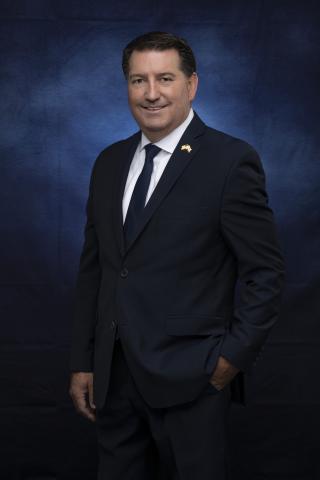
Photo of Tim Grayson
D California Senate · District 9

Sen. Tim Grayson

Compare
Total votes
25,590
all sessions
Attendance
95%
945 missed
Higher than 80% of chamber peers
With party
99%
of cast votes
Higher than 77% of chamber peers
Bipartisan score
0%
crosses aisle rarely
Lower than 85% of chamber peers
Sponsored
1,741
bills & resolutions
Near the chamber average
Committees
14
assignments
1,741 bills and resolutions

Sponsored bills

Total
1,741
Primary
246
Co-sponsor
1,495
This page
1,741
matching current filters
Co-sponsor SCR 123
Signed into law · California Senate · Co-sponsor
California Peace Officers' Memorial Day.

Maddy summaryThis bill designates Monday, May 4, 2026, as California Peace Officers' Memorial Day to honor law enforcement officers. It does not create new laws or change existing policies but serves as a formal proclamation to recognize the date. The measure affects the state by establishing an official day of remembrance for peace officers.

Signed into law May 21, 2026 1 co-sponsor
Co-sponsor SCR 130
Signed into law · California Senate · Co-sponsor
Relative to Child Abuse Prevention Month.

Maddy summaryThis bill designates April 2026 as Child Abuse Prevention Month to raise awareness about preventing child abuse. The measure does not change laws or allocate funding but instead directs state agencies to acknowledge the month through official proclamations. By recognizing this period, the legislature aims to highlight the importance of child safety without altering existing policies.

Signed into law May 21, 2026 1 co-sponsor
Co-sponsor SR 105
Passed · California Senate · Co-sponsor
Relative to National Tennis Month.

Maddy summaryThis Senate Resolution officially designates the month of May as National Tennis Month in California to honor the sport's history and growing popularity. The measure recognizes the United States Tennis Association's efforts to promote health, education, and inclusivity through local programs and adaptive grants. By acknowledging these contributions, the resolution aims to encourage community facilities and organizations to highlight tennis opportunities for people of all ages and abilities. The text serves as a formal declaration rather than a law that changes funding or regulations.

Passed May 18, 2026 1 co-sponsor
Primary SB 972
In committee · California Senate · Lead sponsor
California Financing Law: commercial loans: investment advisers.

Existing law, the California Financing Law, generally regulates the business of finance lenders and brokers and prohibits any person from engaging in those businesses without obtaining a license from the Commissioner of Financial Protection and Innovation. Existing law also imposes various requirements on licensees who offer or sell commercial loans, as defined. This bill would authorize an investment adviser that is registered with the United States Securities and Exchange Commission, known as an "SEC-registered investment adviser," to apply for and obtain a finance lender license to act on its own behalf and on behalf of any client account if all lending activity conducted pursuant to the license is limited to commercial loans, in accordance with certain requirements. The bill would provide that a license obtained by an SEC-registered investment adviser to act as a finance lender covers any affiliate of the SEC-registered investment adviser that is also an SEC-registered investment adviser. The bill would require the SEC-registered investment adviser to maintain and file with the commissioner an appendix to its license application and renewals, listing each client account, as defined. Under the bill, as a condition of licensure, the SEC-registered investment adviser would be required to obtain and maintain a surety bond, complete background checks, meet minimum net worth and commercial loan threshold requirements, and file specified information with the commissioner under oath, subject to penalty of perjury. The bill also would authorize the commissioner to adopt rules and regulations as necessary to implement and administer these provisions. By expanding the scope of the crime of perjury, the bill would impose a state-mandated local program. The California Constitution prohibits usury, which is the loan or forbearance of any money, goods, or things at a rate of interest in excess of specified rates, but exempts certain transactions and lenders from these provisions, and allows the Legislature to exempt additional classes of persons by statute. Existing law, the California Financing Law, establishes a class of exempt persons pursuant to the constitutional provision on usury that includes personal property brokers and specified lenders. This bill would provide that the class of exempt persons under the California Financing Law includes each person within the meaning of client account, as defined, to which the above-described provision on investment advisors applies. Existing constitutional provisions require that a statute that limits the right of access to the meetings of public bodies or the writings of public officials and agencies be adopted with findings demonstrating the interest protected by the limitation and the need for protecting that interest. This bill would make legislative findings to that effect. The California Constitution requires the state to reimburse local agencies and school districts for certain costs mandated by the state. Statutory provisions establish procedures for making that reimbursement. This bill would provide that no reimbursement is required by this act for a specified reason.

In committee May 14, 2026 0 co-sponsors
Co-sponsor SB 1001
In committee · California Senate · Co-sponsor
Local agency, public utility, or mutual water company: personnel access: Personal Identity Verification-Interoperable.

Existing law creates the Office of Emergency Services within the office of the Governor and sets forth its powers and duties, including establishing by rule and regulation various classes of disaster service workers, the scope and duty of each class, and the way disaster service workers of each class are to be registered. Existing law authorizes officers of the Department of the California Highway Patrol, police departments, marshal's office or sheriff's office, and officers or employees of the Department of Forestry and Fire Protection or the Department of Fish and Wildlife designated as peace officers to close to all unauthorized persons an area where a menace to the public health or safety created by a calamity exists for the duration of the menace and the immediate area surrounding any emergency field command post or any other command post activated for the purpose of abating a calamity, riot, or other civil disturbance, as specified. Under existing law, an unauthorized person who enters or remains in a closed area, as prescribed, is guilty of a misdemeanor. This bill would, beginning on July 1, 2028, require the Office of Emergency Services, upon request, to issue a local agency, public utility, or mutual water company responsible for public works and critical infrastructure with specified credentialing to facilitate personnel access to an area during or following a natural disaster, act of terrorism, or other man-made disaster. The bill would specify that the credentialing, a Personal Identity Verification-Interoperable (PIV-I) , would conform with the federal Personal Identity Verification standards pursuant to federal National Incident Management System guidelines. This bill would require the application for a PIV-I card to be signed by a duly authorized representative of a local agency, public utility, or mutual water company and include a certification by the local agency, public utility, or mutual water company. This bill would require the office to impose and collect a fee from a local agency, public utility, or mutual water company for a PIV-I card that does not exceed the reasonable costs of the identification card program. This bill would specify that the authorization for particular officers to close an area, as described above, shall not prevent an individual who holds a valid PIV-I card or an individual who holds a valid identification card issued by a local agency, public utility, or mutual water company from entering the closed area unless a peace officer finds that the disaster is of such a nature that it would be unsafe for the cardholder to enter or that the presence of the cardholder would interfere with disaster response.

In committee May 14, 2026 1 co-sponsor
Co-sponsor SB 1275
In committee · California Senate · Co-sponsor
Sales and use tax exemption: vehicle license fee imposition: motor vehicles.

(1) Existing state sales and use tax laws impose a tax on retailers measured by the gross receipts from the sale of tangible personal property sold at retail in this state or on the storage, use, or other consumption in this state of tangible personal property purchased from a retailer for storage, use, or other consumption in this state. The Sales and Use Tax Law provides various exemptions from those taxes. This bill would, on and after July 1, 2027, and before July 1, 2032, exempt from those taxes the gross receipts from the sale of, and the storage, use, or other consumption of a used motor vehicle sold by specified dealers or their affiliates or a new motor vehicle. Existing law requires a bill authorizing a new tax expenditure to contain, among other things, specific goals the tax expenditure will achieve, detailed performance indicators, and data collection requirements. This bill would exclude the exemption from that requirement. The Bradley-Burns Uniform Local Sales and Use Tax Law authorizes counties and cities to impose local sales and use taxes in conformity with the Sales and Use Tax Law, and existing laws authorize districts, as specified, to impose transactions and use taxes in accordance with the Transactions and Use Tax Law, which generally conforms to the Sales and Use Tax Law. Amendments to the Sales and Use Tax Law are automatically incorporated into the local tax laws. This bill would provide that the exemption created by this bill does not apply to local sales and use taxes or transactions and use taxes. Existing law imposes or dedicates certain state sales and use tax rates for local funding, including through the Local Revenue Fund 2011. This bill would provide that the exemption created by this bill does not apply to those state sales and use tax rates imposed or dedicated for local government funding, including those rates for which revenues are deposited into the Local Revenue Fund 2011. (2) The Vehicle License Fee Law imposes a license fee for the privilege of operating upon the public highways in this state of specified vehicles, including any vehicle of a type which is subject to registration under the Vehicle Code. This bill would impose, on and after July 1, 2027, and before July 1, 2032, upon the sale of a used motor vehicle sold by specified dealers or their affiliates or the first sale of a new motor vehicle to a consumer, an additional license fee equal to 3.9375% of the gross receipts from the sale. The bill would require the dealer to collect the license fee, as described, and remit the funds. The bill would require the Department of Motor Vehicles to report the amounts collected to the California Department of Tax and Fee Administration and deposit those moneys in the General Fund. This bill would include a change in state statute that would result in a taxpayer paying a higher tax within the meaning of Section 3 of Article XIIIA of the California Constitution, and thus would require for passage the approval of 23 of the membership of each house of the Legislature. (3) This bill would take effect immediately as a tax levy.

In committee May 14, 2026 1 co-sponsor
Primary SB 919
In committee · California Senate · Lead sponsor
Biomethane monetary incentive program.

The California Global Warming Solutions Act of 2006 designates the State Air Resources Board as the state agency charged with monitoring and regulating sources of emissions of greenhouse gases. The act authorizes the state board to include the use of market-based compliance mechanisms in regulating those emissions. The implementing regulations adopted by the state board provide for the direct allocation of greenhouse gas allowances to electrical corporations and gas corporations pursuant to a market-based compliance mechanism. Existing law vests the Public Utilities Commission with regulatory authority over public utilities, including gas corporations. Existing law requires the commission to consider options to promote the in-state production and distribution of biomethane, and that facilitate the development of a variety of sources of in-state biomethane. The commission has adopted 2 decisions implementing these requirements, the 2nd of which adopted a 5-year monetary incentive program effective June 11, 2015, for biomethane projects. Existing law requires the commission to modify the biomethane monetary incentive program in specified respects and to extend the program, as modified, until December 31, 2026, or until all available program funds are expended, whichever occurs first. This bill would require the commission to extend the biomethane monetary incentive program until December 31, 2030. The bill would authorize the commission to authorize additional funding of $50,000,000 for the program, of which no more than $10,000,000 would be authorized for dairy biomethane projects, using the revenues, including any accrued interest, received by a gas corporation as a result of the direct allocation of greenhouse gas allowances provided to gas corporations as part of the above-described market-based compliance mechanism. Under existing law, a violation of the Public Utilities Act or an order, decision, rule, direction, demand, or requirement of the commission is a crime. Because the provisions of this bill would be part of the act and because a violation of a commission action implementing its requirements would be a crime, the bill would impose a state-mandated local program. The California Constitution requires the state to reimburse local agencies and school districts for certain costs mandated by the state. Statutory provisions establish procedures for making that reimbursement. This bill would provide that no reimbursement is required by this act for a specified reason.

In committee May 14, 2026 0 co-sponsors
Co-sponsor SCR 149
Signed into law · California Senate · Co-sponsor
Relative to World Autism Awareness Day.

Maddy summaryThis bill designates April 2, 2026, as World Autism Awareness Day within the state of California. It directly affects state agencies and the general public by officially recognizing this specific date for awareness activities. The primary mechanism is a simple legislative declaration that adds this observance to the state calendar without creating new laws or funding requirements. Once enacted, the resolution serves as a formal record of the state's acknowledgment of the global observance.

Signed into law May 11, 2026 1 co-sponsor
Co-sponsor SCR 141
Signed into law · California Senate · Co-sponsor
Relative to Women's Equal Pay Day.

This measure would recognize March 26, 2026, as Women's Equal Pay Day in California, in recognition of the need to eliminate the gender gap in earnings by women and to promote policies to ensure equal pay for all.

Signed into law Apr 21, 2026 1 co-sponsor
Co-sponsor SCR 134
Signed into law · California Senate · Co-sponsor
Relative to Nowroz.

This measure would recognize March 21, 2026, as the beginning of the International Day of Nowroz and extend best wishes for a peaceful and prosperous Nowroz to all Californians.

Signed into law Apr 17, 2026 1 co-sponsor
Showing 71 to 80 of 1,741 bills
Previous 1 7 8 9 175 Next