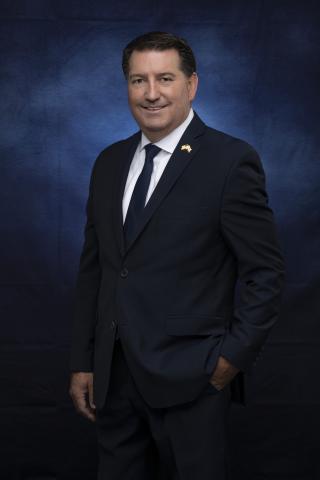
Photo of Tim Grayson
D California Senate · District 9

Sen. Tim Grayson

Compare
Total votes
25,590
all sessions
Attendance
95%
945 missed
Higher than 80% of chamber peers
With party
99%
of cast votes
Higher than 77% of chamber peers
Bipartisan score
0%
crosses aisle rarely
Lower than 85% of chamber peers
Sponsored
1,741
bills & resolutions
Near the chamber average
Committees
14
assignments
1,741 bills and resolutions

Sponsored bills

Total
1,741
Primary
246
Co-sponsor
1,495
This page
1,741
matching current filters
Co-sponsor SCR 105
Passed · California Senate · Co-sponsor
Relative to human rights in Gaza.

This measure would, among other things, reaffirm California's commitment to universal human rights and call for the end to the humanitarian catastrophe in Gaza and the immediate release of all hostages.

Passed Feb 9, 2026 1 co-sponsor
Co-sponsor SR 71
Passed · California Senate · Co-sponsor
Relative to affordable homeownership.

Maddy summaryThis Senate Resolution recognizes the importance of affordable homeownership for economic stability and racial equity in California, particularly for lower-income families and communities of color. It highlights how nonprofit-led programs like Habitat for Humanity provide long-term affordability through mechanisms such as deed restrictions and shared equity while engaging local volunteers and strengthening neighborhoods. The resolution calls attention to California's low homeownership rate and housing shortage, urging state officials to prioritize affordable home supply in their policies and budget decisions.

Passed Feb 5, 2026 1 co-sponsor
Primary SB 273
Failed · California Senate · Lead sponsor
Surplus land.

Existing law declares that surplus government land should be made available for affordable housing, including near transit stations, and for parks and recreation or open-space purposes. This bill would make a nonsubstantive change to this provision.

Failed Feb 2, 2026 0 co-sponsors
Primary SB 343
Failed · California Senate · Lead sponsor
Career technical education: high school graduation requirements: apprenticeship and preapprenticeship programs.

Existing law requires a pupil to complete designated coursework while in grades 9 to 12, inclusive, in order to receive a diploma of graduation from high school. The coursework requirements include, among others, the completion of one course in visual or performing arts, foreign language, or career technical education. Existing law establishes the Division of Apprenticeship Standards within the Department of Industrial Relations and requires the division, among other things, to evaluate apprenticeship and preapprenticeship programs to ensure that the program evaluated is complying with its standard, as specified. This bill would authorize school districts, county offices of education, and charter schools to deem a pupil who successfully completes coursework provided in an apprenticeship or preapprenticeship program to have fulfilled, in order to receive a diploma of graduation from high school, the one course in visual or performing arts, foreign language, or career technical education requirement if the apprenticeship or preapprenticeship program meets specified requirements, including, among others, that it is approved by the division or registered with the United States Department of Labor.

Failed Feb 2, 2026 0 co-sponsors
Primary SB 637
Failed · California Senate · Lead sponsor
Consumer review platforms.

Existing law prohibits a contract, or proposed contract, for the sale or lease of consumer goods or services from including a provision waiving the consumer's right to make a statement regarding the seller or lessor, or its employees or agents, or concerning the goods or services. This bill would prohibit a business from making a consumer review platform available in the state that does not allow a business to opt out of being the subject of consumer reviews or consumer testimonials on the consumer review platform. The bill would define "consumer review platform" to mean an online platform, or a portion of an online platform, that is dedicated to enabling a consumer to see or hear consumer reviews of, or consumer testimonials with respect to, particular businesses that consumers have submitted to the online platform.

Failed Feb 2, 2026 0 co-sponsors
Primary SB 377
Failed · California Senate · Lead sponsor
Biomethane procurement targets.

Existing law vests the Public Utilities Commission with regulatory authority over public utilities, including gas corporations. Existing law requires the commission, in consultation with the State Air Resources Board, to consider adopting specific biomethane procurement targets or goals for each gas corporation and core transport agent, as specified. Existing law requires, if the commission adopts specific biomethane procurement targets or goals for each gas corporation and core transport agent, the commission to, among other things, ensure that the biomethane available for any procurement program is either delivered to California through a dedicated pipeline, or through a common carrier pipeline and meets 2 specified requirements related to the injection of the biomethane and specified environmental benefits, as prescribed. This bill would instead require that biomethane delivered to California through a common carrier pipeline meet either of the specified requirements, rather than both. The bill would also add the displacement of conventional natural gas that results in a reduction in greenhouse gas emissions as one of the specified environmental benefits, as specified. Existing law requires the commission to consider options to promote the in-state production and distribution of biomethane, including whether to allow recovery in rates of the costs of investments to (1) facilitate direct investment in the procurement and installation of utility infrastructure necessary to achieve interconnection between the natural gas transmission and distribution pipeline network and biomethane generation and collection equipment and of gathering lines for a dairy cluster biomethane project, (2) provide for the installation of utility infrastructure to achieve interconnection with facilities that generate biomethane, and (3) ensure that these investments for infrastructure are prudent and reasonable and provide a direct benefit to, and are in the interests of, all classes of ratepayers. This bill would require, on or before June 1, 2026, the commission to allow recovery in rates of the costs of those investments. Under existing law, a violation of the Public Utilities Act or an order, decision, rule, direction, demand, or requirement of the commission is a crime. Because the provisions of this bill would be part of the act and because a violation of a commission action implementing its requirements would be a crime, the bill would impose a state-mandated local program. The California Constitution requires the state to reimburse local agencies and school districts for certain costs mandated by the state. Statutory provisions establish procedures for making that reimbursement. This bill would provide that no reimbursement is required by this act for a specified reason.

Failed Feb 2, 2026 0 co-sponsors
Primary SB 315
Failed · California Senate · Lead sponsor
Quimby Act.

The Quimby Act, which is within the Subdivision Map Act, authorizes the legislative body of a city or county to require the dedication of land or to impose fees for park or recreational purposes as a condition to the approval of a tentative map or parcel subdivision map if specified requirements are met. The act provides that the dedication of land, or the payment of fees, or both, shall not exceed the proportionate amount necessary to provide 3 acres of park area per 1,000 persons residing within a subdivision subject to the act, except as specified. This bill would additionally prohibit the proportion of the land to be dedicated, or the amount of any fee to be paid in lieu thereof, or both, from exceeding 25% of the total acreage of the subdivision, if the proposed subdivision is for infill housing. The bill would also prohibit the legislative body of a city or county from requiring the dedication of land or the payment of fees in lieu thereof, if the proposed subdivision is for infill housing and the subdivision is located within 12 mile of an existing park. The Mitigation Fee Act, among other things, requires a local agency that imposes a fee as a condition of approval of a development project to deposit the fee in a separate capital facilities account or fund, and to make certain information about the account or fund available to the public annually, as specified. The Mitigation Fee Act generally excepts fees imposed pursuant to the Quimby Act from its provisions. This bill would, notwithstanding that exception, require fees collected pursuant to the Quimby Act to comply with the requirement to deposit the fee in a separate capital facilities account or fund and to comply with the public reporting requirements described above. By increasing the duties of local officials, this bill would impose a state-mandated local program. The bill would include findings that changes proposed by this bill address a matter of statewide concern rather than a municipal affair and, therefore, apply to all cities, including charter cities. The California Constitution requires the state to reimburse local agencies and school districts for certain costs mandated by the state. Statutory provisions establish procedures for making that reimbursement. This bill would provide that no reimbursement is required by this act for a specified reason.

Failed Feb 2, 2026 0 co-sponsors
Co-sponsor SB 350
Failed · California Senate · Co-sponsor
Water Rate Assistance Program.

Existing law requires the State Water Resources Control Board to develop a plan for the funding and implementation of the Low-Income Water Rate Assistance Program. Existing law requires the plan to include, among other things, a description of the method for collecting moneys to support and implement the program and a description of the method for determining the amount of moneys that may need to be collected from water ratepayers to fund the program. This bill would establish the Water Rate Assistance Program. As part of the program, the bill would establish the Water Rate Assistance Fund in the State Treasury, available upon appropriation by the Legislature, to provide water affordability assistance, for both residential water and wastewater services, to low-income residential ratepayers, as specified. The bill would require the state board to take various actions in administering the fund, including, among other things, tracking and managing revenue in the fund separately from all other revenue. The bill would require the state board, in consultation with relevant agencies and after a public hearing, to adopt guidelines for implementation of the program and to adopt an annual report to be posted on the state board's internet website identifying how the fund has performed, as specified. The bill would require the guidelines to include minimum requirements for eligible systems, including the ability to confirm eligibility for enrollment through a request for self-certification of eligibility under penalty of perjury. By expanding the crime of perjury, the bill would impose a state-mandated local program. The bill would require the state board to take various actions in administering the program, including, but not limited to, providing guidance, oversight, and funding for low-income rate assistance for residential ratepayers of eligible systems. The bill would authorize the Attorney General, at the request of the state board, to bring an action in state court to restrain the use of any method, act, or practice in violation of these provisions, except as provided. The bill would make the implementation of all of these provisions contingent upon an appropriation by the Legislature. The California Constitution requires the state to reimburse local agencies and school districts for certain costs mandated by the state. Statutory provisions establish procedures for making that reimbursement. This bill would provide that no reimbursement is required by this act for a specified reason.

Failed Feb 2, 2026 1 co-sponsor
Primary SB 422
Failed · California Senate · Lead sponsor
California Workforce Development Board: developmental services.

Existing law establishes the California Workforce Development Board as the body responsible for assisting the Governor in the development, oversight, and continuous improvement of California's workforce investment system and the alignment of the education and workforce investment systems to the needs of the 21st century economy and workforce. Existing law requires the board to assist the Governor in certain activities, including the review and technical assistance of statewide policies, programs, and recommendations to support workforce development systems in the state, as specified. This bill would require the board, on or before January 1, 2027, to review existing recommendations and to research and provide a report to the Governor and the Legislature including recommendations on the most compelling strategies for addressing the workforce shortage in California's developmental services system, as specified. The bill would require the State Department of Developmental Services to provide staff support and expertise to the board for this purpose.

Failed Feb 2, 2026 0 co-sponsors
Primary SB 487
Signed into law · California Senate · Lead sponsor
Workers' compensation.

Existing law establishes a workers' compensation system, administered by the Administrative Director of the Division of Workers' Compensation, to compensate an employee for injuries sustained in the course of employment. Existing law requires an employer to provide all medical services reasonably required to cure or relieve the injured worker from the effects of the injury. Existing law establishes a Workers' Compensation Appeals Board and sets forth various proceedings that are required to be brought forth before the board. Existing law authorizes an employer who pays or becomes obligated to pay compensation, salary in lieu of compensation, or an amount to the Department of Industrial Relations to make a claim or bring an action against a third person who caused the injury or death of an employee that gave rise to the employer's obligations. Existing law relieves the employer from an obligation to pay further compensation to or on behalf of the employee if the employer has paid litigation expenses, attorney's fees, and the employer's lien. Existing law requires any release or settlement of a claim to include notice to both the employer and employee, as specified, and the written consent of both the employer and employee, in order for the release or settlement to be valid. Existing law authorizes the appeals board to credit the employer with an amount equal to the recovery by the employee that has not been applied to certain expenses, to be applied against the employer's liability for compensation, as specified. Existing law authorizes an employer to enforce payment of a lien against a third party, or against the employee, if damages have been paid to the employee, in the manner provided for enforcement of money judgments. This bill would state that when the injured employee is a peace officer, as defined, or a firefighter, the employer will be entitled to receive no more than 13 of the third-party defendant's liability insurance policy limit, if the employee establishes that their total damages exceed the net recovery after satisfaction of the employer's claim and that the total liability insurance limits available are insufficient to fully compensate the employer and employee's proven damages. The bill would limit an employer's right to reimbursement, subrogation, or lien to the maximum recovery threshold, as specified. The bill would prohibit an employer from asserting any recovery by one of these injured employees as a credit or offset against future workers' compensation benefits and would require a settlement or release to limit an employer's claim for reimbursement to the portion of the settlement not allocated to the employee pursuant to these provisions. The bill would limit these provisions to those peace officers and firefighters who are employed by certain local entities, such as a city or county, among others.

Signed into law Oct 13, 2025 0 co-sponsors
Showing 91 to 100 of 1,741 bills
Previous 1 9 10 11 175 Next