

The California Constitution establishes the Public Utilities Commission and authorizes the commission to exercise ratemaking and rulemaking authority over all public utilities, as defined, subject to control by the Legislature. The Public Utilities Act authorizes the commission to supervise and regulate every public utility, including electrical corporations, and to do all things that are necessary and convenient in the exercise of that power and jurisdiction. Existing law authorizes the commission to fix the rates and charges for every public utility and requires that those rates and charges be just and reasonable. Existing law authorizes the commission, in a proceeding on an application by an electrical corporation to recover costs and expenses arising from a catastrophic wildfire occurring on or after January 1, 2019, to allow cost recovery if the costs and expenses are just and reasonable, after consideration of the conduct of the utility, including consideration of specified factors. Existing law establishes the Wildfire Fund to pay eligible claims arising from a covered wildfire, as provided. Existing law requires the commission to initiate a rulemaking proceeding to consider using its existing authority to require certain electrical corporations to collect a nonbypassable charge from its ratepayers to support the Wildfire Fund, and requires the commission to direct those electrical corporations to collect that charge if the commission determines that the imposition of the charge is just and reasonable and that it is an appropriate exercise of its authority, as specified. This bill would enact the Wildfire Prevention and Community Resilience Act of 2020 and would require the Natural Resources Agency, in consultation with the commission, to adopt an interim expenditure plan and an expenditure plan that are focused on reducing wildfire risk on the ground and in communities through activities such as defensible space implementation, home hardening, improved public safety, including expenditures to add trained emergency medical technicians to the workforce, and other authorized activities, as well as to prepare residents for wildfires through public education and outreach, as provided. The bill would establish the Wildfire Prevention and Community Resilience Fund and, upon appropriation by the Legislature, would require moneys in the fund be used for the implementation of those plans. The bill would require the Secretary of the Natural Resources Agency, upon the adoption of the interim plan, to notify the State Controller of the adoption. The bill would require, within 30 days of the notification, the transfer of $500,000,000 from the Surplus Money Investment Fund to the Wildfire Prevention and Community Resilience Fund, and would appropriate the money to the Natural Resources Agency for the implementation of the interim expenditure plan. The bill would provide for the repayment of the moneys transferred from the Wildfire Prevention and Community Resilience Fund to the Surplus Money Investment Fund, as provided. The bill would require the commission to require large electrical corporations, as defined, to collect, on and after a specified time, a nonbypassable charge from their ratepayers, as provided, to finance the bonds issued for the support of the Wildfire Prevention and Community Resilience Fund, as described below. Existing law, until January 1, 2003, authorizes the Department of Water Resources to enter into contracts for the purchase of electric power. Existing law authorizes the department to sell power to retail end use customers and local publicly owned electric utilities under certain circumstances. Existing law authorizes the department to issue revenue bonds and entitles the department to recover, as a revenue requirement, amounts necessary to enable it to finance the bonds and purchase electric power pursuant to these provisions. Existing law authorizes the department to issue Wildfire Fund bonds on and after either the date on which the department legally defeases all of its remaining bonds under the provisions described above or the date on which it pays those obligations in full at maturity, whichever is earlier, to support the Wildfire Fund. Existing law entitles the department to recover, as a revenue requirement, amounts necessary to enable it to finance the bonds in support of the Wildfire Fund. Existing law requires those bond proceeds and revenues received by the department to be deposited in the Department of Water Resources Charge Fund. Existing law continuously appropriates the moneys in the Department of Water Resources Charge Fund to the department for specified purposes, including transfers to the Wildfire Fund and repayment of the bonds issued in support of the Wildfire Fund. This bill would authorize the department to issue bonds, in an aggregate amount of up to $3,000,000,000, the repayment of which, including interest, commences on the date on which the department has paid in full, at maturity, or legally defeases any outstanding bonds issued for the support of the Wildfire Fund or on January 1, 2036, whichever is later, to support the Wildfire Prevention and Community Resilience Fund. The bill would entitle the department to recover, as a revenue requirement, amounts necessary to enable it to finance the bonds in support of the Wildfire Prevention and Community Resilience Fund. The bill would require those bond proceeds and revenues received by the department to be deposited in the Department of Water Resources Charge Fund. The bill would continuously appropriate the moneys in the Department of Water Resources Charge Fund to the department for specified purposes, including transfers to the Wildfire Prevention and Community Resilience Fund and repayment of the bonds issued for the support of the Wildfire Prevention and Community Resilience Fund. Under existing law, a violation of the Public Utilities Act or any order, decision, rule, direction, demand, or requirement of the commission is a crime. Because certain of the above provisions would be codified in the act and would require action by the commission, a violation of which would be a crime, this bill would impose a state-mandated local program. This bill would incorporate additional changes to Section 3289 of the Public Utilities Code proposed by SB 350 to be operative only if this bill and SB 350 are enacted and this bill is enacted last. The California Constitution requires the state to reimburse local agencies and school districts for certain costs mandated by the state. Statutory provisions establish procedures for making that reimbursement. This bill would provide that no reimbursement is required by this act for a specified reason. This bill would declare that it is to take effect immediately as an urgency statute.
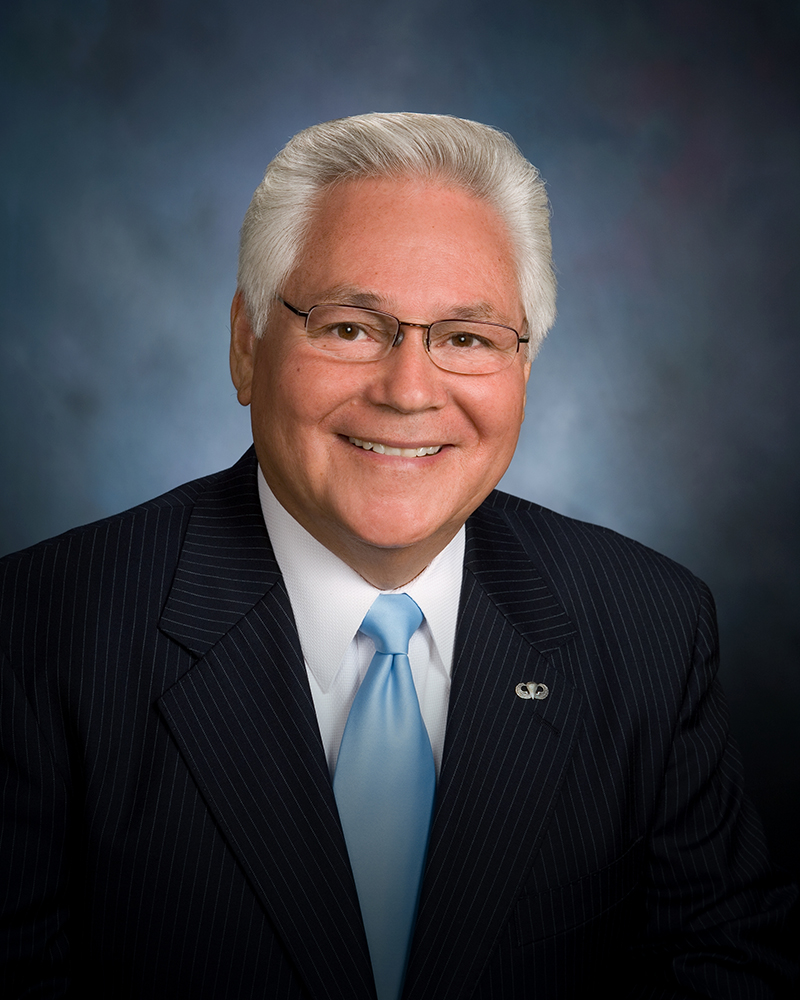
Sen. Bob Archuleta
Sponsored bills
Existing law, the Stop Tobacco Access to Kids Enforcement (STAKE) Act, prohibits a person from selling or otherwise furnishing tobacco products, as defined, to a person under 21 years of age. Existing law also prohibits the use of tobacco products in county offices of education, on charter school or school district property, or near a playground or youth sports event, as specified. This bill would prohibit a tobacco retailer, or any of the tobacco retailer's agents or employees, from selling, offering for sale, or possessing with the intent to sell or offer for sale, a flavored tobacco product or a tobacco product flavor enhancer, as those terms are defined, except as specified. The bill would make a violation of this prohibition an infraction punishable by a fine of $250 for each violation. The bill would state the intent of the Legislature that these provisions do not preempt or prohibit the adoption and implementation of local ordinances that impose greater restrictions on the access to tobacco products than the restrictions imposed by the bill, as specified. The bill would state that its provisions are severable. By creating a new crime, the bill would impose a state-mandated local program. The California Constitution requires the state to reimburse local agencies and school districts for certain costs mandated by the state. Statutory provisions establish procedures for making that reimbursement. This bill would provide that no reimbursement is required by this act for a specified reason.
Existing law prohibits a school district from receiving a state apportionment based upon average daily attendance unless it has maintained the regular day schools of the district for at least 175 days during the next preceding fiscal year. Existing law exempts from this prohibition a school district, county office of education, or charter school that is prevented from maintaining its schools during a fiscal year for at least 175 days because of a specified emergency or other extraordinary condition. If the average daily attendance of a school district, county office of education, or charter school has been materially decreased during a fiscal year because of a specified emergency, existing law requires the Superintendent of Public Instruction to estimate the average daily attendance in a manner that credits to the school district, county office of education, or charter school approximately the total average daily attendance that would have been credited to the school district, county office of education, or charter school had the emergency not occurred. This bill would add public safety power shutoffs to the list of emergencies for which the above-described provisions apply.
Under existing law, the Public Utilities Commission (PUC) has regulatory authority over public utilities, including electrical corporations, while local publicly owned electric utilities are under the direction of their governing boards. Existing law requires the PUC and the State Energy Resources Conservation and Development Commission (Energy Commission) to undertake specified actions to advance the state's clean energy and pollution reduction objectives, including, where feasible, cost effective, and consistent with other state policy objectives, to increase the use of large- and small-scale energy storage with a variety of technologies, including green electrolytic hydrogen, targeted energy efficiency, demand response, eligible renewable energy resources or other renewable and nonrenewable technologies with zero or lowest feasible emissions of greenhouse gases, criteria pollutants, and toxic air contaminants onsite to protect system reliability. For these purposes, "green electrolytic hydrogen" is defined as hydrogen gas produced through electrolysis and not from fossil fuel. Existing law requires the PUC, State Air Resources Board (state board) , and Energy Commission to consider green electrolytic hydrogen as an eligible form of energy storage, and to consider other potential uses of green electrolytic hydrogen. This bill would include use of green electrolytic hydrogen as an alternative transportation fuel as another potential use for these purposes. The Charge Ahead California Initiative, administered by the State Air Resources Board (state board) , among other things, requires the state board to identify and adopt appropriate policies, rules, or regulations to remove regulatory disincentives preventing certain retail sellers of electricity from facilitating the achievement of greenhouse gas emission reductions in nonelectrical industry sectors through increased investments in transportation electrification. Existing law, enacted as part of the Clean Energy and Pollution Reduction Act of 2015, requires the PUC, in consultation with the Energy Commission and state board, to direct electrical corporations to file applications for programs and investments to accelerate widespread transportation electrification, as defined, to achieve specified results. The PUC is required to approve, or modify and approve, programs and investments in transportation electrification, including those that deploy charging infrastructure, through a reasonable cost recovery mechanism, if they meet specified requirements. This bill would revise the definition of "transportation electrification" for this purpose to include the use of renewable hydrogen when used directly as a transportation fuel in fuel cell electric vehicles, if the hydrogen meets specified renewable content requirements. The bill would require the PUC, in consultation with the state board and the Energy Commission, to authorize gas corporations to file applications for investments in programs to accelerate widespread transportation electrification to advance specified environmental objectives. The bill would require the PUC to approve, or modify and approve, programs and investments in transportation electrification, including hydrogen and hydrogen-related distribution, pipelines, and make-ready infrastructure for hydrogen, utilizing a reasonable cost recovery mechanism if they are consistent with the specified environmental objectives, do not unfairly compete with nonutility enterprises, include performance accountability measures, and are in the interest of ratepayers, as defined. Existing law generally designates the state board as the state agency with the primary responsibility for the control of vehicular air pollution and requires the state board, in partnership with the Energy Commission and in conjunction with other state agencies, to develop and adopt a state plan to increase the use of alternative fuels, as defined. Existing law requires the state board to adopt regulations that will ensure that, in any year immediately following a 12-month period in which the mass of hydrogen fuel dispensed for transportation purposes in California exceeds 3,500 metric tons, no less than 33.3% of the hydrogen produced or dispensed in California for motor vehicles be made from eligible renewable energy resources, as defined. This bill would require those regulations to require that, on a statewide basis, not less than 33.3% of the hydrogen produced or dispensed in California for motor vehicles be renewable hydrogen, as defined. The bill would require that the renewable hydrogen percentage be increased to 44% by December 31, 2024, 52% by December 31, 2027, 60% by December 31, 2030, and would require that by December 31, 2045, 100% of the hydrogen produced or dispensed in California for motor vehicles be either renewable hydrogen or clean hydrogen produced using zero-carbon resources. Existing law requires that the governing board of a local publicly owned electric utility with an annual electrical demand exceeding 700 gigawatthours adopt an integrated resource plan and a process for updating the plan at least once every 5 years to ensure the utility achieves specified objectives. Existing law requires that the integrated resource plan address procurement of, among other things, transportation electrification and a diversified procurement portfolio consisting of both short-term and long-term electricity, electricity-related, and demand response products. By expanding the definition of transportation electrification the bill would expand the matter that a local publicly owned electric utility must consider when updating an integrated resource plan, thereby imposing a state-mandated local program. The California Constitution requires the state to reimburse local agencies and school districts for certain costs mandated by the state. Statutory provisions establish procedures for making that reimbursement. This bill would provide that no reimbursement is required by this act for a specified reason.
Existing law, the Veterans Housing and Homeless Prevention Bond Act of 2014 (the 2014 bond act) , authorizes the issuance of bonds in the amount of $600,000,000, as specified, for expenditure by the California Housing Finance Agency, the Department of Housing and Community Development, and the Department of Veterans Affairs to provide housing to veterans and their families pursuant to the Veterans Housing and Homeless Prevention Act of 2014 (VHHPA) . This bill would enact the Veterans Housing and Homeless Prevention Bond Act of 2022 to authorize the issuance of bonds in an amount not to exceed $600,000,000 to provide additional funding for the VHHPA. The bill would provide for the handling and disposition of the funds in the same manner as the 2014 bond act. The bill would provide for the submission of the bond act to the voters at the March 8, 2022, statewide primary election.
Existing law authorizes governing boards of school districts to grant leaves of absence to persons employed in positions requiring certification qualifications and to persons employed in the classified service of the school district. For purposes of state apportionments, if the average daily attendance of a school district, county office of education, or charter school during a fiscal year has been materially decreased during a fiscal year because of an emergency, existing law requires the Superintendent of Public Instruction to estimate the average daily attendance in a manner that credits to the school district, county office of education, or charter school the total average daily attendance that would have been credited had the emergency not occurred. This bill would prohibit the governing board of a school district from requiring an employee of the school district who is employed in a position requiring certification qualifications or a classified employee to use sick, vacation, or other paid leave if the school is forced to close because of a mandatory evacuation order or certain emergencies, or if the employee is unable to report to work because they reside in an area that is subject to an evacuation order or affected by certain emergencies, and would require the governing board of the school district to ensure the employee is provided their regular pay for any days missed. The bill would require the governing board of a school district to adopt rules and regulations requiring and prescribing the manner by which employees shall prove their inability to report to work because they reside in an area that is subject to a mandatory evacuation order or affected by certain emergencies. By imposing new duties on school districts to create new rules and regulations, the bill would create a state-mandated local program. The California Constitution requires the state to reimburse local agencies and school districts for certain costs mandated by the state. Statutory provisions establish procedures for making that reimbursement. This bill would provide that, if the Commission on State Mandates determines that the bill contains costs mandated by the state, reimbursement for those costs shall be made pursuant to the statutory provisions noted above.
This measure would proclaim September 20, 2020, as Latino Veterans Day.
This measure would urge the United States Congress to include and approve in its 2021 budget an appropriation of approximately $385,000,000 to the United States of Army Corps of Engineers Civil Works program to perform the critically needed construction and repair work on Whittier Narrows Dam to protect the citizens of southeastern Los Angeles County from catastrophic flooding.