

Existing law provides that a child may be a dependent child of the juvenile court in certain cases, including when the child has suffered, or is at substantial risk of suffering, serious physical harm or illness as a result of the willful or negligent failure of the parent or guardian to provide the child with adequate food, clothing, shelter, or medical treatment. Existing law requires a social worker who has cause to believe that a child has been abused or neglected to immediately conduct an investigation to determine whether child welfare services should be offered to the family and whether proceedings in the juvenile court should be commenced. This bill would require a county child welfare department investigating a case of child abuse or neglect to determine if the parent or guardian is an active duty member of the Armed Forces of the United States. The bill would authorize the county child welfare department to develop and adopt memoranda of understanding with military installations that would govern the investigation of allegations of child abuse or neglect against active duty service members, as specified. The bill would specify that these provisions do not limit or change the responsibilities of a county child welfare department with respect to investigations of, or responses to, allegations of abuse or neglect. By imposing additional duties on local officials, this bill would impose a state-mandated local program. The California Constitution requires the state to reimburse local agencies and school districts for certain costs mandated by the state. Statutory provisions establish procedures for making that reimbursement. This bill would provide that no reimbursement is required by this act for a specified reason.
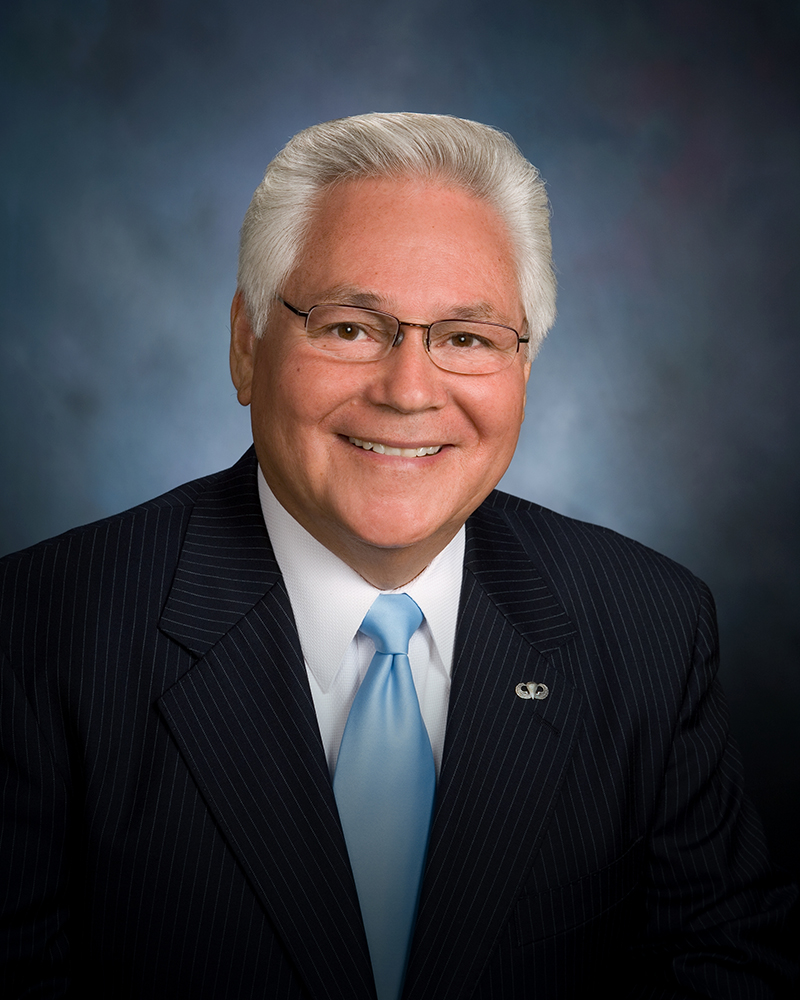
Sen. Bob Archuleta
Sponsored bills
Existing law directs the Attorney General to furnish state summary criminal history information, as defined, to specified individuals, organizations, and agencies when necessary for the execution of official duties or to implement a statute or regulation. Existing law also directs the Attorney General to disseminate federal criminal history information when specifically authorized and upon a showing of compelling need. Existing law authorizes a human resource agency or an employer to request from the Department of Justice records of all convictions or any arrest pending adjudication involving specified offenses of a person who applies for a license, employment, or volunteer position, in which they would have supervisory or disciplinary power over a minor or any person under their care. Existing law requires a request for records to include the applicant's fingerprints and any other data specified by the department. Existing law requires the department to furnish the information to the requesting employer and to send a copy of the information to the applicant. This bill would establish procedures for individuals, organizations, and agencies to request a fingerprint-based criminal history information check from the Department of Justice. This bill would establish a process for communication between the department and the Federal Bureau of Investigation and require a department response to the requesting individual, organization, or agency. This bill would prohibit the department from requiring the applicant's residence address for the purpose of these requests..
Federal Executive Order 13888 generally prohibits a refugee from being resettled in a state or locality if the state or locality has not consented, in writing, to the resettlement of refugees. The Executive Order requires the United States Secretary of State and the United States Secretary of Health and Human Services to implement a process to determine if a state or locality consents. The bill would prohibit a refugee from being denied resettlement in California based on any criterion, method of administration, or practice that has the purpose or effect of discriminating on the basis of specified protected characteristics.
The existing federal Indian Gaming Regulatory Act of 1988 provides for the negotiation and execution of tribal-state gaming compacts for the purpose of authorizing certain types of gaming on Indian lands within a state. The California Constitution authorizes the Governor to negotiate and conclude tribal-state gaming compacts, subject to ratification by the Legislature. Existing law expressly ratifies a number of tribal-state gaming compacts, and amendments of tribal-state gaming compacts, between the State of California and specified Indian tribes. The California Environmental Quality Act (CEQA) requires a lead agency to prepare, or cause to be prepared, and certify the completion of, an environmental impact report on a project, as defined, that it proposes to carry out or approve that may have a significant effect on the environment, as defined, or to adopt a negative declaration if it finds that the project will not have that effect. This bill would ratify the tribal-state gaming compacts entered into between the State of California and the following Indian tribes: the Ione Band of Miwok Indians, the Mooretown Rancheria of Maidu Indians of California, the Paskenta Band of Nomlaki Indians, the Shingle Springs Band of Miwok Indians, the Tolowa Dee-ni' Nation, and the Tule River Indian Tribe of California. The bill would provide that, in deference to tribal sovereignty, certain actions related to these compacts and amended compacts are not projects for purposes of CEQA. This bill would declare that it is to take effect immediately as an urgency statute.
Existing law requires the State Energy Resources Conservation and Development Commission, within the limits of available funds, to provide technical assistance and support for the development of petroleum diesel fuels that are as clean or cleaner than alternative clean fuels and clean diesel engines. This bill would instead require the commission, within the limits of available funds, to provide technical assistance and support for the development of zero-emission fuels, zero-emission fueling infrastructure, and zero-emission fuel transportation technologies.
Existing sales and use tax laws, among other things, impose a tax on retailers measured by the gross receipts from their sales of tangible personal property sold at retail in this state. The Sales and Use Tax Law designates that certain sellers of tangible personal property are consumers, and not retailers, of the tangible personal property they sell, including, until January 1, 2021, that an all volunteer fire department, as defined, is a consumer, and not a retailer, of all tangible personal property sold by it, if the profits are used solely and exclusively in furtherance of the purposes of the all volunteer fire department, subject to specified limitations, so that the retail sale subject to tax is the sale of tangible personal property to the all volunteer fire department. This bill would extend the operation of that consumer designation for all volunteer fire departments until January 1, 2026. Existing law requires any bill authorizing a new tax expenditure to contain, among other things, specific goals, purposes, and objectives that the tax expenditure will achieve, detailed performance indicators, and data collection requirements. The bill also would include additional information required for any bill authorizing a new tax expenditure. The Bradley-Burns Uniform Local Sales and Use Tax Law authorizes counties and cities to impose local sales and use taxes in conformity with the Sales and Use Tax Law, and existing laws authorize districts, as specified, to impose transactions and use taxes in accordance with the Transactions and Use Tax Law, which generally conforms to the Sales and Use Tax Law. Amendments to the Sales and Use Tax Law are automatically incorporated into the local tax laws. Existing law requires the state to reimburse counties and cities for revenue losses caused by the enactment of sales and use tax exemptions. This bill would provide that, notwithstanding Section 2230 of the Revenue and Taxation Code, no appropriation is made and the state shall not reimburse any local agencies for sales and use tax revenues lost by them pursuant to this bill. This bill would take effect immediately as a tax levy.
Under existing law, the Department of General Services, except in the case of contracts for professional bond services, is the administering agency of the California Disabled Veteran Business Enterprise Program, which requires state agencies and all other state entities contracting for materials, supplies, equipment, alteration, repair, or improvement to have at least 3% participation goals for disabled veteran business enterprises (DVBEs) , as defined. Existing law requires an awarding department, upon completion of an awarded contract for which a commitment to achieve a DVBE goal was made, to require the prime contractor that entered into a subcontract with a DVBE to certify to the awarding department specified information relating to amounts paid under the contract, as specified. Existing law subjects a person or entity that knowingly provides false information on this certification to certain criminal and civil penalties, as specified. This bill would require an awarding department, on a contract entered into on or after January 1, 2021, to withhold $10,000, or the full payment if it is less than $10,000, from the final payment on a contract until that certification is received by the awarding department. The bill would require the awarding department to give a prime contractor that fails to meet those certification requirements 15 to 30 calendar days to cure the defect. The bill would require the awarding department to permanently deduct $10,000 from the final payment, or the full payment if it is less than $10,000, from a contract with a contractor who does not comply with those requirements within the specified time period. The bill would require the Legislative Analyst's Office to complete an assessment and report of the DVBE program, as specified, and submit that report to the Legislature on or before January 1, 2024.
Existing law authorizes the Director of General Services to sell or lease certain property, known as the Southern Youth Correctional Reception Center and Clinic, to the County of Los Angeles by January 1, 2015, at market value upon terms and conditions and subject to reservations and exceptions the director determines are in the best interests of the state, and, after January 1, 2015, authorizes the director to sell the property to any other party at market value through a competitive bid process. This bill would instead authorize the director, until January 1, 2025, to sell that property to the City of Norwalk at fair market value upon terms and conditions the director determines are in the best interests of the state. The bill would authorize the director, notwithstanding those provisions, to sell the property below fair market value for purposes of providing housing to persons and families of low or moderate income, subject to reporting specified information 30 days before the sale to the chairpersons of the fiscal committees of the Legislature. The bill would revise the approximate acreage of the property to 32 acres. The bill, after January 1, 2025, would authorize the director to dispose of the property in accordance with specified procedures and priorities otherwise applicable to the disposal of surplus property by the department. The bill would exempt the sale of the property from the California Environmental Quality Act.
Existing provisions of the California Constitution establish the University of California as a public trust under the administration of the Regents of the University of California. The California Constitution grants to the regents all the powers necessary or convenient for the effective administration of this public trust. Pursuant to the California Constitution, there are 7 ex officio members of the regents and 18 appointive members appointed by the Governor and approved by the Senate, a majority of the membership concurring. This measure would enact the University of California Equal Employment Opportunity Standards Act, which would, effective January 1, 2021, except as specified, require the regents to ensure that all contract workers, as defined, who are paid to perform support services for students, faculty, patients, or the general public at any campus, dining hall, medical center, clinic, research facility, laboratory, or other university location, are at all times subject to and afforded the same equal employment opportunity standards, as defined, as university employees performing similar services. The measure would authorize the regents, or any campus or other entity of the University of California, to contract for, or otherwise arrange to use, contract labor, as defined, to perform support services only under specified conditions, only if authorized to do so by statute, and only to the extent necessary to address one or more of prescribed needs. The measure would authorize the Legislature to enact statutes to further the purposes of, and to aid the enforcement of, this measure.
The Rechargeable Battery Recycling Act of 2006 requires every retailer, as defined, to have in place a system for the acceptance and collection of used rechargeable batteries, defined to include lithium-ion batteries, for reuse, recycling, or proper disposal. The act requires the system for the acceptance and collection of used rechargeable batteries to include, at a minimum, specified elements, including, among others, the take-back of a used rechargeable battery at no cost to the consumer. The hazardous waste control laws, among other things, authorize the Department of Toxic Substances Control to regulate the generation and disposal of hazardous waste. Existing law prohibits a person from intentionally disposing of or causing the disposal of a hazardous or extremely hazardous waste at a point not authorized by the hazardous waste control laws, as provided. Under existing department-adopted regulations, specified hazardous wastes, including certain batteries, are designated as "universal waste" and are regulated separately pursuant to universal waste management provisions. A violation of the hazardous waste control laws, including a regulation adopted pursuant to those laws, is a crime. This bill would prohibit a person from knowingly disposing of a lithium-ion battery in a container or receptacle that is intended for the collection of solid waste or recyclable materials, unless the container or receptacle is designated for the collection of batteries for recycling, as provided. The bill would require the Department of Resources Recycling and Recovery, on or before July 1, 2023, and in consultation with the Department of Toxic Substances Control, to develop a guidance document relating to the proper handling and disposal of lithium-ion batteries and products that contain lithium-ion batteries, as provided. The bill would authorize the Department of Resources Recycling and Recovery, in carrying out that requirement, to solicit and use any expertise available in other state agencies and would authorize the department to convene a specified working group to advise on the content, development, and promotion of the guidance document. The bill would require the Department of Forestry and Fire Protection, before January 1, 2022, in consultation with relevant state agencies and stakeholders, to develop a model protocol and training that identifies best practices for the detection, safe handling, and suppression of fires that originate from discarded lithium-ion batteries or products that contain lithium-ion batteries on or in solid waste or recycling collection vehicles, transfer or processing stations, or disposal facilities, as provided. The bill would require a solid waste enterprise, as defined, before July 1, 2022, after consulting with the county fire marshal of every county in which the solid waste enterprise conducts solid waste collection operations, to adopt, or update if necessary, a protocol and arrange any necessary training for relevant employees that identifies procedures to follow under those same circumstances. By imposing new duties on county fire marshals, the bill would impose a state-mandated local program. The California Constitution requires the state to reimburse local agencies and school districts for certain costs mandated by the state. Statutory provisions establish procedures for making that reimbursement. This bill would provide that, if the Commission on State Mandates determines that the bill contains costs mandated by the state, reimbursement for those costs shall be made pursuant to the statutory provisions noted above.