Issue · Transportation

Transportation (Electric Vehicles)

Every transportation bill, vote, and legislator stance in California, automatically classified by Maddy, our AI policy reader.

Total bills
32
2025-2026 Regular Session
Top supporter
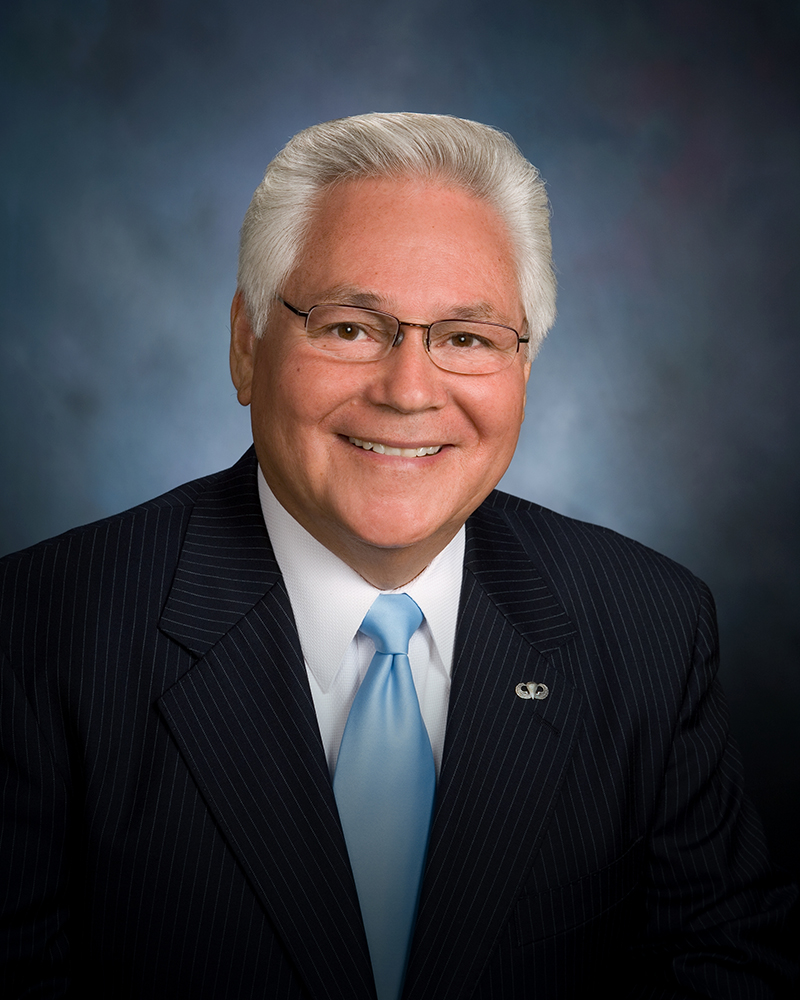
Jesse Arreguín
100% support rate
Top opponent
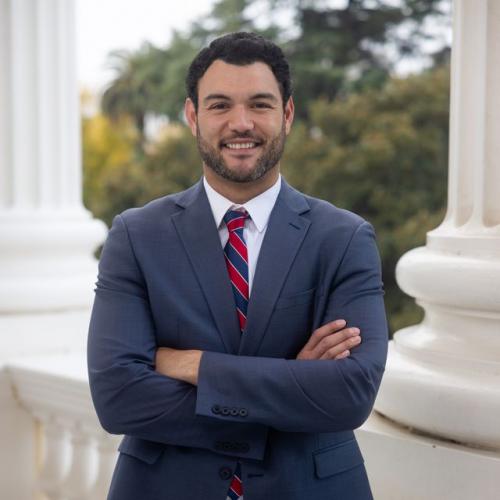
David Tangipa
0% support rate
Ranked legislators
10
5 support · 5 oppose
Key legislators

Who's moving electric vehicles in California

Legislators moving electric vehicles in California
Legislator Party Stance Support rate Votes
JA
Jesse Arreguín Senate · District 7
D
Strong +
100% 8
Aisha Wahab
Aisha Wahab Senate · District 10
D
Strong +
100% 7
Blanca Pacheco
Blanca Pacheco House · District 64
D
Strong +
100% 7
Bob Archuleta
Bob Archuleta Senate · District 30
D
Strong +
100% 7
Buffy Wicks
Buffy Wicks House · District 14
D
Strong +
100% 7
David Tangipa
David Tangipa House · District 8
R
Strong −
0% 7
Megan Dahle
Megan Dahle Senate · District 1
R
Strong −
0% 7
Tony Strickland
Tony Strickland Senate · District 36
R
Strong −
0% 7
Ali Macedo
Ali Macedo House · District 33
R
Strong −
0% 6
Diane Dixon
Diane Dixon House · District 72
R
Strong −
0% 6
Showing 1–10 of 32 bills

All transportation bills

in committee · California · Assembly May 14, 2026

AB 1942: Electric bicycles: registration and special license plates.

Existing law prohibits a person from driving, moving, or leaving standing upon a highway, or in an offstreet public parking facility, any motor vehicle, trailer, semitrailer, pole or pipe dolly, or logging dolly, unless it is registered and the appropriate fees have been paid, except as specified. Existing law requires the Department of Motor Vehicles, upon registering a vehicle, to issue to the owner license plates that identify the vehicles for which they are issued for the period of their validity, as specified. Existing law also requires a motorized bicycle to display a special license plate issued by the department. Existing law authorizes a city or county to adopt a bicycle licensing ordinance or resolution, authorizes the licensing agency, by ordinance or resolution, to adopt rules and regulations for the collection of license fees, as specified, and sets the fee for each new bicycle license and registration certificate at a sum of no more than $4 per year. Existing law defines an electric bicycle as a bicycle equipped with fully operable pedals and an electric motor of less than 750 watts, and classifies electric bicycles into 3 classes with different restrictions. This bill would require class 2 electric bicycles and class 3 electric bicycles to be registered with the department and to display a special license plate issued by the department. The bill would require the department to adopt regulations to implement these requirements, and would make a person operating a class 2 or class 3 electric bicycle in violation of these requirements guilty of an infraction punishable by specified fines. By creating a new crime, the bill would impose a state-mandated local program. The bill would create the Electric Bicycle Registration Fund in the State Treasury, require all moneys received by the department pursuant to these provisions to be deposited in the fund, and require all moneys in the fund to be available, upon appropriation by the Legislature, to the department for the administration of these provisions. The bill would also appropriate an unspecified sum of moneys from the General Fund to the Electric Bicycle Registration Fund as a loan for purposes of administering these provisions, as specified. The California Constitution requires the state to reimburse local agencies and school districts for certain costs mandated by the state. Statutory provisions establish procedures for making that reimbursement. This bill would provide that no reimbursement is required by this act for a specified reason.
in committee · California · Senate May 14, 2026

SB 1215: Electrical corporations: electric vehicle charging stations: multifamily housing properties.

Existing law vests the Public Utilities Commission with regulatory authority over public utilities, including electrical corporations. Existing law requires each electrical corporation, not later than February 28, 2021, to file an advice letter for, and requires the commission, not later than June 30, 2021, to approve, a new tariff or rule that authorizes each electrical corporation to design and deploy all electrical distribution infrastructure on the utility side of the customer's meter for all customers installing separately metered infrastructure to support charging stations, other than those in single-family residences. Existing law requires the commission to establish strategies and quantifiable metrics to maximize the use of feasible and cost-effective electric vehicle grid integration, as defined, by January 1, 2030, as specified. This bill would require the commission, on or before March 1, 2027, to establish targets for each electrical corporation to install electric vehicle charging stations at multifamily housing properties. The bill would require the commission to ensure the targets reduce costs for all ratepayers, and to require electrical corporations to make annual progress reports and to provide to the commission corresponding maps that identify the proposed multifamily housing properties within its service territory where use will be highest based on distribution system planning and experience with electric vehicle charging station infrastructure. The bill would require the commission, in establishing the targets, to determine whether to impose certain requirements on an electrical corporation, including a requirement that an electrical corporation recover all costs, to the extent not covered by nonratepayer funding, for deploying the electric vehicle charging stations, including the costs for administration and implementation, as operations and maintenance costs rather than as capital costs. Under existing law, a violation of the Public Utilities Act or any order, decision, rule, direction, demand, or requirement of the commission is a crime. Because the provisions of the bill would be a part of the act and therefore a violation of the bill's requirements, or a violation of a commission action implementing the bill's requirements, would be a crime, this bill would impose a state-mandated local program. The California Constitution requires the state to reimburse local agencies and school districts for certain costs mandated by the state. Statutory provisions establish procedures for making that reimbursement. This bill would provide that no reimbursement is required by this act for a specified reason.
Sub-Topics Electric Vehicles
in committee · California · Senate Apr 20, 2026

SB 956: Vehicles: Electric Bicycle Special License Plate Pilot Program.

Under existing law, a person riding an electric bicycle is subject to the laws pertaining to the operation of a bicycle upon a highway. For these purposes, existing law defines an electric bicycle as a bicycle equipped with fully operable pedals and an electric motor of less than 750 watts, and classifies electric bicycles into 3 classes with different restrictions, as specified. Existing law states that these provisions do not prevent local authorities, by ordinance, from regulating the registration of bicycles and the parking and operation of bicycles on pedestrian or bicycle facilities, provided such regulation is not in conflict with the Vehicle Code. Existing law prohibits a city or county, which adopts a bicycle licensing ordinance or resolution, from prohibiting the operation of an unlicensed bicycle. The bill would, until January 1, 2032, authorize the County of Orange to establish a pilot program to require the display of a special license plate on electric bicycles. The bill would authorize the county to adopt ordinances or resolutions to implement the pilot program, and would make a person operating an electric bicycle in violation of this requirement guilty of an infraction punishable by specified fines and mandatory attendance of the Department of the California Highway Patrol-approved electric bicycle training course. By creating a new crime, the bill would impose a state-mandated local program. The bill would also exempt electric bicycles from the prohibition described above. The bill would, by January 1, 2032, require the county to submit a report to the Legislature, as specified. The California Constitution requires the state to reimburse local agencies and school districts for certain costs mandated by the state. Statutory provisions establish procedures for making that reimbursement. This bill would provide that no reimbursement is required by this act for a specified reason.
in committee · California · Senate May 14, 2026

SB 1282: Transportation electrification: grid-integrated vehicle technologies: standards.

Existing law requires the State Energy Resources Conservation and Development Commission (Energy Commission) , in consultation with the Public Utilities Commission (PUC) , to develop uptime recordkeeping and reporting standards for electric vehicle chargers and charging stations. This bill would require the Energy Commission, on or before December 31, 2028, to conduct and publish on its internet website an assessment of, among other things, the electrical grid energy supply, reliability, and cost implications associated with the state's transition to 100% renewable and zero-carbon energy sources and the target level of grid-integrated vehicle technology vehicle use and grid-integrated charging technology-enabled vehicle use necessary to address those needs, as provided. The bill would require the Energy Commission, on or before December 31, 2029, to adopt and implement standards, in consultation with the State Air Resources Board, the PUC, and other relevant local and state agencies, for grid-integrated vehicle technology and associated grid-integrated charging technology of new vehicles, as provided. The bill would require that these standards establish requirements for on-road vehicles of any weight class sold within the state to incorporate grid-integrated vehicle technology and grid-integrated charging technology to achieve those targets, except as specified, and include specified provisions relating to, among other things, classes and types of grid-integrated vehicle technologies that can satisfy those requirements and alternative compliance mechanisms, as provided. The bill would exempt specified types of vehicles from these requirements adopted by the Energy Commission, including, among others, authorized emergency vehicles, as provided. The bill would require the Energy Commission, if it adopts requirements that would require the inclusion of grid-integrated charging technology or grid-integrated vehicle technology on a specific vehicle model or type within a weight class, to adopt a process for a manufacturer to apply for a waiver from that requirement if implementation is not feasible for the vehicle model.
passed both · California · Senate Aug 30, 2026

SB 1283: Electric vehicle charging stations: installation: permits.

Existing law requires a city, county, or city and county (local government) to administratively approve an application to install an electric vehicle charging station (EV station) through the issuance of a building permit or similar nondiscretionary permit. Existing law requires those EV stations to meet all applicable safety and performance standards established by specified entities. This bill would require this administrative approval to extend to EV stations with a canopy, as defined, or onsite energy storage systems sized to support charging. This bill would also require any electric vehicle supply equipment installed at the EV station to meet all applicable safety and performance standards. Existing law requires every local government to adopt, pursuant to specified deadlines, an ordinance that creates an expedited, streamlined permitting process for EV stations. Existing law requires the local government to adopt a checklist of all requirements with which the EV stations must comply with for expedited review. This bill would require the ordinance to also address expedited streamlining for any supporting infrastructure necessary for or accessory to the operation of EV stations, as described, and would clarify that the checklist may be amended. The bill would require the ordinance and checklist to be amended to implement the bill's provisions no later than December 31, 2027. This bill would further provide that if the local government has not adopted or amended such a checklist, an application to install an EV station must contain specified information about the proposed project to the building official of the local government, including, but not limited to, the specific location of the EV station. The bill would require the Governor's Office of Business and Economic Development (GO-Biz) to develop and publicly post a standardized form that applicants may use and submit to the local government for purposes of satisfying this requirement. The bill would also require GO-Biz to develop and publicly post an optional template that applicants may use to document their application's compliance with specified provisions relating to the submittal of their EV station application. This bill would require a local government to provide, no later than 30 days after an application has been deemed approved, a written notice to the applicant of the date the application was deemed approved and identify all permits and authorizations that have been granted. The bill would authorize an applicant to proceed with project construction following that notice, as described. This bill would prohibit its provisions from being construed to limit a local agency's ability to, among other things, require plans or supporting documentation that are necessary to verify an electric vehicle charging station, including supporting infrastructure, meets all health and safety requirements of local, state, and federal law, as provided. This bill would make conforming changes and revise various definitions in these provisions, including by redefining an EV station for purposes of these provisions to mean a physical site where one or more devices with one or more charging ports and connectors for charging electric vehicles are available for use. By imposing additional duties on local agencies, the bill would impose a state-mandated local program. The California Constitution requires the state to reimburse local agencies and school districts for certain costs mandated by the state. Statutory provisions establish procedures for making that reimbursement. This bill would provide that no reimbursement is required by this act for a specified reason.
in committee · California · Assembly Mar 23, 2026

AB 2459: Vehicle charging stations: electrical service connection: certificate of occupancy.

Existing law authorizes the legislative body of any county or city to adopt ordinances that, among other things, regulate the use of buildings, structures, and land as between industry, business, residences, open space, including agriculture, recreation, enjoyment of scenic beauty, use of natural resources, and other purposes. Existing law requires every city, county, or city and county to, in consultation with the local fire department or district and the utility director, if the city, county, or city and county operates a utility, adopt an ordinance that creates an expedited, streamlined permitting process for electric vehicle charging stations, as provided. This bill would prohibit a local building authority from denying, withholding, or conditioning a certificate of occupancy to a nonprofit applicant solely on the basis that required vehicle charging stations are not fully operational, provided that certain conditions are met, including that the applicant has installed all vehicle charging infrastructure required by applicable law, regulation, or building code in the manner and to the specifications required. By increasing the duties of local officials, this bill would impose a state-mandated local program. The bill would include findings that changes proposed by this bill address a matter of statewide concern rather than a municipal affair and, therefore, apply to all cities, including charter cities. The California Constitution requires the state to reimburse local agencies and school districts for certain costs mandated by the state. Statutory provisions establish procedures for making that reimbursement. This bill would provide that no reimbursement is required by this act for a specified reason.
Sub-Topics Electric Vehicles
in committee · California · Senate Mar 4, 2026

SB 1413: State vehicle fleet: zero-emission vehicles.

Existing law requires the Department of General Services, beginning no later than the 2024–25 fiscal year, to ensure at least 50% of the light-duty vehicles purchased for the state vehicle fleet each fiscal year are zero-emission vehicles, except as provided. This bill would make nonsubstantive changes to that requirement.
passed · California · Assembly Aug 13, 2026

AB 2560: Climate Action Plan for Transportation Infrastructure: goals.

Existing law establishes the Transportation Agency, which has the power of general supervision over specified state entities. Existing law requires the agency to develop and report on legislative, budgetary, and administrative programs to accomplish comprehensive, long-range, coordinated planning and policy formation in the matters of public interest related to the agency. This bill would establish specified goals for the Climate Action Plan for Transportation Infrastructure (CAPTI) , consistent with state law.
Sub-Topics Electric Vehicles
passed both · California · Assembly Aug 25, 2026

AB 2346: Vehicles: electric bicycles and speed limits.

(1) Existing law defines an electric bicycle as a bicycle equipped with fully operable pedals and an electric motor of less than 750 watts, and classifies electric bicycles into 3 classes with different restrictions for various purposes. This bill would require all class 2 electric bicycles manufactured, sold, or offered for sale on or after January 1, 2029, to be equipped with a speedometer. The bill would also require all electric bicycles manufactured, sold, or offered for sale on or after January 1, 2029, to be equipped with an integrated or detachable front lamp and a rear lamp, as specified. The bill would also require sellers and distributors of electric bicycles to disclose specified information at or before the point of sale, including, among other things, the classification and maximum speed of the electric bicycle and a recommendation that persons under 16 years of age should not ride an electric bicycle at a speed greater than 15 miles per hour. The bill would make a violation of these provisions punishable as an infraction, as specified. (2) Existing law regulates the operation of bicycles on highways and authorizes local authorities to, among other things, prohibit, by ordinance, the operation of an electric bicycle or any class of electric bicycle on equestrian trails or hiking or recreational trails. This bill would authorize a local authority to set a speed limit on a bicycle path of 10, 15, or 20 miles an hour or on a multiuse trail to 10, 15, or 20 miles per hour, as specified, subject to specified signage requirements. However, the bill would specify that speed limits on a bicycle path or multiuse trail established prior to January 1, 2027, shall remain in effect. The bill would also make technical, nonsubstantive changes to these provisions. (3) Existing law establishes various prima facie speed limits. Existing law establishes that specified convictions and violations under the Vehicle Code and traffic-related incidents count as points against a driver's record for purposes of the suspension or revocation of the privilege to drive, except as specified. This bill would additionally set a prima facie speed limit of 10 miles per hour on a sidewalk and specify that a conviction of a violation of that speed limit shall not result in a violation point count. (4) Under existing law, a violation of the Vehicle Code is a crime. By creating new requirements within the Vehicle Code, the violation of which would be a crime, this bill would impose a state-mandated local program. The California Constitution requires the state to reimburse local agencies and school districts for certain costs mandated by the state. Statutory provisions establish procedures for making that reimbursement. This bill would provide that no reimbursement is required by this act for a specified reason.
passed both · California · Senate Aug 30, 2026

SB 1213: Zero- and near-zero-emission medium- and heavy-duty vehicles: incentives: transparency.

(1) Existing law establishes the California Clean Truck, Bus, and Off-Road Vehicle and Equipment Technology Program, to be administered by the State Air Resources Board in conjunction with the State Energy Resources Conservation and Development Commission (Energy Commission) . The program funds eligible projects, including, among others, projects for technology development, demonstration, precommercial pilots, and early commercial deployments of zero- and near-zero-emission medium- and heavy-duty truck technology, including projects that help to facilitate clean goods movement corridors. Existing law establishes the Clean Transportation Program, administered by the Energy Commission, to provide, among other things, competitive grants and revolving loans to specified entities for those entities to develop and deploy innovative technologies that transform California's fuel and vehicle types to help attain the state's climate change policies. This bill would require, within the California Clean Truck, Bus, and Off-Road Vehicle and Equipment Technology Program, the state board and the Energy Commission, beginning January 1, 2027, to condition the inclusion of any medium- or heavy-duty vehicle model in specified incentive programs, including the Clean Transportation Program, on the receipt of the pricing data specified below. (2) Existing law establishes the state board as the state agency responsible for monitoring and regulating sources emitting greenhouse gases. The state board, in this capacity, administers the California Hybrid and Zero-Emission Truck and Bus Voucher Incentive Project (project) under which the agency issues a limited number of vouchers to incentivize the purchase and use of zero-emission commercial vehicles. This bill would require the state board, in order to support the deployment of zero-emission heavy-duty vehicles through the project, to annually reevaluate the cap on the purchase of unredeemed state vouchers issued through the project, as specified. The bill would also require the state board to periodically reevaluate whether or not taxes should be included when determining the maximum share of vehicle cost incentivized through the project. This bill, beginning January 1, 2027, would require a state agency administering any medium- or heavy-duty vehicle incentive program that receives funding from the Greenhouse Gas Reduction Fund, including, but not limited to, the project, and any program that receives funding through the California Clean Fuel Reward through the Low-Carbon Fuel Standard regulations, or through the Clean Transportation Program, to condition the inclusion of any medium- or heavy-duty vehicle model in that program upon certain transparency requirements. The bill would require these transparency requirements to include, among other things, the original equipment manufacturer providing the manufacturer suggested retail price for all zero-emission vehicle models offered for sale in California that may be funded by the above-described incentive programs and receipt by the administering agency of a final itemized purchase order, as provided. This bill would require the state board, in coordination with the Energy Commission, to compile and make publicly available on its internet website in an aggregated format that anonymizes and protects the confidentiality of specified information, the data provided pursuant to these requirements. The bill would also authorize the state board to recover previously dispersed incentive funds that are found to have been dispersed based on data that was knowingly and intentionally misrepresented. The bill would require suspension of a vehicle model's eligibility for the above-described incentive programs for failure to comply with the reporting requirements, following a notice and a reasonable opportunity to cure the failure to comply. (3) Existing law establishes the Medium- and Heavy-Duty Zero-Emission Vehicle Fleet Purchasing Assistance Program within the Air Quality Improvement Program to make financing tools and nonfinancial supports available to operators of medium- and heavy-duty vehicle fleets to enable those operators to transition their fleets to zero-emission vehicles. The bill would require the state board, on or before January 1, 2028, and in coordination with the Governor's Office of Business and Economic Development and the California Infrastructure and Economic Development Bank, to explore alternative financing opportunities to encourage the deployment of zero-emission medium- and heavy-duty vehicles and report its findings regarding these alternative financing opportunities to the Legislature. The bill would require this report to include, but not be limited to, incentives with a specific focus on encouraging new entries into the market, spurring market competition, and prioritizing manufacturing within the state, an evaluation of ways to de-risk and scale up the participation of private investors in the market for affordable zero-emission medium- and heavy-duty vehicles, including used vehicles, and an exploration of increasing deployment and decreasing costs by retrofitting internal combustion medium- and heavy-duty vehicles to zero-emission.
Showing 1 to 10 of 32 bills
1 2 3 4 Next